Anatomy of a week

Monday

I move between bed, bath and couch, book, audiobook and my show on Amazon Prime, occasionally eat leftovers, nap often.

In the evening, I’m picking up my lover and his lover but not my son and his father — one set of travellers is due to arrive nine’ishs and the other after midnight. I’m supposed to pick up the earlier arrivals and not the later ones.

But stuff happens, and I end up with all four of them packed into Darwin the beetle for the chaotic three-drop drive home.

This is a happy if slightly awkward moment.

True thing: When I see my son waiting there outside the airport, everything else disappears, nothing else matters, my lover disappears (he understands), my child is back.

Tuesday

Work. So much work. Also, am I getting a cold? No, I refuse to be getting a cold, but I work from home just in case. I don’t have time for my personal writing in the morning and I’m not right for the rest of the day.

In the afternoon, I pick up my son from his dad’s — teenagers on summer vacation sleep forever. I bring him home, feed him. He’s restless.

We walk downtown to the Value Village Boutique to look for jerseys, find none. On the way there, my crazy neighbour passes us on an electric scooter and swears at me. Fun times. I make a note in the “violations of the restraining order” log on my phone.

We walk back across the downtown, cross the river. I drop him off at his dad’s and continue walking on to my home. My body doesn’t appreciate the exercise. It would prefer to nap.

I skip Tuesday dance church to catch up with my love, back in town after a few days away. He’s fighting a cold. No kissing. How can you truly reconnect without kissing? We hold each other tight but I still feel very far away.
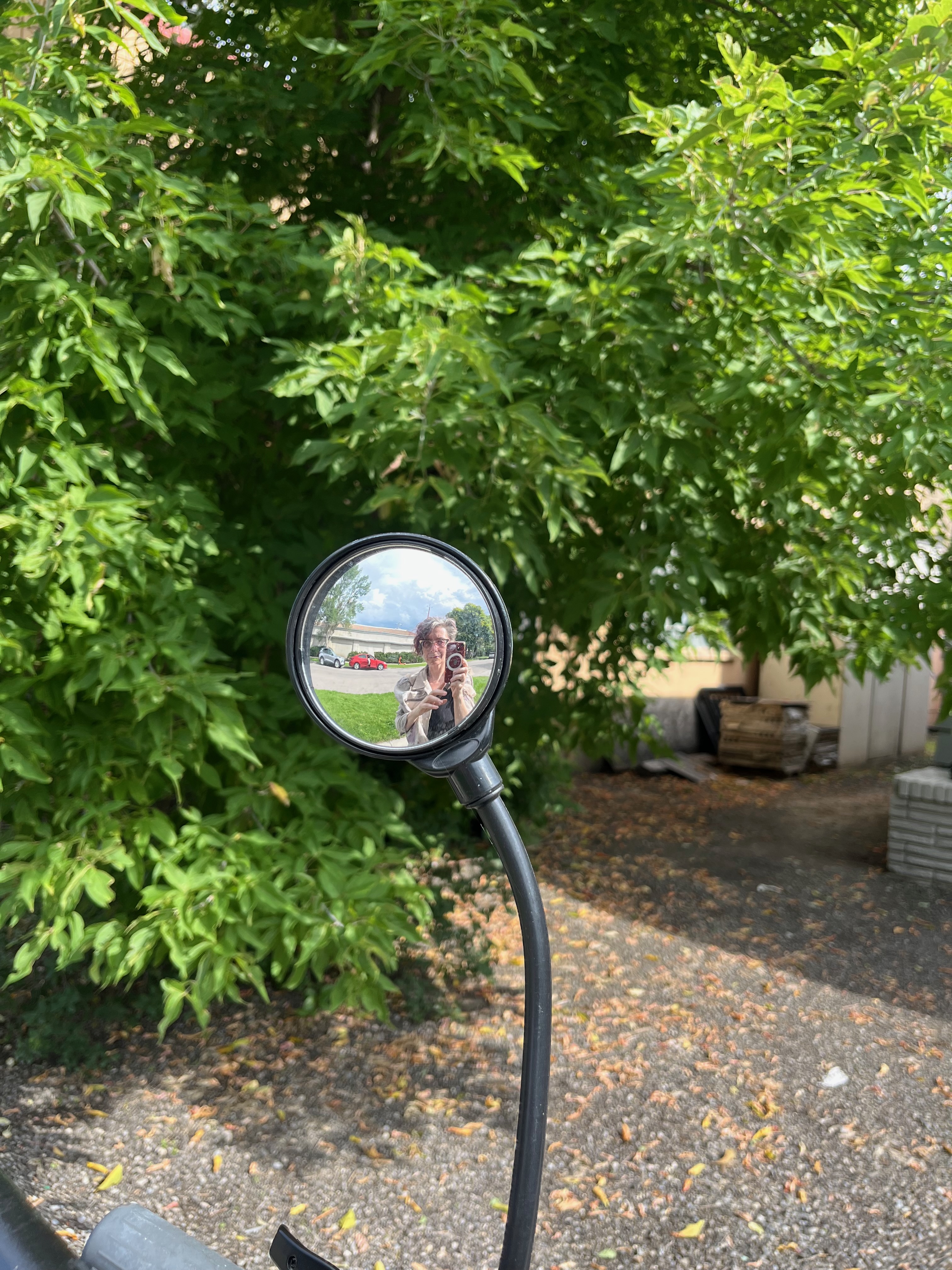
Wednesday

OMG so much work, why did I accept this 7:30 am meeting what was I thinking, it’s fine, it’s fine, I’m up and awake. I work from my lover’s house in the morning while he sleeps — it still feels, a little, like reconnection. I think with envy about the people who can pick up any connection, any relationship after a period of absence without effort. When I don’t see you, whether it’s for a few days or a few weeks—or few years—you fade, you get so far away, I forget how to be with you, I’m not sure if you are still there —if we are still there.

I look into the bedroom.

Still there.

Back to work, so much work.

Power Nap.

More work.

Tea and cookies with my sick love.

Tender goodbyes, but no kisses. 

Home via the local Somali butcher for some chicken.

So tired. Full work day but unfulfilled, I know why, I did not do any of my writing, will I be able to today, I can barely keep my eyes open.

Nap. Make food. Pick up sons.

Supper. Arbitration. The 15 year old and 23 year old do not get along super well these days. The 23 year old’s jokes don’t land well. The 15 year old’s moodiness likewise. And I’m a very bad referee.

The eldest walks to his dad’s, I drive the younger.

Back home, exhausted, I contemplate bath and bed.

But I haven’t written — for me — for two days.

I make tea and sheesha and pull out my notebooks and the laptop instead.

The writing isn’t good. But it is. For today, that’s enough.

Thursday

Up early enough to write, it will be a good day. And yes, the morning is magic — I slide from morning pages to creative writing to the first work task effortlessly and I’m brilliant, I feel brilliant, sharp, alive.

Mid-morning, I relocate to the office to keep on riding the wave — I do ok. I feel a crash coming and I ward it off with a coffee walk — but not coffee — with colleagues.

I check in with the youngest son to see if he wants to hang in the afternoon but he’s ditched me for friends and I’m relieved, to be honest — tired, so tired and I have plans in the evening.

I trudge home — so tired, you know that story about how if you’re feeling low energy you should go for a walk? Ha. No, you should nap, the walk takes forever, my legs are made of cement, my shoes are bowling balls and my head so so so heavy—and I’m asleep almost before I cross the threshold.

But I manage to make it to a (really bad) comedy night (like, really bad, has nobody told these children how to structure a bit? It’s really not that hard — jokes are hard and being funny is hard, but giving your performance the semblance of cohesion is so easy, I can teach you in 5 minutes, are you willing you learn?) with a cute girl, and feel like a functioning adult who goes out and does things after work and that feels good.

Oh, and do you remember, I wrote that morning? Yeah.

Friday

This is way too much work for a Friday, but I’m on it, I got it, I do all the things, I don’t drop anything. And I start the day with my own writing. I know this is, if not exactly the secret to a good day… ok, it’s like this: If I do my morning pages, I may or may not have a good day. It’s a crapshoot, you just don’t know what will come. But if I don’t do my morning pages, nothing feels right for the rest of the day and I ache.

Check in on sons. Uncoordinated schedules. I feed one at 5 and the other at 6. It’s all right, the one on one time with each is nice. 

After they’re gone, I try to tidy the house. Give up as the neglected middle child, living on her own in Vancouver, calls. Essay emergency. We talk themes, metaphors, narrative hacks. 

Torment the cats for a bit, then trudge up the hill to see my love.

He’s sick, I’m exhausted, we talk a bit and watch Buffy the Vampire Slayer in bed.

I sleep.

Saturday

Up early, man unconscious, woman restless. I pack up and tiptoe down the hill to my place, count the cats. Still three for a few more hours. I feel ungrounded, confused — stop.

Write.

Set up cute writing area on balcony. Decide to indulge with sheesha again (feel a bit guilty about it, because nicotine is a nasty drug but also, it’s been a rough week, and I’ve been caffeine and alcohol free for almost two years now, give me something to feel guilty about).

I sheesha. I write. I read.

Mid-day, I plan a picnic and capture the foster cats, return them to their people. There is much joy.

Then I picnic with my still sickly love at a park with a view. We eat, talk, read, nap (me), drink too much tea (me), need to find a place to pee in the bushes (again, me, also, seriously, what is it with the lack of public washroom facilities in this city, do you think I like peeing in the bushes? No. I would very much like to pee in a clean public restroom, thank you very much).

We pack up when the sun starts dipping behind the mountains and it gets chilly. My place first — check on the cat, unpack picnic leftovers, pack computer and clothes. Up the hill next.

I take a long bath while he putters. Then we parallel play: I read a Georgette Heyer murder mystery so clearly inspired by Agatha Christie’s The Murder of Roger Ackroyd that I know who did it from the first paragraph while he watches a show (ear buds in) and stitches his leatherwork project.

Still no kissing but we finally feel more real.

Sunday

I write.

I feel good.

I write some more.

xoxo

“Jane”
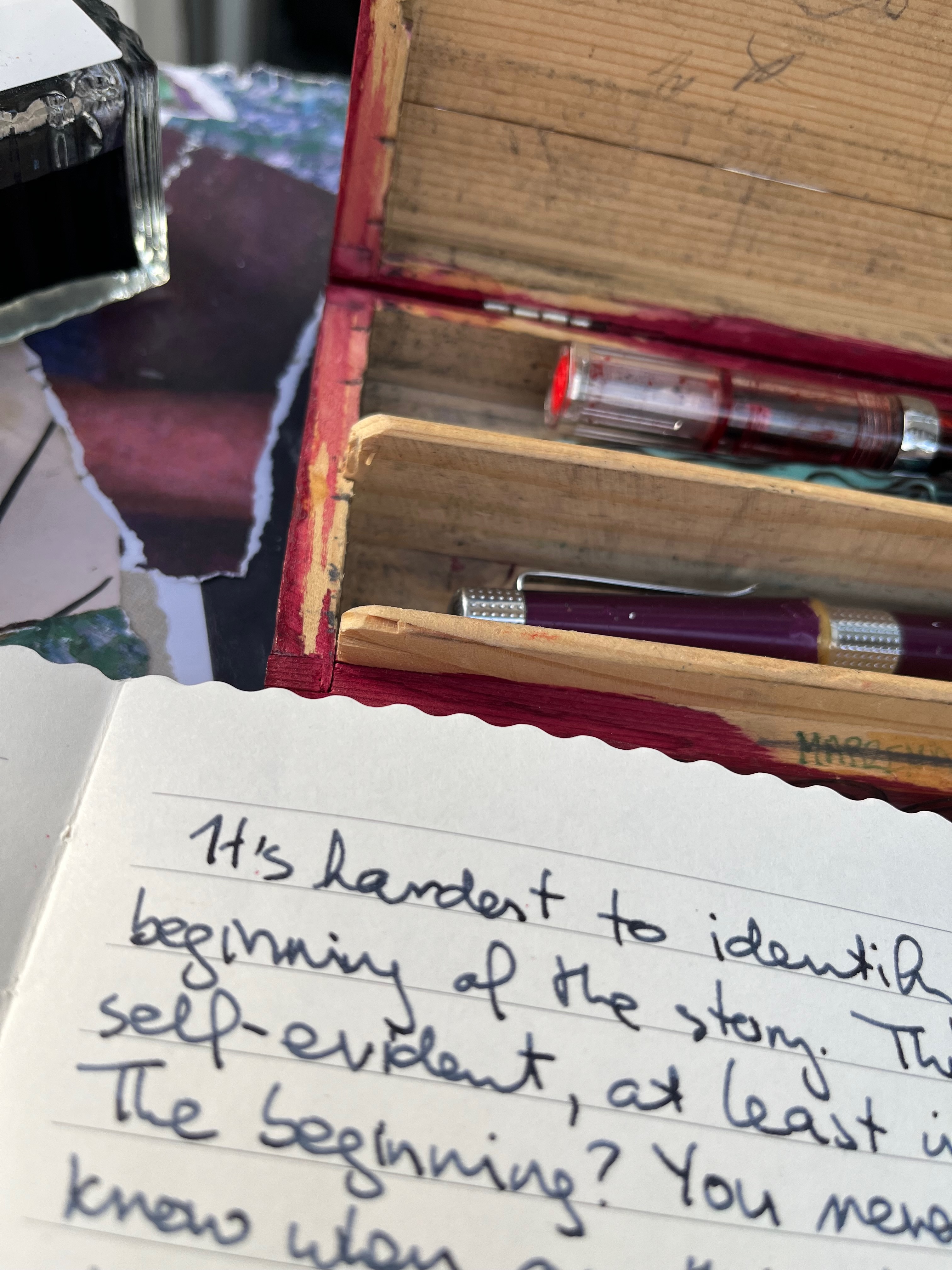
More drama, please

Have you ever noticed that the people who tell you “I’m not the type of person who…” are guaranteed to be the type of person who, precisely that?

And, the people who tell you, at every turn, “No drama, please!” and criticize friends, lovers, and strangers for bringing drama into their lives—they aren’t just drama magnets, but drama creators?

Weird.

But maybe not…

Let me be honest and contradictory: me, I like drama. I prefer Macbeth and Hamlet to As You Like It and Love’s Labour Lost. I’d rather watch murder mysteries than sit-coms. And I like life to be… well, interesting. If you bore me, I won’t hang out with you—or work for you—but neither will I create drama in our dynamic to spice things up.

I’ll just move on.

Drama creation is on my mind these days because a friend-acquaintance of mine seems to be particularly bored in her life right now and hell-bent on making it more interesting by manufacturing drama. I get it—a boring life is, well, boring. It does not use up enough psychic energy, and all that energy needs to go somewhere. If I felt entitled to give her advice, I’d suggest she take up knitting or woodworking, maybe Zumba, aerial yoga or karate—but making such suggestions would be officious and, really, neither her boredom nor her theatricals are any of my business. I can watch from the sidelines and be amused—or decide that the show is tedious and move on.

A friend who has known me since I’ve achieved sentience—for me, that happened at 17, not seven, I guess I was a late bloomer—fixates on, almost idolizes this aspect of my character, this ability to define a clear boundary and maintain it—to move on from relationships. He keeps on getting sucked in by manufactured drama and, inevitably, becomes not just compliant in the drama, but its active co-creator.

Jane: You can stop texting. You can hang up. Leave the room. Unfollow, unfriend, delete and block the contact.

Him: But I can’t!

And he really can’t. Weird thing: unlike me, he’d probably say he doesn’t really want life to be interesting. He’d prefer it to be, if not outright boring, then at least largely predictable. He’ll protest this assessment, I expect—no one likes to be tagged as wanting things to be stable. (But they don’t like drama! No drama, please!)

As I write and reflect, I think that perhaps I lie: yes, I want life to be interesting. But I also want large chunks of it to be predictable. Predictably interesting, is that a thing? I thrive on routines, and so do my kids—Laundry Monday, Tuesday night dancing, Wednesday night movies, Friday night rambling and tacos, Saturday morning Pilates (hey, that worked for a while, maybe I should bring that back), Sunday night board games. I want to have a rough road map for how my day, week, year will unfold—when most things are predictable and constant, the unexpected and the dramatic, be it good or bad, when it comes, shakes things up just enough. I can ride it, enjoy it, thrive on it too.

When everything is out of control—I’m looking at you, 2013, 2019, 2020—everything sucks, including drama.

Well past the halfway point for 2022, I feel I’m still rebuilding my anchors and routines, crafting the predictability that lets me enjoy chaos. It’s going well: I’m now creating some space for boredom—not to create drama in your life or mine, but in my head.

I tend to channel my thirst for drama, when it comes, into story. Rachel’s grandmother is dead, now it’s time to pick up the pieces—is this the fall that I finally write Noelle’s story, go back to Felicia Elizabeth Jay’s drama, is my life stable enough that I can engage in my favourite type of drama again?

Here’s some dialectics for you (mostly me): Each one of my novels to date was conceived and completed in chaos, against a back drop of severe unpredictability. The novel was the anchor—my writing practice the key thing that gave a semblance of stability to my life.

A lot of things are giving me stability right now. If I can accept that the chaos of the pandemic (if not the pandemic itself) has firmly retreated into the past, my life right now is the most predictable it has ever been. I’ve never had so much certainty, security.

Yes, this means I’m about to start manufacturing drama to make it more interesting.

Let’s hope that it stays on the page…

xoxo

“Jane”

A conversation, a reading assignment, a writing exercise, and a re-run #3

A conversation:

Sean: Hurry! I need to pee and the baby is grabbing the camera, the box of nails and my beer!
Jane: Where are you?
Sean: In the bathroom! Hurry!
Jane: Your camera, box of nails, and beer are in the bathroom?
Sean: Now is not the time to discuss the inappropriateness of me putting all these things in the bathroom sink. Just save my beer… and the camera. He can have the box of nails.

September 9, 2011

 A reading assignment that will change your life:

Vera Pavlova’s If There Is Something To Desire: 100 Poems.

for a shot of Vera to convince you to devour her beautiful book of poetry, check out this article she wrote for Poetry magazine: Heaven is not verbose: a Notebook.


A writing exercise to do instead of wishing you were writing:

This is my favourite Vera Pavlova poem:

I walk a tightrope,

a kid on each arm for balance.

This is all a poem can be, this is all a poem should be. Now. Write your own. Two lines. That’s all.


An explanation:

This is the third week of my 12-week unplugged AWOL (don’t tell my clients… um or too many of my friends 😉 ). No phones, no wifi… also, no winter! I’m going to be documenting things old school via journals and postcards (if you want a postcard from… well, that place where I’m hiding… email your snail mail address to nothingbythebook@gmail.com).

The blog’s on auto-pilot with a conversation from the archives, a reading recommendation, a writing assignment (cause I can’t nag any of you in person), and unsolicited advice… er, that is, a re-run post of the kind I don’t write very often anymore.

Enjoy.


A re-run:

In defence of routines

 (first published on September 21, 2011)

I wrote this essay in response to a long and heated thread called “Discipline for Young Children” on one of the yahoo groups I belong to. I’m not as active a participant in those discussions as I was when Cinder and Flora were little―partly because I no longer have napping kids, partly because I’ve become much more reluctant to offer advice, even when nominally asked for (because I’ve learnt most people don’t want advice and solutions: they just want to whinge, and get unconditional support for their whinging… but that’s food for another post), but mostly because I work and write for money so much more now than I did in those first years… and I’m kind of written out at the end of the day. But every once in a while, against my better judgement, I just can’t resist…
…I would like to offer a defence of―or the case for―rhythms and routines in an unschooled life, with young children and older ones too. [Another poster] wrote in one of her earlier posts “Whenever someone reaches for some additional form of external or arbitrary ‘structure’ I wonder, usually in my head, what is making them feel insecure this week and why they feel that will solve the problem…”

And I would like to answer that with, yes, actually, it can.

The stuff that you have a predictable routine/rhythm for―so long as it works for you in a positive way―is stuff you don’t have to expand energy thinking about and reacting to. (I’m reminded of The Big Bang Theory episode in which Sheldon uses gaming dice to make all non-essential decisions to leave his precious brain cells free to do the important work of “the mind.”)

My partner and I are both self-employed, random-deadline driven people engaged in creative, chaotic work. That injects a great deal of surprise, unpredictability and “must make this decision Now!” and “must upset any and all plans made to date and respond to this Crisis Now!” into our professional―and because we are self-employed and work from home and see our lives as intertwined etc.―personal lives.

The counterbalance or anchor if you prefer that word to that chaos is predictability and simplicity wherever it makes sense. And we didn’t arrive at that conclusion/practice overnight: it slowly evolved as we kept on adding children and responsibilities to the chaos.

So we have a morning routine, for example, that I stick to even when there’s a deadline fire burning under me and what I want to do the second I wake up is start pounding away at the keyboard. It’s a routine that honours the fact that 3/5 of the members of this family suck at mornings, and 2/5 are ridiculous early birds, and it includes things like me sitting on the couch with a book ignoring the kids while I drink my first―and hopefully second―cup of coffee and my eldest not speaking or looking at anyone for 45 minutes or so after he wakes up and playing his X-box or just lying on the couch with a blanket over his head. (A routine, see, doesn’t have to be about “doing” stuff. It can also be about safeguarding time to just “be.”) It also includes things like getting dressed, brushing hair, recorder practice, tossing a load of laundry in, making the big bed, and culminates with a morning walk with the dog. But its most important thing is―the time for three of us to just wake up and hang for a bit. (Two of us starting playing and doing stuff as soon as they wake up. The bums.)
This is what we do 9 out of 10 mornings. And it’s not something that anyone complains about as rigid, boring, limiting―it’s a guarded part of our day that, on that 1 out of 10 mornings where we have to miss it―where we have to get into the car first thing in the morning for example―makes us appreciate it all the more on the morrow when we return to it.

There are other anchors like that throughout the day and the week―I’m pretty protective of the last part of our evenings and bedtime, for example, so even though there’s no magic time by which everyone’s in bed or sleep, there sure is a rhythm to the last part of each evening. I have a built-in 3 p.m. tea break for me―that’s the magic time when I run out of steam and get cranky, so I plan for it: tea for me, snack for the kids, something to do (if just flopping on the couch to watch a DVD) so that I don’t become Evil Exhausted Mom (it took me six years to realize I consistently lost it at 3 p.m. Super-observant, I am.) We go swimming each Monday and Thursday―unless something else comes up, but that’s the “default” setting on each week, just as our girl’s music class mid-week is. But there was a time―when my eldest was four to six in particular―when the routines had to be perfectly predictable and inviolate, because that was what he needed at that time.

This last year, I’ve outsourced dinner to routines, a la Taco Tuesday, Slow Cooker Wednesday, Pizza Friday. (Also “What the Fuck’s for Dinner Thursday,” the day that reminds me to stick to the boring predictability of the rest of the week.) This is not my default setting: my default setting is―I’m getting hungry, what should we make for dinner, oh no, the fridge is empty, let’s go out―but this Taco Tuesday setting, although it makes me sound like the most boring person in the world, is better. It means we eat even when I’m on deadline, when my default setting is to not eat at all until the project is done―oh, crap, you mean you kids need to eat?

There are personalities, families, life cycles and individuals who don’t need any of this and don’t thrive on it. For sure. But there are very unschooled families who do. And hyper-organized people who need strict routines to have something to deviate from. And hyper-unorganized people who need some kind of even aspirational guideline to be fly-by-the-seat of-their-pants with.

I’m not sure which one I am, or my family is: we’re five individuals with very different personalities. But I do know that routines/rhythms/anchors―whatever you want to call them if the word schedule gives you the willies―make our family life more peaceful, our work life possible. Most of our days have plenty of spontaneity, go with the flow, live in the moment kinda stuff―too much, I would argue, on the days when work throws me a really unexpected curveball.

Does Slow Cooker Wednesday and 3 p.m. tea mean the baby getting sick, the washing machine flooding the basement, the 9 y o breaking an arm doesn’t throw us into chaos? Of course it doesn’t. But Slow Cooker Wednesday does mean we eat a good supper on Wednesday even if we spent most of the day at the ER (unless of course the broken arm happened before the chicken went into the slow cooker) or mopping up the basement and calling plumbers (see previous caveat).

Making my and my eldest’s morning incapacitation part of our morning routine respects our biological clocks and sets the stage for a good day―and it keeps me from unproductive feelings of guilt over being unproductive in the mornings. And that 3 p.m. tea break I give myself? I don’t like being Evil Exhausted Mommy. And it takes such a small act and such a small amount of planning to keep that from happening.

End of pro-routine pontification.

The Family that eats together, or “Help! I can’t make my kids stay sitting at the table through the meal”

English: The end of dinner

Question: What is that that you’re trying to achieve with “family” dinners?

I don’t make my kids stay at the table until everyone’s finished eating. Never have. Rarely will, even with the elder two. But guess what? Now that they’re 10 and coming up on 8, they’ll often―usually―choose to stay at the table through the meal. Even when it’s one of those festive family meals that drags on together.

On “regular” days, although we almost always eat at home, we don’t always eat dinner together as a family. And here’s why.

When your purpose is to create a time that’s special, shared and valued–a time, place and space where the family comes together and builds itself, strengthens itself–how can that possibly occur when that togetherness is enforced and participated in unwillingly? The “family that eats together” myth is so ingrained in our culture — the picture of the family sitting down to dinner together such a sacred cow — a lot of us don’t really think critically about what it is that we are trying to achieve — and how we may be subverting our actual goals by the “we’re all eating dinner together goddammit” action.

There are so many other ways to come together over food if a ritual meal time is something you’re after:

Picnics.
Tea parties.
Dessert.
Appetizers.
4 o’clock tea
8 o’clock snack.

It doesn’t have to be dinner. In fact, depending on the ages of your children and the work schedules of the adults, dinner may be the worst possible time for a ritualized get-together: too late for the children, too much in the middle of too many other things for the adult who’s come home from work and needs to rush off to a meeting…

It may be so much more pleasant for everyone involved if young children eat their meal (meals) an hour or two before the parents eat their dinner – and then everyone can come back to the table or kitchen for drinks, dessert, cleaning, the post-dinner game, whatever. Or get the togetherness you’re shooting for from cuddling together on the couch, wrestling on the carpet, going for a walk, going swimming―at another time of the day. After dinner. On the weekend. Before bedtime.

The ritual power of the joint meal is huge, I get that, totally–the most important events in my calendar are our community potlucks, family dinners and food celebrations with friends–but their strength comes from voluntary, joyful participation.

I know from the example of my elder two children that my toddler will one day happily join us at the family dinner table for a prolonged meal. But it probably won’t be this year. Or next year. And that’s okay. He’s learning the power of ritual and community and family even as he runs laps around the dinner table―or eats two hours before us, and is asleep by the time we have our meal.

What do you think? Do you eat together as a family? Is that important to you? Does it work for you? If it does―how do you make it work? If it doesn’t… why do you keep on doing it?

MOST POPULAR POSTS

My current favourite: The Authoritative New Parents’ Guide to Sex After Children (of course)

SeriousWhen toddlers attack (surviving “That Hitting Things”) • Searching for strategies for Sensitive Seven • Five is hard: can you attachment parent an older child • It’s not about balance: Creating your family’s harmony • 10 habits for a happy home from the house of chaos and permissiveness • The ultimate secret behind parenting: it’s evolution, baby

FunnyFloor peas • The rarest song of all • Sarcasm, lawn darts, and toilets  • What humanitarian really means  • The sacrifices mothers make for their children (Warning: grossness factor uber-high)  • It’s all about presentation  • Anatomy talk, now and forever  • Want to hear all the swear words I know?  • Of the apocalypse, euphemisms and (un)potty training  • Mom? Have you noticed I’ve stopped…  • Poisonous Volvo

And remember, we have a new spin-off blog focused on homeschooling: Undogmatic Unschoolers.

“What’s Bedtime?”

Or, why you should probably never listen to anything I say about bedtime routines and sleep

Flora to me, after reading Madeline and the Gypsies: “Mom, did you know that some children have to go to bed at the same time every single night? How weird is that?”

Madeline and the Gypsies

Madeline and the Gypsies (Photo credit: brianfling)

From Life’s Archives, September 18, 2009… but it could have been said yesterday

Need A New Bedtime Routine?

This is a slight reworking of a response post to a good friend of mine whose bedtime routine had just gone sideways. You’re reading a 1/10th of the conversation here, for which I apologize, but the remaining 9/10ths are not mine to repost:

…Keep this in mind about routines, bedtime and otherwise: humans (even those of us who think we’re uber-spontaneous) are habitual creatures, and we form bad habits and bad routines just as we do good ones (and faster too). So at certain ages and stages it doesn’t take much for a couple of out-of-whack nights to push us into a bad routine–the whole bath-pjs-book-sleep to be turned into bath-pjs-book, book, book, whine, run around, complain, have a meltdown sleep –and then do it again the next night, because this is what I do every night, right?

Every few months, I find myself in this situation still with one or all three of mine, and need to press the reset button! But I find that before returning to the positive routine–or building a new one–I need to get into a “throw everything out and surrender” for a few nights, and not do any of the things I’d usually do (or want to do in the new bedtime routine). Does that make sense?

These days, I find the mistake I’m making with bedtime for the kids is that my head gets into bedtime space as soon as the freakin’ sun sets, and I start the whole thing too early.

…I should ‘fess up that one of us still stays in the room with the kids until they fall asleep. But we have a “disengage.” So a really long reading session is part of our bedtime. I mean long. I’ve read for two hours at bedtime (critical part of the homeschooling plan, frankly) for the older two these days, cause during the day, they don’t sit and snuggle on the couch with me as often as they used to.) And then, I’m done–or Sean’s done–and I read my book quietly. Or work on the laptop.

Our kids like lights on to fall asleep, so that’s feasible. If you need to do it in the dark–disengage with i-Pod headphones on and listen to a book on tape or something. And they drift off to sleep, and I get “me time” and “sitting on my butt time” (my favourite these days!) all at the same time.

Settling Into Fall

I’m in bit of shock that it’s not just the second half of October, it’s the last third of October.

We’ve ended up with pretty minimalist external demands—Orff music for Flora once a week, Tang Soo Do for Cinder twice a week, and they both have just started drama for 8 weeks at Evergreen. And it’s been my deadline lax time of year—about to turn into deadline hell, but I have another week of grace, I think—and still, I don’t think I’ve ever felt time pass so quickly.

Perhaps it’s the gorgeous weather? We’ve been able to be outside so much of September and October.

Our Learning Plan, in which I for the first time ever dared to make some more solid predictions, was out the window
the day I sent it off to the School Board. We briefly left Ancient Greece for Venice with The Thief Lord, but are now back into the realm of the Greek gods—as they morph into Roman ones—courtesy of Rick Riordan’s The Lost HeroBunnicula‘s made a brief reappearance, primarily in early reader form—if there are other fans of the vampire bunny out there, there’s a new series of mini-chapter books James Howe has been writing called Tales from the House of Bunnicula. They’re both fun read alouds and manageable read alones for a Flora (not a Cinder), so we’ve been enjoying those. And back to the Horrible Science mags. Another new thing: Life of Fred the elementary series—this very oddball approach to math through story. Flora loves it; she devoured the first volume, Apples, in a handful of days, and now we’re more slowly reading through Butterflies. (Cinder’s a passive participant; the math is way easy for him, but I think he enjoys some of the silliness.)

I’ve mostly been focusing on creating good morning and meal routines—with various levels of success. We’ve been getting out to walk the dog en mass first thing in the morning (our definition of first thing in the morning: at the crack of anywhere between 9:30 and 11 a.m.), and I’ve been doing the Taco Tuesday/Pizza Friday meal schedule thing pretty consistently. I think I need to do the same thing to lunch. 🙂 Them kids, they just won’t stop eating!

What’s your fall looking like so far? [originally a yahoo group post]

In Defence of Routines

I wrote this essay in response to a long and heated thread called “Discipline for Young Children” on one of the yahoo groups I belong to. I’m not as active a participant in those discussions as I was when Cinder and Flora were little―partly because I no longer have napping kids, partly because I’ve become much more reluctant to offer advice, even when nominally asked for (because I’ve learnt most people don’t want advice and solutions: they just want to whinge, and get unconditional support for their whinging… but that’s food for another post), but mostly because I work and write for money so much more now than I did in those first years… and I’m kind of written out at the end of the day. But every once in a while, against my better judgement, I just can’t resist…

…I would like to offer a defence of―or the case for―rhythms and routines in an unschooled life, with young children and older ones too. [Another poster] wrote in one of her earlier posts “Whenever someone reaches for some additional form of external or arbitrary ‘structure’ I wonder, usually in my head, what is making them feel insecure this week and why they feel that will solve the problem…”

And I would like to answer that with, yes, actually, it can.

The stuff that you have a predictable routine/rhythm for―so long as it works for you in a positive way―is stuff you don’t have to expand energy thinking about and reacting to. (I’m reminded of The Big Bang Theory episode in which Sheldon uses gaming dice to make all non-essential decisions to leave his precious brain cells free to do the important work of “the mind.”)

My partner and I are both self-employed, random-deadline driven people engaged in creative, chaotic work. That injects a great deal of surprise, unpredictability and “must make this decision Now!” and “must upset any and all plans made to date and respond to this Crisis Now!” into our professional―and because we are self-employed and work from home and see our lives as intertwined etc.―personal lives.

The counterbalance or anchor if you prefer that word to that chaos is predictability and simplicity wherever it makes sense. And we didn’t arrive at that conclusion/practice overnight: it slowly evolved as we kept on adding children and responsibilities to the chaos.

So we have a morning routine, for example, that I stick to even when there’s a deadline fire burning under me and what I want to do the second I wake up is start pounding away at the keyboard. It’s a routine that honours the fact that 3/5 of the members of this family suck at mornings, and 2/5 are ridiculous early birds, and it includes things like me sitting on the couch with a book ignoring the kids while I drink my first―and hopefully second―cup of coffee and my eldest not speaking or looking at anyone for 45 minutes or so after he wakes up and playing his X-box or just lying on the couch with a blanket over his head. (A routine, see, doesn’t have to be about “doing” stuff. It can also be about safeguarding time to just “be.”) It also includes things like getting dressed, brushing hair, recorder practice, tossing a load of laundry in, making the big bed, and culminates with a morning walk with the dog. But its most important thing is―the time for three of us to just wake up and hang for a bit. (Two of us starting playing and doing stuff as soon as they wake up. The bums.)

This is what we do 9 out of 10 mornings. And it’s not something that anyone complains about as rigid, boring, limiting―it’s a guarded part of our day that, on that 1 out of 10 mornings where we have to miss it―where we have to get into the car first thing in the morning for example―makes us appreciate it all the more on the morrow when we return to it.

There are other anchors like that throughout the day and the week―I’m pretty protective of the last part of our evenings and bedtime, for example, so even though there’s no magic time by which everyone’s in bed or sleep, there sure is a rhythm to the last part of each evening. I have a built-in 3 p.m. tea break for me―that’s the magic time when I run out of steam and get cranky, so I plan for it: tea for me, snack for the kids, something to do (if just flopping on the couch to watch a DVD) so that I don’t become Evil Exhausted Mom (it took me six years to realize I consistently lost it at 3 p.m. Super-observant, I am.) We go swimming each Monday and Thursday―unless something else comes up, but that’s the “default” setting on each week, just as our girl’s music class mid-week is. But there was a time―when my eldest was four to six in particular―when the routines had to be perfectly predictable and inviolate, because that was what he needed at that time.

This last year, I’ve outsourced dinner to routines, a la Taco Tuesday, Slow Cooker Wednesday, Pizza Friday. (Also “What the Fuck’s for Dinner Thursday,” the day that reminds me to stick to the boring predictability of the rest of the week.) This is not my default setting: my default setting is―I’m getting hungry, what should we make for dinner, oh no, the fridge is empty, let’s go out―but this Taco Tuesday setting, although it makes me sound like the most boring person in the world, is better. It means we eat even when I’m on deadline, when my default setting is to not eat at all until the project is done―oh, crap, you mean you kids need to eat?

There are personalities, families, life cycles and individuals who don’t need any of this and don’t thrive on it. For sure. But there are very unschooled families who do. And hyper-organized people who need strict routines to have something to deviate from. And hyper-unorganized people who need some kind of even aspirational guideline to be fly-by-the-seat of-their-pants with.

I’m not sure which one I am, or my family is: we’re five individuals with very different personalities. But I do know that routines/rhythms/anchors―whatever you want to call them if the word schedule gives you the willies―make our family life more peaceful, our work life possible. Most of our days have plenty of spontaneity, go with the flow, live in the moment kinda stuff―too much, I would argue, on the days when work throws me a really unexpected curveball.

Does Slow Cooker Wednesday and 3 p.m. tea mean the baby getting sick, the washing machine flooding the basement, the 9 y o breaking an arm doesn’t throw us into chaos? Of course it doesn’t. But Slow Cooker Wednesday does mean we eat a good supper on Wednesday even if we spent most of the day at the ER (unless of course the broken arm happened before the chicken went into the slow cooker) or mopping up the basement and calling plumbers (see previous caveat).

Making my and my eldest’s morning incapacitation part of our morning routine respects our biological clocks and sets the stage for a good day―and it keeps me from unproductive feelings of guilt over being unproductive in the mornings. And that 3 p.m. tea break I give myself? I don’t like being Evil Exhausted Mommy. And it takes such a small act and such a small amount of planning to keep that from happening.

End of pro-routine pontification.