But what if I don’t want to be a brand?

1

I’m a human, a mother and a writer. Roughly in that order, I think, because one must be human first, right? If we all agreed on that, we’d have world peace and all that. But whatever. Maybe you’re not a human first. Maybe your first label is narrower — you’re an American or a yoga instructor. Maybe it’s broader — you’re a primate, a vertebrate, an animal. I don’t want to pick a fight about this, ok? You’re what you are, and you need to be you. Me, I’m a human. A mother. A writer.

I am not a brand, and I’d really, really appreciate it if you’d stop pressuring me to be one.

Yes, you. All of you. Ok, maybe there’s a Buddhist monk in Tibet somewhere — or a psychonaut on Hornsby Island — who’s not on that wagon. (Of course, there are Buddhist monks with brands too; just google Thich Nhat Hanh or Sylvia Boorstein.)

But most of you? (Ok, I exaggerate, fine, not the whole entire world. But everyone in my professional and creative circles You know who, what I’m talking about.) You want me to be a brand.

I don’t wanna.

I really, really don’t.

I just want to be… a human. One who writes and makes and creates and laughs and cries and dances and stumbles, occasionally falls, sleeps and wakes up, lives and eventually dies.

And I want that to be enough.

Why isn’t it?

2

The new year is all about beginnings and endings and that’s dangerous. Reflections, too and that’s worse. It’s very, very dangerous to reflect and navel-gaze during winter’s dark. Right? Do not, do not make major life decisions at Winter Solstice. Or as of January 1, no matter how tempting that is. Wait for the Equinox, wait for spring.

When you have to wake up before sunrise, when the sun disappears before you wrap your day job… yeah. Bad time for making decisions. Hit pause. Wait until you feel the sun on your face in March.

3

Question: Was being human always hard? When, exactly, did we invent existential angst? Is there a gene for it? If yes, could I have it removed?

I realize that was four questions. Whatever.

Her: You know, there are drugs for this.

Jane: I know. I choose to experience the dark unmedicated. It’s part of the deal between the Super Ego and the Id. 

Her: For someone who repeatedly curses Freud’s outmoded theories, you sure reference him a lot.

Jane: Just because he was wrong about everything doesn’t meant mean the man didn’t spin an effective story.

4

Human, mother, writer.

Not a brand.

Enough as I am,

Even on the bad days.

There’s great freedom in utter insignificance. Right?

5

Sidenote: I’ve written some really funny stuff in the dark.

6

Her: I get what you were trying to do with the juxtaposition of these two topics in this post but I don’t think it’s working.

Jane: But it’s on brand.

xoxo

“Jane”

But see, we’re all doing it all for the first time…

1

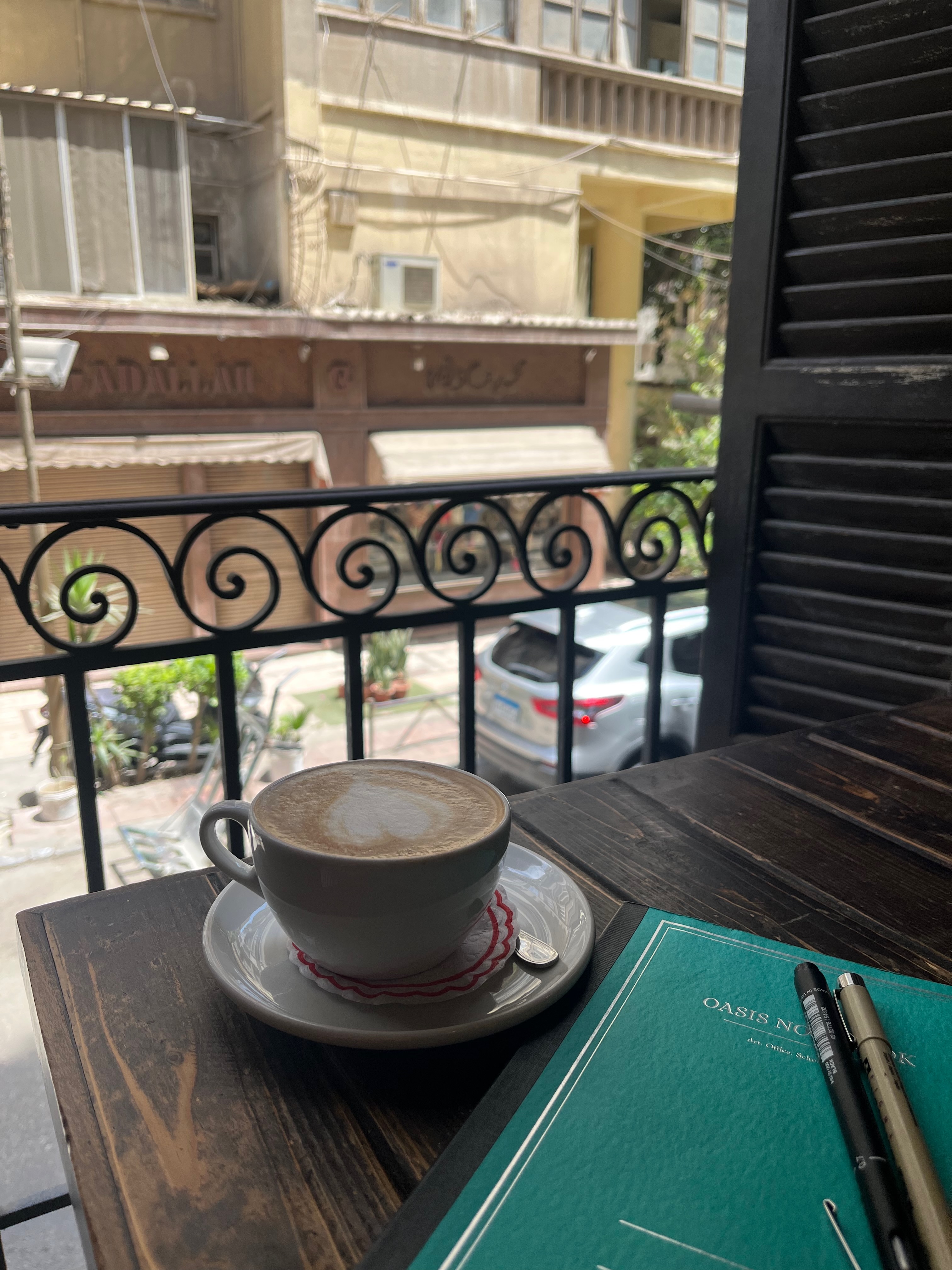
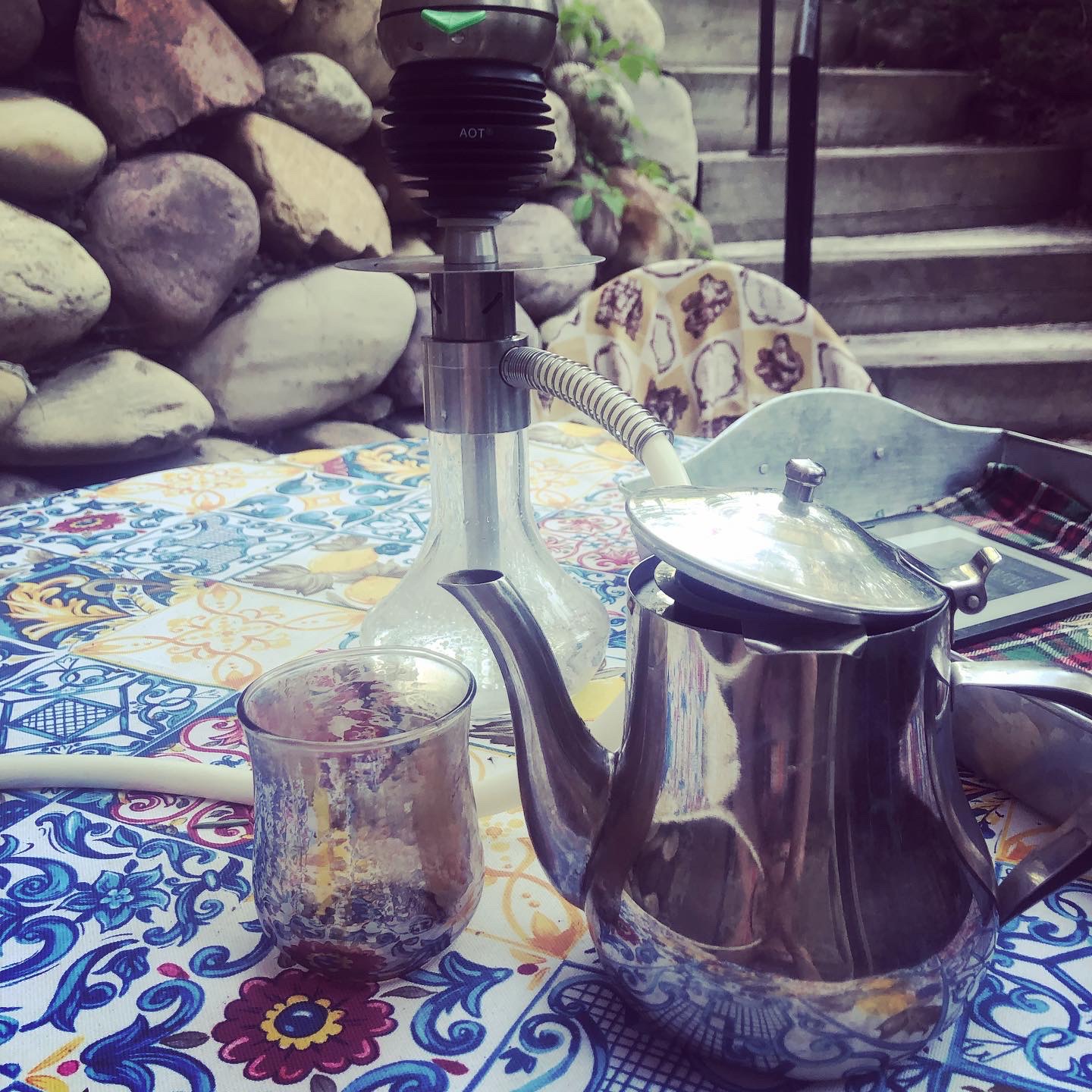
Today’s view: a sun-baked Cairo street, which I’m observing from a shady, cool Cairo cafe. I’m drinking Turkish coffee and smoking double apple sheesha as payment for electricity and wifi. The mid-day prayer is on the radio in the background. One of the waiters refreshes my coals, the other unobtrusively prays. The hostess leans against the front door, scrolling through Instagram.

Me, I’m writing, very much at peace, resting after a morning adventure of roaming the back streets of Mohandessin — the neighbourhood where I’m staying — and getting thoroughly lost — then found — in its slanted gird.

I won’t lie — I experienced a flash of panic at one point after my phone died, but oh, the exhilaration when I finally recognized a landmark and found my way back… Not quite as intense as the exhilaration that followed surviving the Blue Hole, but pretty close.

2

Last night, overwhelmed and overstimulated — Cairo is a lot — I open Instagram myself and get lost for a while in friends’ stories and strangers’ reels. The Instagram algorithm is confused or malfunctioning and throws me into Get Z/ young Millennial dating angst.

Get X dating angst exists, of course, but it must be different: We’re older, after all, and we remember (maybe) how to meet people offline and differentiate better between online and IRL. Also, those of us who were looking for the one true love, marriage and children have already done it and we’re now either unhappily married or happily divorced and in a very different place than a twenty-something looking for the one (or to increase their body count) (both laudable goals; no judgement here for either choice).

But maybe not — what do I know. Maybe it’s just me and my crowd and the rest of Gen X is as whiny as these Gen Z influencers. In any event, for me, my own angst at 50 is all professional and creative. As far as my heart goes, I’m at peace. And I really enjoyed dating in my 40s — enjoy it still in my 50s (that still feels so weird, btw, that I’m now in my 50s, how did that happen?).

And from this smug standpoint, I look at the Gen Z and Millennial dating angst — and advice — with amusement and compassion.

3

The Instagram algorithm throws mostly straight cis Gen Z men (I’m trying not to call them boys — they so desperately want to be men) into my feed. It’s not entirely broken so I’m ending seeing mostly dudes who a) are getting laid regularly (Congratulations!) and b) want to unpack toxic masculinity. The enthusiasm with which they offer advice to to other men and to women is… adorable. Yeah, I can’t think of a better word. Adorable.

(But also — is men giving dating advice to women mansplaining? Cause I sort of think it is…)

(But also — why is Instagram not showing me any women giving men dating advice? Cause I know it must be out there.)

(And also… why am I still doom scrolling Instagram? I’m in Egypt. I should be doing Egyptian things. Or Egyptians.)

Their advice to women, btw, boils down to, “Don’t date assholes.”

Their advice to men is, basically, don’t be an asshole.

4

Here’s some unsolicited dating advice from a queer Gen X women with no agenda: Think of dating as both exploring and building on existing connections. Date your friends. Meet your friends’ friends and families. Date your children — by which I mean, put as much effort and creativity into your plans and relationships with them as you would to a new romantic love. Do fun things with fun people, even if you don’t know them very well. Invite people to your home for coffee, for dinner, brunch, movie nights. Meet for work or reading dates in cafes. Go to art galleries and thrift shops as a group of friends.

Invite the strangers you’d like to get to know better to hang out with you and your friends.

Take the pressure off, you know? There’s no stress, no end-game, no agenda. Do fun things with fun people — build community in the process.

There doesn’t have to be an agenda.

There is no end game.

5

During my 2.5 weeks in Egypt, I meet many people, have lovely experiences and stay celibate.

This surprises me at first, because a) I’m very slutty, b) Egyptians are beautiful, and c) I’m here during my bad decision week (i.e., I’m ovulating). But I’m never tempted to escalate things and on reflection, it makes sense. I’m in a constant state of low-grade anxiety and hyper vigilance because everything is new, different, often overwhelming. As a result, my sex drive is suppressed. 

It’s not that I don’t feel safe — but there’s too much to navigate for me to feel sufficiently comfortable to want to get naked with a stranger.

Is that what’s happening with Gen Z? Too much to navigate all the time?

Maybe.

Back home in the wee hours of each morning (Egypt does not sleep), I check in on my kids, debrief with my partner, send photos to my loves and friends.

I feel at peace.

But I’ve already told you that.

6

Aging is weird.

It’s weird in an even more profound way that motherhood is weird.

Think about it — aging.

It’s inevitable.

Everyone gets older, more experienced — more physically fragile — eventually dead.

Everyone who’s older than you has been your age once. 

Everyone gets older.

But for each of us, every year, every stage — every day — is new.

This is the first time that I’ve been here, that I’ve been this me. Almost 51. (Or, as my daughter would frame it, basically dead.)

In a bizarre way — I’m new to me.

Isn’t that kind of weird?

I t feels weird.

Not bad.

Just, you know… new.

7

I finish my coffee, sheesha and writing. Grounded in myself and solitude, I get ready for the afternoon and night’s adventures.

I’m so grateful — for this experience.

For self-awareness. For Loops and low prescription glasses. For this feeling of piece in the midst of chaos.

And I wish I could tell the Gen Zs that it will come to them too, with time, with experience — when they take the pressure off — and they don’t have to go to Cairo to get it (but hey, if the Nile, the desert and the pyramids call you, you should definitely come visit).

Of course, they won’t believe me.

Because they’re doing it all for the first time.

xoxo

“Jane”
What would a cavewoman do?

i

I feel about modern self-help cults much the way I feel about the patriarchy. I’ve written extensively about how I don’t want to be a better person. I’m not going to floss more and drink less coffee (although I do keep an eye on the wine intake), and while I might exercise more, I’ll always do it resentfully, and… well. There it is.

None of this is to say that I’m perfect. Or that I accept myself as is. I irritate and disappoint myself continually. I wish was kinder. More patient. Thinner, fitter, all the things my Instagram feed tells me I should be. I am not immune to those social pressures.

Just, as I’ve gotten older, I’ve increasingly come to terms with my innate… laziness? Wiring? Whatever you want to call it, it boils down to this: I don’t want to put my limited energy into making myself a work of art.

I’d rather put it into making works of art.

And, loving my children.

ii

Question from a former lover who never understood me: Everything in your life and its quality remained the same but you didn’t have children. Would you choose that option?

Answer: Never.

Also, the fact that you’re asking that question is one of the reasons, maybe the reason, I don’t love you anymore.

You never understood how important my children are to me. How they shape my work, how they fuel me, transform me – drive me. How they are an inseparable part of me – three living, independent beings that exist outside of me but whose every pain and joy I feel in my own flesh.

I could not love as I do, live as I do, write as I do if not for the joy and pain (there is a lot of pain, I won’t lie) my children bring. So the “Everything in your life and its quality remained the same but you didn’t have children” statement is not possible. The question is something only a psychopath would ask.

Right, I forgot. You are a psychopath.

(I knew he was a psychopath when I loved him – I probably loved him because he was a psychopath, but that’s another story.)

I don’t tell him all of that, by the way.

I just say, “Never,” and move on.

iii

My good friend, who works on herself a lot, often says, “I work on myself so that I can be a better mother.” I never say anything in response – just make supportive sounds – but the phrase always bothers me.

Being a mother is… well, it just is, right? I try my best, every day. Sometimes, I fail, spectacularly. Sometimes, I’m amazing.

Sometimes – like that day, ugh – I’m barely adequate. Not even adequate. Sub-par.

On those days, I wish I was a cavewoman and that doing my best meant not letting the children get eaten by the neighbourhood tiger. 

That must have been very high stress, high stakes, of course, but also, very clear: Woo-hoo, child alive! Good job! Fuck, child mauled and devoured. I fucked up and  have increased my chances of becoming an evolutionary dead-end.

I don’t suppose a cavewoman ever said, “I work on myself so that I can keep my children from getting eaten by a tiger.”

She just, you know. Did her best to keep her kids alive.

iv

Recently, though, I have been thinking that I should, perhaps, exert a little more effort on Project “Be a better person.”

Peri-menopause is coming, is possibly here, and the happy “I’ll adjust and love you no matter what” hormones are leaving and the “Smash all the things!” hormones are spiking. I suppose I could take drugs to balance them out, but, to be honest, I want to see what the “Smash all the things!” hormones do to my work (and the patriarchy). 

It could be amazing.

So, no drugs. But also, no temper tantrums – not with the kids, not at work. (But in the work, maybe. Things need to be smashed.)

Instead, what? Meditation? Actively working to be a better person?

Maybe. I’m thinking about it.

Or, you know. I might just yell at the tigers.

What would a cavewoman do?

Xoxo

“Jane”
PS Alas, most cavewomen were dead before menopause hit, so this last question does not arise. 😉

Project “The Rest of My Life is More Important Than Work” begins today

So the therapist I’m working with now – wait, before I tell you that, a caveat – the therapist I’m working with now exists only in my imagination, because the last one was so bad. But that’s ok. I have a fecund imagination and I’m a Gemini: magicking up a virtual therapist who disagrees with everything I say, believe and want to do is not hard.

With that caveat – the therapist I’m working with right now (in my imagination), unmindful of the reasons for which I’ve fired the last one, says that I’ll be much happier, fulfilled and healthier if I care less about my work.

And I might actually be ready to listen to her.

The last two years have been the first time in more than twenty years that I’ve had a job-job – applying my skills on behalf of one employer, for a salary, instead of, with every gig, article, script, book, building my brand(s) and business.

The difference between the two pursuits is immense. After two years of the job-job, while I value the stability and security of that biweekly paycheque (people, it’s amazing, it appears in my bank account like clockwork, and I never have to remind, plead, cajole or threaten legal action to get it), I’m starting to realize that giving my all to it, the way I did to the “I’m working for me” job, is not serving me.

When you’re engaged in creative work and when you’re basically your own employer and sole shareholder, the separation between work and life is blurred at best – impossible to achieve on the most meaningful projects. And not necessarily desirable. Some of the best work I’ve produced has been the result of personal passion, fueled by the demands of daily life. The process was arduous, but the end result, worth it, so worth it.

I was still in that place, trying to find ways to keep that fire going in the face of Flora’s illness and other pressures, when my (real-life, now fired) therapist suggested that perhaps the solution to my struggle was caring less about my work.

I fired her, stopped going to therapy and kept on caring, passionately, about every word, sentence, paragraph, project, initiative.

Today?

I’m very, very tired, and as my imaginary therapist echoes her words, I pause and ponder. Bringing that same level of passion and dedication to a Monday-to-Friday, 9 a.m. to 5 p.m. (Eastern Time) salaried job, in which I have limited (zero) control over and, most of the time, inadequate knowledge of, the strategic vision of not-my-business? Recipe for angst, stress and unhappiness.

The cure, unfortunately, is probably that elusive Buddhist detachment: I do my best – for 35 hours a week – and I let go of the outcome. And I expand zero energy thinking, “OMG, I could do much better work if,if, if  [long list of things outside my control].”

So suggests my imaginary therapist.

She’s not saying work is an illusion (although sometimes, me, I do think work is an illusion). Her point is that all my pain points related to the job-job will disappear as soon as I stop caring so much…

And, dammit, she’s probably right.

Except, of course… passion is the secret sauce. Technique makes you competent. Passion makes you extraordinary.

Therapist: You’re sabotaging yourself. Again.

Jane: You’re fired.

Yes, you can fire your imaginary therapist. Her replacement sits down beside me.

Imaginary therapist 2: Where were we?

Jane: I want to bring my all to my work, and not be stressed about things outside of my control, and to definitely not bring that stress into my non-work life and, also, to have all the time – chronological and emotional – for my kids, my loves, my friends, my writing and dancing.

Imaginary therapist 2: Have you tried meditation? Or medication?

So she’s fired.

And I’m on my own again.

Still. Project The Rest of My Life is More Important Than Work begins today – as does a search for a new therapist. Perhaps a flesh and blood one this time, but no promises on that. I don’t need a therapist to tell me to meditate, take baths and walks, and smell the roses.

I need one that will help me dismantle the structure and conventions of today’s workplace while still collecting a biweekly paycheque.

In the meantime… I’m going to not work on Tuesday afternoon so that I can go to my youngest son’s year-end celebration at school and I’m not going to feel guilty about it.

Baby steps people, baby steps.

xoxo

“Jane”

Happy 2023: Here’s to NOT becoming a better person, again

i

Happy New Year, and belatedly, Happy Solstice, Happy Yalda and also, merry three days until Christmas Eve – I wrote the first draft of this post on December 21, while I was still busy dying, but when it started to look as though I would live and I would not have to spend Christmas in isolation.

The bad news, of course, is that I’m two weeks behind on life during what we’ve managed to turn into the busiest and most stressful time of the year

The good news is that I don’t care.

The neutral news – the news that I’m not sure is good or bad, but which has acquired consciousness and insists that I recognize its potential significance – is that I ran out of coffee a day or two into my incapacitation, and I was too sick to do anything about it. Didn’t matter, anyway, my main beverage was NeoCitron.

So my First World dilemma as I recover: the illness enforce a caffeine – and alcohol – cleanse of sorts. Do I keep on riding that horse or do I celebrate my return to the land of the living with an espresso and a glass of Cab Franc?

I hate, tbh, that this question is even occupying brain space in me. I don’t drink coffee morning to night. I don’t think it affects my sleep, my energy levels or my behaviour. I just really enjoy my coffee. I love making it, smelling it, tasting it. It’s glorious. (See “But I love it” https://nothingbythebook.com/2017/10/16/but-i-love-it/

Wine and its variants are a bit more complicated. There are signs that alcohol adversely affects my sleep, and even a drink or two makes me more sluggish in the morning. But I don’t drink a bottle of wine a day – or even a week. And  if I choose to indulge with the grape on a Saturday night with friends and am willing to pay the price of a mild hangover for a couple of glasses of wine… why do I feel as though I should work towards eliminating all alcohol from my system til the end of time?

A smidgen of it has to do with the family and national history of alcoholism – I do not want to all victim to that, ever.

But most of it is your fault.

ii

I don’t mean you personally, of course. I’m talking about the meta-you, the global-you. Or, if you don’t want to take any responsibility for my neurosis, we can say it’s their fault. You know, them. The media, society, Instagram wellness reels and pop-up advice about nutrition trends. The First World has eliminated famine – for the First World – and replaced it with joy-killing obsession about what we put into our mouths, our bellies.

I wish I was immune to its guilts, but I’m not.

Coffee. Alcohol. Gluten. Processed foods Dairy. Soy products. Nightshade vegetables. If I  really cared about my body and my health, I wouldn’t put any of those thigs into my system.

Ugh.

I love all of these things. (Except soy. I can give up all soy products tomorrow. Tofu is what people invented when they were short of yummy animals.)

Here’s the thing: I’m actually a pretty healthy person. Reasonably fit, and the bit of squish on my belly is a perfectly reasonable amount of squish (and, if I believe my lovers, adorably cute to boot) for a woman careening towards 50 whose body has birthed three humans.

Nope. Not good enough, not thin enough, not firm enough, not flexible enough, not strong enough, not Instagram reel worthy enough.

Double ugh.

Why did you do this to me?

iii

I don’t believe in conspiracy theories. I lived in cooperative housing for 15 years, and let me tell you: getting a group of like-minded people already committed to a common goal to agree on the colour of building siding and the cost of bathroom fixtures is hell. The Illuminati don’t exist, and if they do… all their energy is spent on vicious in-fighting over the interior decorating choices of their secret meeting room.

I know no government, media, corporation or religious representatives ever sat down in a room and decided, “You know what’s guaranteed to perpetuate the patriarchy? Getting women to obsess about the inadequacy of their bodies. Here’s how we do it.”

No. They didn’t do it to us to push their agenda. We did it to ourselves – and they (corporations in particular) happily leveraged it.

The last few decades, instead of liberating women from The Beauty Myth, we are sucking men into it. Check out the beard oil product selection in a drug store, or how exercise is marketed to men now if you don’t believe me.

For the last few years, I’ve been becoming increasingly – suspicious? disillusioned? angry? hard to choose the right adjective, they all fit – with the self-improvement cults sweeping the First World and invading the globe. They are all replacements for religion, tradition, community. They give their adherents something to focus on, something to believe in, and a group of fellow believers to commiserate with.

They keep us focused on ourselves. We make ourselves the work, the project – instead of making the world the project.

That’s right. I’m not giving up coffee, because if I do, the Illuminati win.

(I know I said they don’t exist. It’s a metaphor, dammit.)

In 2023, again, I am NOT working on becoming a better, let alone a best, version of myself.

Screw that.

So bring me a latte and a glass of the house red, a side of fries and then a crème brûlée.

I’ve got two weeks of the NeoCitron diet to make up for

xoxo

“Jane”

On my recalcitrant reluctance to re-establish a meditation practice

i

I meditated today for 20 breaths.

It wasn’t awful.

Among my dozens upon dozens (hundreds?) of unpublished posts and unsubbed (bad) poems from the last two and a half, three years, there’s a whole category entitled “On my recalcitrant reluctance to re-establish a meditation practice.”

(I know, the title just rolls off the tongue, don’t it.)

I had a robust, twice daily meditation practice for many years. Hey, atheists have to pray somehow — for me, after many years of mocking yoga (I still find it problematic), an encounter with Kundalini yoga and an (unrelated) romance with a (sort of) Buddhist nun finally got me meditating … not coincidentally, at what I had then thought was the hardest patch of my life.

Then came truly the hardest, worst patch of my life – nothing will ever be worse and I have no fear of tempting the fates to fuck around with me here. I have lived the worst that a mother can live, and meditation utterly and completely failed me at this time.

I used Rex Stout and M.C. Beaton audiobooks to silence the screaming in my head instead.

Query: Can reading murder mysteries be a religion? Asking for a friend.

Later when the screaming subsided, I tried to find my way back to meditation. Repeatedly. I’m not sure, honestly, why. It had, after all, failed me. And as I reflected on my clearly dysfunctional relationship with meditation as I tried to work through my resistance to resuming the practice, I repeatedly came up against this:

Meditation did not help me to endure to help I had no choice but to walk through. (Rex Stout’s shallow plots and Michael Prichard’s sonorous voice did that.)

When things hadn’t been so bad, and when I actually had a choice? Meditation contrived to keep me in a situation I should have been actively working to change.

ii

So what I did today was breathe. 20 breaths. Eyes closed. A moment of silence and stillness.

It wasn’t awful. But then, I’m very happy now. There aren’t a lot of demons howling inside.

iii

Why am I even trying to find my way back to this practice that I view as having failed me, twice, in two different ways?

Because I remember… I remember it feeling good. The stillness, when I achieved it, felt really good. I catch glimpses of it now in my daily life: after I finish my morning pages, when I’m driving Cinder to the train station at 6:30 in the morning in -40 weather, when I water my plants, when Ender and I make art, when I watch the cats wrestle, when I read while Flora works on her bones, when I make coffee, occasionally when I peel potatoes.

Sadly, never when I load or unload the dishwasher – or when I do my work-work. I love my job-job, more than I care to admit to most people (“Sell-out,” you know) but my days are fractured, full of meetings, revisions and shifting deadlines. I want to find pockets of stillness in my workday.

I think meditation may help.

And that, perhaps, is its proper role. A helpmeet with a narrowly defined role and purpose.

Not a panacea. Not salvation.

iv

Salvation, incidentally, is a hard concept to full let go of – and that’s how you know I was raised Catholic. The concept, the metaphor of salvation pervades my creative and reflective language still. Who really wants to give up on salvation? To say – yeah, you know, what? I’m good. I’m embracing suffering and damnation, I don’t want relief, I’m good, really.

I officially let go of religion, faith – and so, I suppose, salvation – when I was 14… but it creeps in. It creeps in.

I suppose it always will.

v

I am not sure I will meditate, or take 20 silent breaths, tomorrow. Or ever again. Then again, I might, when I have eight minutes between meetings, an awkward amount of time, not even enough to properly pay attention to email… but enough for a couple of spinal stretches, 20 breaths.

I might.

But I might not.

Don’t hold your breath.

xoxo

“Jane”
Temptation in my pocket

i

Trying to write my Morning Pages with two phones and two laptops open beside me. Not good. I can’t focus or rest on the page. On the work phone, a Teams chat about something not urgent but interesting that I want to be part of. On my personal phone, sweet nothings from my lover and a dozen notifications from this site or that. On the work laptop, a presentation I can’t wait to start working on and an article I need to share, also, my LinkedIn profile. On my personal laptop, banking tab—can’t forget to pay the Mastercard—also, my current WIP in Scrivener.

Breathe.

Why am I doing this, why am I setting myself up for such failure? I will neither rest on the page nor do my work nor prepare for future writing. I will freeze, paralyzed by all that I could do, ought to do.

Breathe.

ii

I accidentally give my iPhone, much battered already and with many cracks and breaches, a bath. As I put it in a bowl of lentils—I’m out of rice, but surely lentils will do the same trick?—I ponder whether I really want/need to get another smart phone.

I have a work phone on which kids could text me in emergencies.

Could I go back to a life free of apps? A pre-Instagram, pre-texting all the time, everthing at my fingertips life?

And do I want to?

iii

It’s the question I’ve been asking myself since May 2013, when my mother bought me my first iPhone for my not quite-40th birthday.

It’s been great. I love it.

But it’s also been awful. By which I mean—I know I’m chained to, dependent on that device more than I am on coffee, never mind cheap red wine.

I think there’s  lot to be said for NOT having the world at your fingertips.

At the same time… Google Maps, Yelp restaurant reviews, cat reels on Instagram and all those sweet nothings from you totally make my life better.

iv

So I’ve ordered a new phone. It’s the smallest one I could find, on the cheapest plan I could find—still more than I need or want, and I know I will use it more than I want—or need.

I resent that it’s this difficult.

I don’t own a television. I don’t binge on Netflix (although, I confess, I’ve spent the occasional weekend in bed with a BBC murder mystery series or Bridgerton or low-budget Netflix romcoms).

I should be able to just use this microcomputer in my pocket to serve me—not to worry that I am its slave.

v

Morning pages. Laptops and phones away, out of sight and out of reach… but I know where they are. And what is the worst that will happen if I open Spotify s that I can have some music on while I write?

I push the thought away. Breathe. Stay on the page.

Resent the effort it takes.

xoxo

“Jane”

More drama, please

Have you ever noticed that the people who tell you “I’m not the type of person who…” are guaranteed to be the type of person who, precisely that?

And, the people who tell you, at every turn, “No drama, please!” and criticize friends, lovers, and strangers for bringing drama into their lives—they aren’t just drama magnets, but drama creators?

Weird.

But maybe not…

Let me be honest and contradictory: me, I like drama. I prefer Macbeth and Hamlet to As You Like It and Love’s Labour Lost. I’d rather watch murder mysteries than sit-coms. And I like life to be… well, interesting. If you bore me, I won’t hang out with you—or work for you—but neither will I create drama in our dynamic to spice things up.

I’ll just move on.

Drama creation is on my mind these days because a friend-acquaintance of mine seems to be particularly bored in her life right now and hell-bent on making it more interesting by manufacturing drama. I get it—a boring life is, well, boring. It does not use up enough psychic energy, and all that energy needs to go somewhere. If I felt entitled to give her advice, I’d suggest she take up knitting or woodworking, maybe Zumba, aerial yoga or karate—but making such suggestions would be officious and, really, neither her boredom nor her theatricals are any of my business. I can watch from the sidelines and be amused—or decide that the show is tedious and move on.

A friend who has known me since I’ve achieved sentience—for me, that happened at 17, not seven, I guess I was a late bloomer—fixates on, almost idolizes this aspect of my character, this ability to define a clear boundary and maintain it—to move on from relationships. He keeps on getting sucked in by manufactured drama and, inevitably, becomes not just compliant in the drama, but its active co-creator.

Jane: You can stop texting. You can hang up. Leave the room. Unfollow, unfriend, delete and block the contact.

Him: But I can’t!

And he really can’t. Weird thing: unlike me, he’d probably say he doesn’t really want life to be interesting. He’d prefer it to be, if not outright boring, then at least largely predictable. He’ll protest this assessment, I expect—no one likes to be tagged as wanting things to be stable. (But they don’t like drama! No drama, please!)

As I write and reflect, I think that perhaps I lie: yes, I want life to be interesting. But I also want large chunks of it to be predictable. Predictably interesting, is that a thing? I thrive on routines, and so do my kids—Laundry Monday, Tuesday night dancing, Wednesday night movies, Friday night rambling and tacos, Saturday morning Pilates (hey, that worked for a while, maybe I should bring that back), Sunday night board games. I want to have a rough road map for how my day, week, year will unfold—when most things are predictable and constant, the unexpected and the dramatic, be it good or bad, when it comes, shakes things up just enough. I can ride it, enjoy it, thrive on it too.

When everything is out of control—I’m looking at you, 2013, 2019, 2020—everything sucks, including drama.

Well past the halfway point for 2022, I feel I’m still rebuilding my anchors and routines, crafting the predictability that lets me enjoy chaos. It’s going well: I’m now creating some space for boredom—not to create drama in your life or mine, but in my head.

I tend to channel my thirst for drama, when it comes, into story. Rachel’s grandmother is dead, now it’s time to pick up the pieces—is this the fall that I finally write Noelle’s story, go back to Felicia Elizabeth Jay’s drama, is my life stable enough that I can engage in my favourite type of drama again?

Here’s some dialectics for you (mostly me): Each one of my novels to date was conceived and completed in chaos, against a back drop of severe unpredictability. The novel was the anchor—my writing practice the key thing that gave a semblance of stability to my life.

A lot of things are giving me stability right now. If I can accept that the chaos of the pandemic (if not the pandemic itself) has firmly retreated into the past, my life right now is the most predictable it has ever been. I’ve never had so much certainty, security.

Yes, this means I’m about to start manufacturing drama to make it more interesting.

Let’s hope that it stays on the page…

xoxo

“Jane”

Hierarchy of needs

i

On the mornings when Bumblebee the beast sleeps at my house, I start my morning serving the biological needs of the pets. The dog’s bladder trumps the cat’s stomach—although by the dirty look I get as I slide on a coat over my pyjamas and put a leash on the Bumblebee, it’s clear that the cat disagrees.

I tell the cat—Disobedient Sinful Disaster, or SinSin for short—I’ll feed her as soon as I come back. She does not believe me, even though this drama plays out pretty much every morning. When I come back ten minutes later, she is lying on the floor, dying of hunger. How could I?

I feed her before I make my coffee.

That’s the natural order of things: the dog’s bladder, the cat’s stomach, my addiction. I pour water into the kettle, grind the beans, and enjoy every moment of the ritual. Then I take the tray with my Frida Kahlo cup, off-brand Bodum, cardamom and cinnamon to the sofa, sit down, open my notebook, uncap the pen and take my first sip as I write the first lines of my morning pages.

(Julia Cameron would disapprove. She’d say walking the dog, feeding the cat and making coffee have all woken me up too much and my sleepy subconscious won’t be present on the page; the censoring consciousness will obtrude. I don’t buy it. I’ve written first thing the morning before walking the dog or feeding the cat—occasionally before coffee—and it is more or less the same. Sometimes painful, sometimes easy—always grounding.)

Today, I am not sure how much time I’ll have to rest on the page. There’s a lanky child sleeping on my sofabed, so the coffee and morning pages are with me in the bedroom. A child’s needs trump everything else. I need to work—he needs to sleep—if he does not wake up before my first scheduled meeting, I’ll take my work laptop in the bedroom. If he wakes up before I finish my pages, I’ll stop writing.

When I was at home with him every morning, I’d make him—all of them—wait.

”Mommy’s writing. I’ll be with you as soon as I’m finished.” When he was little, he’d crawl into my lap or sit beside me as I wrote. As he got older, he’d abandon my lap, occasionally and then more frequently, for electronics.

Now, at 12, he’s old enough to get his own breakfast. I know that.

He never gets his own breakfast at Mom’s house—the sleepovers are still too few and too precious.

Both his dad and I would prefer if he spent more nights at my place. But children’s needs trump parents’ wants and needs—we had broken that rule with our separation—and what he needs most of the time in his bed, in his room, in the only house he’s ever lived in.

(You do see why he doesn’t make his own breakfast when he’s at my place?)

I find myself pouring a second cup of coffee before I finish my first page, and I frown. I’m not that caffeine deprived—slow, down! Relish and sip, don’t gulp. One of my partners shares my addiction, the other has mocked it for seven years and refuses to feed it. I recognize it for what it is, both a physical and an emotional habit. I’ve let go of it in the past, for months.

But I’ve always come back, because no Japanese mushroom or grain concoction tastes this good, or loves me back this  much.

(My coffee whispers sweet nothings into my ear. Doesn’t yours?)

My son wakes up and stumbles into the threshold of my bedroom.

“Foods?” he says, as if he’s four and not a preteen. He’s often four at Mom’s house, in Mom’s presence, these days. I think that’s the way it needs to be, for a while—Flora, my daughter, 17 and too clever by half, thinks we both need therapy.

I expect we’re both right.

I take a sip of coffee and a breath. I tell him I just need to finish my writing, and I’ll make him breakfast right away then. He tells me he’s going to torment—er, cuddle—the cat while he waits.

I write faster. Then take another breath. Slow down. Take a sip of coffee. Rest on the page.

ii

I’ve just finished teaching a four week course for writers that’s not so much about writing as it is about organizing your life so that you have time for writing—and, also, about thinking in terms of writing practice, not just focusing on, chasing the finished product.

In the course, I talk about the art of radical prioritization, the lie of multi-tasking, the freedom of discipline—and how you only ever have as much time as you are willing to give to yourself.

People generally leave the classes feeling empowered and energized, as do I.

This time around, teaching the class highlights for me, again, what a lifeline my morning pages are, and how often they lead to a morning writing sprint, a draft essay, an outline of a blog post, an idea for a scene or a new story or even book. They are foundational to my writing practice.

But they are not enough. Practice is important. But so is performance.

And product.

Ender: Mom? Are you still writing? I’m starving.

I’m still writing. Then I’m going to make my son breakfast, and also feed myself. For a few hours, I’ll juggle being present for him with working from home—my least favourite thing, because there is no such thing as multitasking. Then I’ll take him to his dad’s house so that Sean does the juggling, and I’ll return to work more focused.

(Maybe I’ll even run over to the office, because we can do that now.)

And in the evening, I’ll write again. In-between, I’ll walk the dog. Feed the cat again. Finish my taxes. Maybe meet you for a drink.

It will be a good day.

“Jane”

P.S. Drafted April 21, which turned out to be not that good a day, but not bad either—thoroughly average, let’s say, with bad news and challenging moments interspersed with small victories and deliveries of support and love. But it started and ended on the page, and in-between, other needs were met. For me, that’s almost always what makes a good day.

What’s your anchor, bookend, consistent key to a good day?

Yeah? You gonna do that today? And tomorrow?

You should…

Still not trying to be a better person

i

I’ve been giving this a great deal of thought, kittens, and here’s the thing—generally speaking, I do want to be a good person. I just don’t want to be a better person. I mean, I probably wouldn’t mind being a slightly better person—it’s just a lot of work and I don’t want to do it. Like eating a totally sugar-free diet, exercising regularly, not drinking and not indulging with my occasional sheesha pipe—these are all things I’m capable of doing. I just… in the final analysis, when push comes to shove, insert cliché of your choice here—don’t want to.

You are on a relentless path of self-improvement—the goal, not perfection, I’ll grant you that, but that self-help enlightenment that makes me cringe. I’ve figured out why, by the way—your self-focus, self-improvement? It ensures that you will never actually change the world. You, yourself, after all are the project—the one thing you can control and change, and you do require infinite work…

He, conversely, thinks he’s perfect, no improvement required. When he clashes with the world, it’s the world that must change, not he. He’s often irritating to be around, I won’t deny—but he’s going to impact the world around him. You won’t.

You get upset when we talk about this—when I talk like this—because you sincerely believe that you do what you do for the greater good, not just of yourself and your soul—although, ok, there’s that too, you admit it—but for the Greater Good, two capital Gs, period.

That’s the lie the gurus, be they yogis of ancient lineages or secular life coaches sell. Maybe some even believe it. But the pursuit of self-enlightenment is really just a distraction—a way of sidelining intelligent, big-hearted people, funneling them away from the external work of social change and trapping them in the Narcissistic mirror of self-love.

Yeah, it’s a conspiracy and it’s a brilliant, grassroots one. The Man did not have to create it. He just needs to use it.

And he does.

ii

To be frank—when am I not—I feel the pull and allure of self-improvement too. I have control over so very little in my everyday life, nevermind on the macro political and social stage. My paltry actions on climate change and smashing the white, heteronormative patriarchy… all so insignificant.

But I have 100 per cent control over being thinner. Physically stronger, maybe even ripped. Capable of sitting still for 20-30 minutes each day in unfocused meditation…

Maybe it’s time to start sitting still and meditating again. It won’t change anything—but it will make me feel like I’m doing something.

Working on myself.

iii

I sit down and close my eyes. Breathe. Ugh. No. Not yet. Moral of the story, reiterated: I don’t really want to be a better person. Now excuse me while I go eat a chocolate croissant, not exercise, and have a long nap…

xoxo

“Jane”
Instead of nihilism, hit a piñata

We’re walking along the river on a breathtakingly beautiful May evening and you tell me that life generally sucks and not much worth experiencing happens after you’re 28—and how do people manage to live through their 50s, 60s, beyond, you don’t know. (And look what we’ve done over the past year to prolong the lives of those in their 80s, WTF is that all about.)

I crinkle my nose and raise my eyebrows and know, now, not to take it personally—you’ve got a thing about 28, and reminding you that you were a few weeks past 28 and I almost 41 when we met, and you already felt that you were past your peak while I was feeling I was yet to hit my prime is not what this story is about.

This story is, I think, about perception. Life past your youth, you say, requires committed self-delusion and would it not be more courageous if people accepted how futile things were and, when they realized that this was it, nothing but a tread mill, a hamster’s exercise wheel—this last, my metaphor not yours—they’d just end things. Properly, with professional assistance—institutionalized euthanasia on request.

I stiffen. My arm is looped through your freshly vaccinated one and my fingers rest lightly on your forearm. I can feel your heart beat through my fingertips, so you feel my stiffening.

“I’m not suicidal,” you say, quickly, forcefully, clarifying because you know you must clarify this to me, you know where any suspicion of this will take me.

“But you’re in a really shitty place.”

“No. I just know life is shit. Has always been shit. But I’m fine. There is a difference.”

You’re not fine, but I won’t argue. I don’t know if it’s pandemic frustration or professional malaise talking—you’re experiencing both in spades—or the anxiety about the health of your faraway loved ones that’s been consuming you for weeks. I suppose all of the above and I suppose it doesn’t matter. Root causes matter much less than pop psychologists and life coaches would have us believe.

I stroke your forearm and think—today, I believe, I know life is beautiful. Because caterpillars turn into butterflies and there are bees building a ground nest outside my front door and we just saw a beaver swimming in the river, right downtown, glass skyscrapers in the background, also, isn’t that crescent of a moon something else? But two, three months ago, I could barely get out of bed and I thought the weight I was carrying would crush me, and I definitely did not think live was beautiful then—I wasn’t particularly sure it was worth living, it just had to be endured, because Cinder, Flora, Ender.

So I won’t insult you with platitudes and clichés—I just stroke your arm.

You switch topics, a little, and talk about the delusions of religion. I don’t disagree, and neither of us mocks. We both know that, for the most part, those with faith are happier than we are. Our loved ones cease to exist when they stop breathing—your uncle, my uncle, both gone forever now.

Theirs go to paradise.

“Except Uncle Mo. He’s definitely in hell.”

And you laugh. I laugh with you. The stiffening in my spine relaxes, a little.

I’m not worried that you will kill yourself. You are, I think, on a very basic level, both too arrogant and too loving to do that, too aware of your importance to your family, your friends—to me. You know your death would destroy us. If things ever get truly dark for you, you will push through them, as I do, not for yourself, but for the people you love, the people who love you.

And I know, too well, from too much painful and so futile actions with my loved ones in the past, that nothing I say or do to you while you’re in this “life is shit” place will change anything, for you. It will just drain me, maybe make me hate you.

Instead, I start planning my birthday party. Three years shy of 50 this year, second pandemic birthday—fuck it all hard, I want to party all weekend. I want cake and balloons and flowers and dancing.

Maybe a piñata.

“Oh my god, you are a 47 year old child.”

Sometimes. But both Jesus and the Buddha thought that imitating a child’s mind brought adults closer to truth, happiness, salvation.

(You said the same thing to me shortly after we met, do you remember? “You are a 40 year old child.” I shrugged, and I kept on tantruming, crying until you fed me ice cream.)

“Can we do all those things?” I ask, five years old, greedy for more cake than is good for me.

“We can do anything you want. It’s your birthday.”

Life is beautiful. Sometimes. And sometimes—often—it is so hard, a slog, it takes superhuman effort to get out of bed. Do the things.

But we do them. Because sometimes, there’s cake and a piñata and always, there are people we love who love us.

xoxo

“Jane”

PS You see the implication, though, right? Check in on the lonely people in your life. The loathsome ones especially. I know it’s hard as fuck, cause you’ve barely got the bandwidth to take care of yourself and the ones you love right now—check in on Aunt Augusta too. She needs you.

If you can’t bring yourself to text or call… send cake.

Or a piñata.

Speaking of cults…

i

I’ve had my first dose of the microchip, kittens—the cheap, doesn’t die in normal refrigerator temperatures one—and suddenly, everything is clear… and I’m yanking your chain, but also  not, because I do have to tell you that holding out for the vaccine of your choice is such a privileged person, First World Problem, I can’t even.

Still—I’d no more prevent you from waiting for Johnson & Johnson than I want you to prevent me from making #genxzeneca trend on Twitter.

Which brings me to what’s so very clear—and yes, clearly, it’s the microchip—the problem with the world order as know it.

Ready? It’s, very simply, this:

Intellectual policy makers, democractic governments and many regular people expect human beings to be rational and to act in rational ways, even in irrational situations.

We’re not. We don’t.

That’s it.

That’s the problem.

You know who knows people aren’t rational?

Religious and cult leaders, marketers and spin doctors, populists and fascists.

Which makes me think… they’re probably gonna win.

We’ve got to start a cult, kittens.

ii

Speaking of cults—I’m thinking of workplaces, organizational cultures and indoctrination, and how some places are so good at getting their people to drink the Kool-aid and others just can’t seem to even fake it. At the heart of it, it’s all about… the heart and not the brain. Organizations that recognize that people are irrational and emotional and so make their decisions with their hearts do a better job of making their people buy into their story than organizations that treat people like a number, a variable, a cost. Which is what they are, absolutely, in rational terms: labour is an expense item.

In emotional terms, though?

“Our people are at the heart of everything we do.” Take that, Karl Marx.
iii

Speaking of labour and Das Kapital, I’m writing this on a Friday, as the official work week ends and the labours of love begin. I have so much to do but the microchip is slowing me down a bit, chills, sweats, arm still sore. Mostly, I want to spend the weekend in bed not labouring. I don’t have a hard deadline for the labour love, so it’s easy to put it off.

But if I only rest, I’ll be unhappy. I know this. Some labour is necessary for pleasure and rest to feel… pleasant.

iv

Speaking of pleasure—it will be a gorgeous afternoon and evening, night, and I will feel the sun on my face and all will be right with the world for those delicious moments. Who needs a cult—I’ll make my own Kool-aid. Second dose in 16 weeks, which means only four more months of this half-life. I can do that—you can do that.

xoxo

Jane

PS Posting on a rainy Monday after writing on such a beautiful Friday and thinking how happy I am that on the sunny Friday, I seized the sun by the lapels and drank from it and bathed in it. Today, clouds, drizzle. Gas fire on even though it’s winter, hot mug of tea on the couch instead of wine and sheesha on the patio—but then, perhaps that is more appropriate to a Monday night. Fingers flying on keys, books around me—this is a good night too. But it’s good because on Friday, I felt the sun on my face and laughter of friends beside me.

If I’m making no sense—don’t mind me. It’s just the microchip.

That’s my story, and I’m sticking to it… no, wait, actually, let me change it…

I believe, rather ardently, in the power of story. If your religion is Christianity, his Islam and hers Wicca—and theirs veganism—my religion is story.

Story is, perhaps, not everything—other things must exist, else there would be no ingredients for story, and no one to tell stories to—but it is all-powerful.

The stories we tell other people, the stories we tell ourselves, they shape our reality. They change the past, define the present, and create the future. That, loves, is power.

Sometimes, in our interactions with other people, our stories clash. There’s a fight. Perhaps one loses and the other wins. Perhaps both break into bits and they create a new story from the flotsam and jetsam of both. Sometimes, two conflicting stories manage to meld into a cohesive—but tense!—single one.

One of the amazing thing about story is its fluidity, adaptability. In oral traditions, the story changes a little bit in every telling. And this happens even in our more rigid, current product-focused traditions. Look at all the remakes of movies, retellings of classical literature. Story changes. That is its nature.

That is its power.

Our personal stories are among the most powerful stories. And these can change too—we can change them. At will, almost. But it’s hard, because stories don’t exist without an audience, and we are rarely the only audience for our story. Family and friends, even if they don’t really like our old story, are used to it. They redirect us to it, in every interaction. Even when we are telling them a new story—they act as though they are hearing the old one.

That’s hard. And discouraging.

I think that’s why, when we are working to change a story, we look for new people. We want a new audience for the new story we are creating. We don’t want the tried and true audience that says, “No, that’s not what happened—I know this story, the Prince woke the Princess up with a kiss and they lived happily ever after, that’s what happens in this story, why aren’t you telling it like that?”

Because I’m changing it, love.

If you can’t listen to the new story without trying to pull me into the old one—that’s okay. It’s natural. I understand. I’m going to tell the story to someone else, who hears it.

The greatest gift we can give our friends and loves, when they are changing their story… is to listen to the new one.

Her: Suppose the new story is all bull shit?

Jane: It’s their story. Their bullshit.

This is, by the way, very hard. Terribly hard. Exceedingly hard. The closer you are to a person and the more enmeshed in their old story, the harder it is to really hear—never mind support—their new story. I’ve failed at this, in the most significant relationships in my life, so I’m not preaching to you from a moral high horse. It’s hard. So hard. Sometimes, impossible. And then, the greatest gift you can give your loves is the opportunity, space, encouragement to find a new audience for their story.

That’s my story and I’m sticking to it.

😉

“Jane”

Pandemic Diary: Paradigm shift: choices, agency, uncertainty

I’m supposed to be marking, an assortment of business profiles and a couple of overdue entertainment reviews; also, re-grading some advertorials.

I’m also supposed to be incorporating beta-reader and development editor comments into novellas that are supposed to launch… like, way too soon.

And I’m supposed to… well, it’s a pretty long list. It usually is.

Instead, I’ve spent the last few days figuring out how to move the rest of my outstanding course on-line, and in-between, re-organizing spaces in my house.

It’s a very soothing task, reorganizing spaces.

Cinder joined me in this exercise today. The closure of his martial arts class and the Y affected him much more than the uncertainty over what’s happening with school. He examined the living room—crowded with Lego—and asked if it could be reorganized so that there’d be a clear work-out space for him.

Done.

In the process, we found a new storage solution for Ender’s nerf guns.

That child of an anti-gun mother, by the way, has way too many weapons. It’s ridiculous.

Flora’s been chilling and napping.

It’s kind of funny how the past four days seem… well, none of them seemed long individually.

We have been a work-at-home, homeschooling family all of our lives, really. The current two in high school, Sean with a full-time job, and me with out of house classes to teach two or three times a week thing is new.

So it’s not really like we’re home significantly more than we usually are.

And we’re not really stressed or anxious. Not really.

Ok, a little.

Because—media, and press conferences, and closures, and wah.

And also, uncertainty—how long will all of this last?

So. As we’ve been hearing—schools closed, campuses closed, libraries closed—I think we’ve all been struggling with the uncertainty of… for how long.

Funny thing about stress—if you know how long something awful will last, and you know that it will definitely end by a pre-determined time… it’s so much easier to endure, and plan for.

Anyway. Our home arrest, if that’s what it will come to, will not be significantly different than our regular life. For me, Cinder, and Ender anyway.

But there is a big psychological difference between spending a lot of time at home because you want to… and spending all your time at home because you have to.

Choice, and even the perception of choice, is a huge thing.

I choose to stay at home to do my part in containing the speed of the spread of the pandemic.

There. That wasn’t that hard, was it?

xoxo

Jane

Like Anaïs Nin, I lie when I write the truth

monday

The Monday morning starts with desire—the desire to write, and the desire to write a journal-diary type post that my fingers tease and type on a computer screen instead of scribbling long-hand with a fountain pen that’s a gift from someone I love in a notebook that’s also a gift from him.

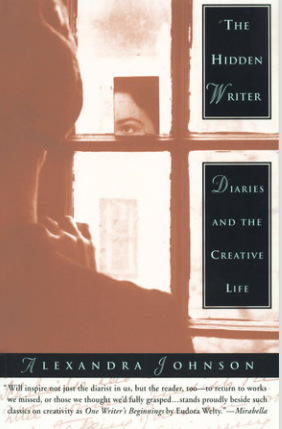
I want to write a public diary entry, and I know why: last week, in-between ALL THE THINGS (and there were so many things), I read Alexandra Johnson’s The Hidden Writer: Diaries and the Creative Life.

The book examines the diaries of Marjorie Flemming (Scottish child prodigy; she died at age nine, and you’ve probably never heard of her), Sonya Tolstoy (Leo’s wife… he made her keep a diary with the understanding that he would read it—as she would read his—btw, this was a sure-fire way of ensuring an unhappy marriage, DO NOT EMULATE), Alice James (sister of Henry and William), Katherine Mansfied and Virginia Woolf, Anaïs Nin, and May Sarton.

It nominally asks the question why do writers keep diaries, and what is it that they achieve in those pages.

It doesn’t… actually answer this question.

I’m not sure if I should recommend it to you or not… there are fascinating passages and insights, but ultimately, for me, the book does not hang together as a whole—I had this sense of “Oh, and now I’m going to write about Virginia Woolf and Katherine Mansfield diaries… and… oh, well, I have to write about Anaïs Nin, of course…” and none of the chapters flew into one another for me.

And the Anaïs Nin chapter pissed me off.

Anaïs Nin—you know this by now do you not?—Anaïs Nin is one of my four… what shall I call them? Models, mentors, saints, inspirations, heroes. (The other three are Frida Kahlo, Colette, and Jane Austen, Jane Austen with an asterix, in a way, because whenever I read Jane, I always end up thinking… how much better a writer she would be if she had been… a mother. It’s funny, I never get that feeling with the childless Frida—who so desperately wanted a little Diego she was willing to die and destroy her body more and more for the chance—or the wilfully childless Anaïs  who presented to the world at least one attempted abortion as a stillbirth. Oh-my. I wasn’t going to write about this at all, but I am thinking about it, and one day soon, I must write about it: why do I get this sense with Jane and not with them? And now I realize that of my four idols—I guess that’s the word, really? Saints is too Catholic. I don’t know that idols really fits either, but I cannot think of the right one—of my four idols, three are childless, and of these three, I look at Jane and think, “You lack this.” Unfair. Why? I will be spending the next few days, weeks, months, thinking about this.)

Back to Anaïs :

The Hidden Writer is written in the late 1990s, shortly after the “untruth” of Anaïs Nin’s diaries came to light. (If you’re unfamiliar with the controversy: she revised them extensively, edited and censored them heavily, omitted lots… crafted more… etc etc.) And Johnson takes the very conventional, middle-class—bourgeouisie?—approach to vilifying Anaïs for betraying her reading public by, effectively, manufacturing her diary…

…therefore missing the whole point of Anaïs Nin, and who she was—and what she achieved and created…

…the whole point of for-publication journals, diaries, and memories, which are manufactured for an audience… and which are the truth, as the writer is willing to reveal/present it to that audience at that point in time…

…the whole point of the elusive relationship between truth – confession – reality – lies – creation of self-protection of self, and this despite the fact that she quotes perhaps the most illuminating thing Anaïs Nin has ever said:

“I would not be concerned with the secrets, the  lies, the mysteries, the facts. I would be concerned with what makes them necessary.”

(Anaïs says this, by the way, to her lover Henry Miller, about his wife June. Which makes me want to watch Henry and June again.)

Anyway. Johnson loses me when she doesn’t get Anaïs. Creatively, historically, viscerally—she just doesn’t get her. Because I not only get  Anaïs, I feel her in my creative DNA—both in my moments of joy and glory, and the moments of despair and madness.

Ender just came downstairs into my writing space, and announced he has to poop. Which means I need to go upstairs and clean his butt—and have a conversation with him, again, about how, um, really, maybe it’s time he starts doing this himself? And he will say, “But poop is so gross and I don’t want to accidentally get it on my hands,” and I will sigh and say, “Me neither, dude!” And I will suggest that his birthday might be the time for this change, no?

And I have typed for too long for he is calling to me.

But here. You have a public diary entry.

There is a private one too. It includes a bad poem—that I might copy out and play with and try to turn into a less bad one—and a private, unshareable few pages that I will burn or soak with water… truly keep private.

But you can share this part of me.

I consent.

xoxo

“Jane”

P.S.

tuesday

I live my day in 15 minute chunks. I do all the work, all the things… in 15 minute chunks. Including some crying.

At the end of it, I am a focused, responsible faking-it-very-well adult, talking into a microphone about BIG PICTURE STRATEGY stuff and THINKING IN QUARTERS, YEARS, AND DECADES.

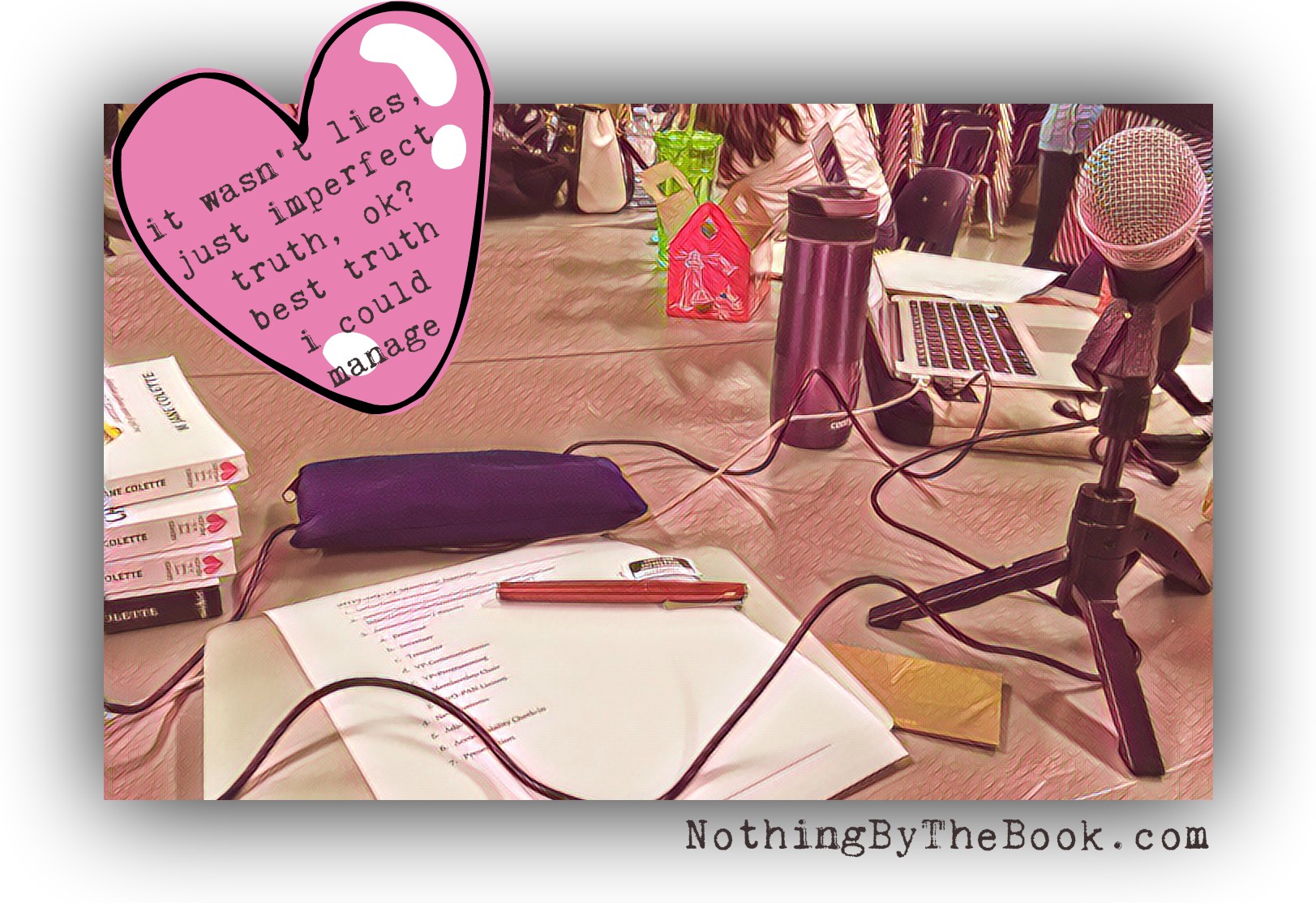
It’s not lies. It’s all truth.

But part of the truth is that the big picture decade-long strategy… gets implemented in 15 minute chunks.

wednesday

I think I can do it all, plus two more things, but instead I manage to do just the minimum.

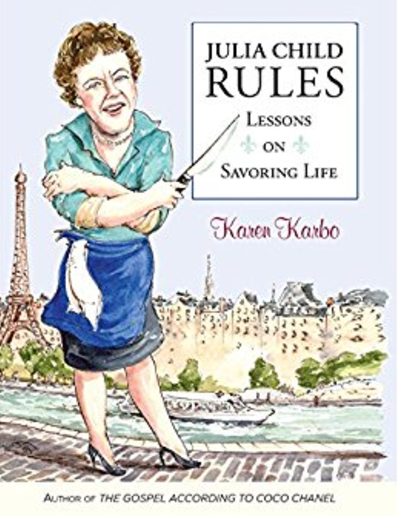
And start reading Karen Karbo’s Julia Child Rules: Lessons on Savoring Life to ground myself.

I remember, while reading it, that when Flora and I watched Julie and Julia—she was four or five, and I was crippled and on bedrest with Ender permanently tied to my nipple—I promised her that when Ender was weaned, we’d debone a duck and make that “amazing recipe” that Julie Powell made at the end of the movie (and her book and blog).

I send Flora a text to a Pâté de Canard en Croûte recipe, and tell her to assemble the shopping list.

thursday

I wake up at 4:30.

Am still awake and in bed at 5:30.

I get out of bed at 5:33. Am working by 5:43.

Ender comes down at 8 a.m. I don’t feel ahead… and, by 8:30, I need a nap.

Still. No one can undo the work I have done in those ridiculously early 2.5 hours.

friday

the week can’t be over. I have too much to do.

Sean: You have the weekend. And you said, you’re a week ahead now.

Jane: I’m panicked. I have too much to do.

The children feed me chocolate. I do all things. Or at least, most of them. A few more still to go.

I dream about going for sheesha in the evening, when they are all over.

I have too much to do.

I think I’ll do most of it. In 15 minute chunks. Right?

And journal about it. Like Anaïs. Creating a cohesive narrative out of something that, while I’m living it, feels like utter chaos.

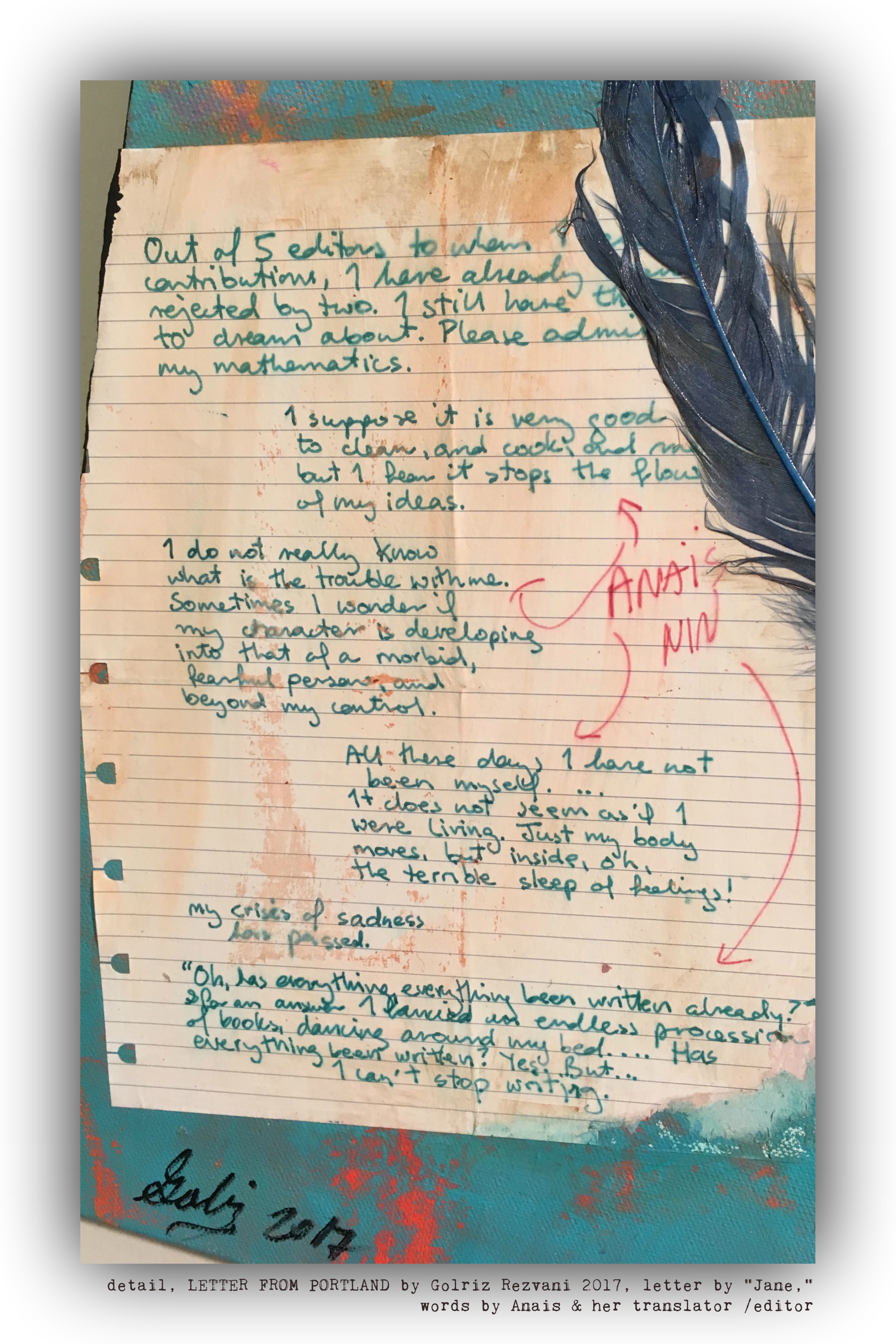
That’s me, sort of, in a painting by outrageously talented Iranian-Canadian artist Golriz Rezvani.

The painting is really about Anaïs Nin–or at least, the battle she lived, fought, documented.

Won.

In the background is a letter I wrote to Golriz while on a plane to Portland, the day after I read my poetry in public for the first time in… twenty? more? years.

I’m reading The Early Diary of Anaïs Nin on the plane, and the letter is mostly Anaïs Nin quotes:

I’m not a slob: I’m a radical revolutionary, or “Housework is unnatural”

For Cathy & Yvonne

I.

I am smoking my first cigar in weeks—but drinking tea, not coffee (although I did have a cup of the chewiest, most hedonistic-erotic-arousing-fullfilling Turkish coffee a few days ago, OMG, my black drug, you make me…)—and I want to write you a story.

II.

Flora: Mom, I had a nosebleed, and I tried to clean it up, but the bathroom looks like someone slaughtered a pig in it.

Jane: Um… can you clean it up more?

Flora: No, I have to go rescue a mouse.

The bathroom doesn’t really look like someone slaughtered a pig in it. But it could possibly be mistaken for a poorly cleaned up crime scene.

I give the blood streaks a half-hearted wipe.

III.

We are having a meeting in the Common and chewing out the challenges of community living (it ain’t always paradise; actually, it’s rarely paradise, but it’s the closest to heaven we can come), and my neighbour uses her in-family compromises as a metaphor for what we need to do as a community.

“I love having a clean, perfectly tidied house,” she says. “But when I have a perfectly clean, tidied house, my family suffers.”

My ears perk up, because that too has been part of my journey.

“When I get everything cleaned up just so, I’m happy—for about half an hour. And then my family tries to live in the house. And I nag them. And… they suffer.”

She says more… and you could argue with her, I suppose. You might. You like to keep your house very tidy too.

Me, I hear her perfectly. I remember the years of writing, over and over again:

“Five people live and learn and work and eat and create in this house. Five people mess in this house. Five people love this house—the way it is.”

The end result is a house that will cause Aunt Augusta (she’s a metaphor) pain and will make her judge me as an inadequate housekeeper and thus an inadequate human being.

The end result is a house that five people love to live in, that everyone considers their own.

IV.

Aunt August always calls it her house, her kitchen.

The pronoun always makes me… flinch. I wonder how her partner, her children feel about that.

I prefer to live in… our house.

I keep my space in our house the way I want it. Everything else? It’s theirs as much as it is mine—some places, so much more theirs than mine.

VI.

She texts me:

I just had this thought as I’m doing all the food and house related drudgery.  The reason “women’s” work isn’t appreciated but Dads doing “women’s” work are celebrated is because on some level it is assumed women just know how to do all things domestic so it’s no effort for them whereas it’s hard for Dads because they have to learn something unnatural to them.

I think this is brilliant.

I write back:

Housework is unnatural.

And then I decide I’m not a slob, but a radical revolutionary.

V.

It is of course much more complicated than this, and I know I’m over-simplifying, but let me leave you with this:

If you weren’t scrubbing your kitchen floor, counters, bathroom, whatever, today… what else could you be doing?

And don’t throw that “these things must be done” stuff at me. Let’s assume a minimum standard here. I’m not suggesting you—or I, for that matter—live in an unhygienic pig sty. Let’s assume… it’s good enough, it’s clean enough. Child Services won’t freak.

Aunt Augusta, though, will judge.

An idea: until you can just shake her judgement off… stop inviting her over.

VI.

When Sean brings the bathroom to a good-enough state a few days after the nose bleed, all the blood spots are gone. Why I love him—he doesn’t even mention that he had to scrub them. He just does it.

VII.

There’s this really, really brilliant comic about gender conflict and housework in heterosexual partnerships that I’d like to send you to: The Gender Wars of Household Chores: A Feminist Comic by Emma.

It makes some really brilliant points, and one that gave me pause:

So I’d like to offer you this life hack, which I think is the reason I am able to homeschool, work from home, chase my passions, and live the life I want.

When the thing you want is to clean off the table… just clean off the table. Leave the damn socks on the floor.

(I know I just gave Aunt Augusta an anxiety. Someone want to hand her a glass of water, please, perhaps doused with laudanum? Thank you.)

VIII.

Cinder and Flora take out the recycling, and Ender does not want to put away the cutlery.

I make him.

It takes less than five minutes.

We actually spent more time talking about putting away the cutlery than putting away the cutlery.

There is a sub-moral in there somewhere too, that possibly contradicts some of my thesis above. I don’t care. Sometimes, you just go and clear the table. But other times… Negotiating relationships and living as a family, community can be complicated, and sometimes, arguing—sorry, discussing—something for an hour instead of just doing the five or ten minutes task-at-hand is a necessary part of the process.

IX.

I’ve smoked my cigar. Written you a story.

I might now go tackle the dishes in the kitchen. Although I’m pretty sure it’s Flora’s turn to wash and Cinder’s turn to put away. I might just argue about that with them for a while instead, and then, while they do the dishes, write another story.

xoxo

“Jane”

A narcissist, a psychopath, and a hypocrite walk into a bar…

I.

Put in a position where I must act either like a social hypocrite or a ruthless bitch without feelings, I don’t even choose the latter—I am the latter because I can’t be the former—and by the way, this convention, this use of latter and former, is so fucking pretentious, I can’t believe I’m using it. Confession: when I encounter it when reading, I always have to scrunch up my forehead, and look carefully—ok, latter refers to… ok, got it… I think… or did I screw it up? Is former before? Former’s before, right? And latter is later? Why didn’t they just say first point, second point? Or parse the sentence differently?

Anyway. My point: I don’t choose to be the ruthless bitch without feelings. I just am one.

Except, of course I’m not. Well. I can be ruthless. But ruthlessness is a characteristic that’s rooted in pretty intense emotions. For me, anyway. And acting ruthless involves looking at the intensity of those emotions… and then cutting a straight ruthless path through them… to the right thing.

The right thing, being, of course, an entirely subjective thing, so let us qualify it as… the right thing for me, the right thing as perceived by me, the important thing in that moment.

The right thing, for short.

II.

Sometimes, I coach Flora on how to do the kind thing instead of the right thing. Because, you know, I want her to do better than me.

Flora: But don’t you think ruthless people are more efficient?

Fucking nailed it, baby. But I don’t think… efficiency… is the thing that’s supposed to make the world go round.

III.

I’m taking lessons in social hypocrisy from a psychopath.

No, seriously. He’s been tested. Not even a borderline psychopath. We’re talking, off-the-charts scores. But, he had a really good mother, who taught him how to… fake it.

Except he doesn’t call it that. He calls it analyzing a social situation and acting appropriately.

Jane: Ok, for the last time, I don’t have that gene.

Psychopath: Neither do I. It’s a socially learned behaviour. Let’s try again.

The lessons are not going well. I think, at least in part… because I’m proud of my INability to engage in that type of behaviour. You know?

Although I do know… white lies make the world go round.

IV.

Ender has that gene. In spades.

Cinder: He’s lying!

Ender: I’m not!

He is… except in his head, he’s just saying the thing everyone wants to hear. Well, not everyone. His parents.

Cinder: Stinking little liar!

Jane: He’s not lying, sweetie, he’s just…

What? Protecting himself? Protecting me. Something like that. It’s not a bad thing, you know. As someone who doesn’t have that ability, I do appreciate it in others.

V.

Except when I don’t.

Jane: And for fuck’s sake, next time? Just tell me—‘I don’t want to—I just really need to be alone.’ Don’t come up with excuses. False excuses have no place between friends.

Her: You’re telling me you wouldn’t have been mad if I had told you the real reason?

Jane: I would have been fucking livid. For five minutes. Then I would have moved on.

Her: You are very scary when you are livid.

Truth.

Jane: I would have been livid in the privacy of my head.

Her: …

Jane: I would have tried to be livid in the privacy of my head.

Her: …

Jane: Ok, I would have probably freaked out at you. For five minutes. Then I would have moved on, and apologized.

Her: …

Jane: What? I am really good at apologizing.

I’m just not that good at social lying.

Which is actually hilarious, because I’m really good at story telling. And you’d think the two would be related.

But they’re not.

VI.

Something else that’s ironic: the psychopath occasionally calls me a hypocrite.

Jane: What the hell? Seriously?

Psychopath: You have completely different expectations of other people than you have of yourself.

Jane: That’s not hypocrisy. That’s common sense. I’m not like other people, so of course I have different expectations of myself.

Psychopath: You might also be a narcissist.

Note to self: when a psychopath calls you a narcissist, it’s even odds whether he’s being casually analytical or coolly manipulative.

In either case, there’s only one right response.

Psychopath: OMFG, why are you crying?

Jane: Because you upset me!

See? I am not a ruthless bitch without feelings.

Just… ruthless.

xoxo

“Jane”

You: WTF?

Jane: I’m experimenting and practicing.

You: What? Incomprehensibility?

Jane: …

You: OMFG, why are you crying?

Jane: Because you just don’t understand me!

;P

PS New here? Catch up on the first three series of Postcards from Cuba. Or just browse.

Buddhists make bad artists or is it the other way around?

I.

Feeling out of sorts yet knowing what he should do, he texts me, partly to whine, partly to ask for advice he won’t take.

“I don’t do that anymore,” I tell him, and as I type the words, I decide it’s true. No more advice, gentle or forceful. No more suggestions. No more answers to questions either explicit or manifestly implied. Figure it out on your own.

Also, no more listening to anyone’s whining.

I make that explicit, too.

“In a mood?” he asks.

“Yes. And I like it. I hope it stays permanent.”

We end up talking about religions, gods, and faith—or lack thereof—will, mindfulness, and discipline—or lack thereof—and the relationship between art and suffering, also the connections between inner discipline, the ability to exist in a place of discomfort, and sex and its permutations.

Much better than him whining and me offering solutions and advice he doesn’t really want, won’t implement.

“So what happened?” he asks after a while. “Advice given gone horribly wrong?”

I’d tell you I shrugged, except we were texting, so, well, I couldn’t.

“I’m in a mood,” I say. Tell him a little more and we return to bigger, more interesting topics.

I won’t tell you what I told him about my mood because A. it’s a boring story and B. I’m done telling it now. Its summary and my take-away is that you can’t save people. I used to have a caveat on that—you can’t save people if they’re not willing to save themselves, but now I’ve struck it. You can’t save people. They have to save themselves.

The only help you (I) can offer… I suppose, really, it’s your (my) presence. I’ve quoted Thich Nhat Hanh’s Mantras of Loving Speech at you before, right? This is the most important one:

I’m here for you.

Except when I realize even that doesn’t help you—and it actually harms me—and then, I’m not.

I’m a terrible Buddhist.

It’s ok. I’m not trying to be a good one, or even an indifferent one.

“You’re a pagan,” he says.

I shake my head. (Well, we’re texting, so I actually write, “No, I don’t think so.”)

“I’m an artist,” I say.

Last week, I purposefully did not write about selfishness versus self-care (and, more importantly, versus self-actualization).

Today I will tell you this: a certain amount of selfishness is critical to physical survival and emotional stability… and to making art.

Not too much. An excess of selfishness makes your art meaningless and self-indulgent—unable to reach people, without resonance… and thus pointless.

Not enough selfishness makes your art… non-existent.

I told you, I’m a terrible Buddhist.

But I’m a practicing and producing artist.

II.

I’m still meditating, twice a day, and laying down in savasana most days.

I’m doing it wrong, because instead of infusing me with boundless compassion, it’s giving me cruel clarity.

And also ramping up my productivity… exponentially.

Like, holy fuck.

So… I don’t actually want to do it right, you know?

;P

xoxo

“Jane”

You might want to re-read this: Meditation for writers, “Mom! I need you!” and struggling to stay on that tightrope (but for fuck’s sake, don’t misconstrue it as advice)

Escape from the ashram (an entirely misleading title, but not really)

I.

This was last week:

This was two years ago:

This was seven years ago:

(And fourteen years ago, there was just one of them, and it was all harder, because it was new.)

You send me this:

and we laugh. But then I think… no. No, actually, that’s wrong. For me, anyway. See, without the children, I wouldn’t have written any of the work that really matters to me—the books, the best blog posts, the articles that captured the tension inherent in all aspects of business and life (especially for women, especially for mothers).

More—before children, I did not know how to love. I did not understand what suffering really was.

There’s a quote I’ve intermittently encountered (I haven’t been able to track it back to its source, my apologies) along the nasty lines that for a woman writer, every child is a lost book. It has always made me bridle, and today, I would like to officially say to that originator of the quote and everyone who has since repeated it, as an excuse it keep herself silent: So. Fucking. Wrong.

I do get why they say it, you know. Why they might even believe it. We live in a culture that hasn’t figured out how to value women, motherhood, or creativity—International Women’s Day, the still-enduring lip-service to the Victorian Cult of Motherhood, and adoration of WEALTHY and FAMOUS musicians, painters, and authors notwithstanding. Being a woman-mother-creator is much more difficult in a patriarchy (we’re still one) than being a man-father-creator. Our burden is bigger. And, we’re not supposed to—we’re terrified of being—selfish.

II.

Ender is playing a Lego.com video game on Sean’s laptop at the kitchen table while I sit beside him and work on mine. Flora comes in, to the soundtrack of a Harry Potter audio book. Groggy-eyed, she asks for a kiss and French toast; I ask for fifteen more minutes.

When Cinder trundles down the stairs before noon—well, probably after—I will thank him for doing the dishes before going to bed at 3 a.m. And stand on my tiptoes to kiss his chin, because I can no longer reach his forehead unless he stoops.

And then I will tell him I’ve found a way for him to earn the $50 that’s his heart desire right now.

III.

I don’t actually want to write about the difference between selfishness and self-care (and, more importantly, self-actualization). A. Everyone else is doing it and B. It’s not a paradigm I’m going to shift in that particular way (I have another plan, but it’s a secret, sssshhhh). Instead, I want to tell you how important it is for me that my work be rooted in this messy, crazy, unpredictable, demanding FULL life. In this kitchen. In this family. In this community that throws an extra obligation at me just as I need to hit a critical deadline. In… reality.

Not in an ivory tower or the isolation of a writer’s retreat or an ashram.

Instead: in this child’s need to crawl into my lap at the precise moment that I need both hands to type and all my faculties focused on what it is I am trying to put into words.

Jane: Ender, I love you, but get out of my lap.

Ender: I love you more, and I need Mommy cuddles now.

On some level, I have been fighting this for the past three years. It was three—three-and-a-half, coming up on four!—years ago that I realized the nature of my work had to change. Before, it was enough to me that I was writing for a living. How lucky was I? Writing for a living, and able to be the primary caregiver for my children. Supporting my family, fulfilling my need to be a writer, and being the mother I needed, wanted to be. What more did I need?

Well, as it turns out… there was some stuff… but that’s probably a novel in itself, or even a hefty self-help book (that one of you can write; as I’ve said, I have other plans).

During that transitional time, I spent a lot of time dreaming of month-long writers’ retreats and week-long conferences and government-funded residencies… I substituted them with occasional weekends alone in hotel rooms (or friends’ apartments) and self-created 12-hour writing marathons in cafes and sheesha lounges. I was chasing “the time and space” to really do my work, to give to it the attention and care it deserved—to give it the sort of focused attention I like to give my family… without, of course, short-changing my family…

…but there was only so much time to go around, right?

And so… a fight…

In the last few weeks, something has shifted.

I have long been able to see the value in this tension between the demands of my kids and the demands of my work. Before 2013, though, the demands of my work were mostly externally created. You know? Editor. Client. Magazine deadline. For the past three years—they have been increasingly, and now almost completely, internal. The drive to create, to make, to write this stuff—it’s all mine. It’s nobody else’s fault, demand, responsibility. I want to—I need to do this.

And now I see the tension between my desires and my life’s demands is not just valuable—it’s also critical. Necessary. Essential—it’s who I am, it’s the reason I write what I write.

And what I want to do going forward is not to alleviate this tension, but to continue to grow how my work comes from my life—how I perform it in the middle of life.

Now—this does not mean that I will not make focused time and space for it. I need that 12-hour marathon at least twice a month. That occasional weekend away is part of an equation that then lets me work in hour-long, 15-minute increments the rest of the time. And the week-long writers’ conference—it’s a gift I will continue to give myself whenever I can.

But it’s what I do on the ordinary days, full of mess and chaos and conflicting demands and dentists’ appointments and children fighting and supper burning and “fuck, we’re out of groceries again, am I a bad mother if they eat cereal for supper? Wait—they can’t even do that, because there is no milk” that determines what I make, how I create it… why I write it… and who I am.

This is a good feeling.

I hope it lasts.

III.

This is today:

xoxo

“Jane”

PS This is a disclaimer to mothers of babies and toddlers: My children are aged fourteen, twelve, and seven. They can get their own breakfast. And lunch. The elder two routinely make supper. Everyone’s old enough to do their own laundry, run a vacuum cleaner, take out the garbage and the recycling. There are no little people sucking on my nipples or needing me to change their poopy diapers. The amount of time that I have to give to my work now compared with what I had seven years ago is exponentially bigger.

Like… I can’t even express how much bigger. When they were little, real work only occurred when another adult could tend to their needs, or when they were asleep.

And they so very rarely all slept at the same time.

But all that time—it was like compost, fertilizer, seeds. This time, this current place of—I don’t even know how to express where I am, because it’s not a place of tranquility at all… it’s a place of explosive creativity and drive and celebration of tension, it is so many things, but tranquil, yeah, not so much—this current place-space I’m in has been created by journeying through the demands and exhaustion and challenges of the baby years and the toddler years and all those “I thought it was supposed to get easier, when the fuck is that going to happen” years.

I am still, to be honest, not sure that it gets easier. Parenting, I mean. It’s gets… different. And we get… better (or, in some cases, worse, but that’s also another story).

PS2 POSTCARDS IN CUBA, the final leg, you won’t get to see until the fall or so. Because this final leg of the postcards is very, very different… and I want to deliver it properly. And that takes time. This, incidentally, another shift: I have all the time I need—and I refuse to give myself Internet/social-media induced FOMO/YOLO/DO IT RIGHT NOW! psychosis.

Because… priorities, baby.

PS3 Sometimes, I think Maria Popova and I share a brain: Hermann Hesse on Little Joys, Breaking the Trance of Busyness, and the Most Important Habit for Living with Presence 

A conversation, a reading assignment, a writing exercise, and a re-run #7

A conversation:

Cinder: Dad will come to the phone in a minute, Mom. He’s just washing his hands–he was cleaning up the blood in the bathroom.

September 16, 2011

A reading assignment that will change your life:

Lawrence Block’s The Liar’s Bible. It’s a collection of columns on writing fiction Block wrote for Writer’s Digest in the 1980s. And it’s down-to-earth brilliant. READ IT.


A writing exercise to do just before making supper:

A garlic and tomato are having a fight. And go.

(No, seriously. Go. It can’t possibly be a good piece. It’s just play. It’s just fun. PLAY, dammit.)


An explanation:

This is the seventh week of my 12-week unplugged AWOL (don’t tell my clients… um or too many of my friends 😉 ). No phones, no wifi… also, no winter! I’m going to be documenting things old school via journals and postcards (if you want a postcard from… well, that place where I’m hiding… email your snail mail address to nothingbythebook@gmail.com).

The blog’s on auto-pilot with a conversation from the archives, a reading recommendation, a writing assignment (cause I can’t nag any of you in person), and unsolicited advice… er, that is, a re-run post of the kind I don’t write very often anymore.

Enjoy.


A re-run:

When Toddlers Attack / That Hitting Thing

Toddlers hit. Not all toddlers. But a lot of toddlers. Like, almost all toddlers, at least some of the time. And some of them—not a few, either, a lot—go through phases when they hit all the time. Attachment parented toddlers hit. Breastfed toddlers hit. Bottle-fed toddlers hit. Babyworn toddlers hit. Toddlers of parents who never raise their voices hit. Really. It’s not just your little guy.

When my first little guy when through this hitting phase, I felt incredibly isolated. Alone. And judged up the wazoo. Here’s our story.

From Life’s Archives. “That Hitting Thing,” March 8, 2006. Cinder’s not quite four; Flora’s one and change.

2006. It happened today, in the playroom, and my head is still whirring. “Flora!” Cinder yells. “You wrecked my tower. That bothers me! Bothers me! I am so angry I want to hit you! But I don’t want to hit you! Grrr!” I poke my head in from the hallway. Cinder is standing closing and opening his fists and breathing. He sees me looking, looks at me. “I didn’t hit Flora,” he announces. “But I’m not proud of you!” he yells at her. She gurgles and hands him a Lego block. They start building the tower together.

I’ve been waiting for this day for… what, two years? Two years to the day, I think. And I know today isn’t the cure. It’s not the turn around, the end. He will hit his little sister again, probably later today. He will push her, pinch her. But he’s working through it—we’re muddling through it, he’s “getting” it. And the fact that this huge emotional break through—this discovery by himself that just because he wants to hit he doesn’t have to hit—has come on the heels of eight nights of peeing the bed puts all sorts of things into perspective for me. Makes me feel not quite so resentful as I wash the sheets and covers for the ninth day in a row…

I’ve been delaying posting this “hitting thing” exposition until I felt I could clearly articulate where we were, why, and how we got there. I don’t think that’s going to happen in the next few weeks or even months. But based on some conversations I’ve had with other mothers of closely spaced siblings—particularly when the older is a boy!—I think this is a story that must be told, in all of its messiness.

Continue reading