POSTCARDS FROM CUBA: and again with Hemingway

This one is for Sean. For saving me from daily self-destruction, among other things.

Listen:


Consider supporting the creation of good online content:

PayPal - The safer, easier way to pay online!

…and, of course, read:

I.

Jane: “We’re almost there. He said five minutes.”

Cinder: “Mom, you’ve said you have a hard time understanding their Spanish. Are you sure he didn’t say five miles?”

Jane: “I’m sure.”

I’m not, actually, I’m in utter despair—I’m as exhausted as the children, and I want to collapse in the middle of the sidewalk and cry—and why is there never one of those 24-hour convenience stores that sells rum in juice boxes when you need one—but the kids already want to turn around, and we’ve gone so far… you know we have to get there, right?

Flora: “This is a really long five minutes.”

It is the longest five minutes ever. A three-mile five minutes, actually…

Cinder: “Maybe he thought we were driving, because nobody’s stupid enough to walk there.”

Maybe…

Marina1

II.

Our destination is the Marina Hemingway, on the outskirts of Havana. Built in 1953 as Marina Barlovento, it was of course nationalized in 1959—and rechristened the Marina Hemingway.

It makes total sense. If I were setting up a Soviet-aligned socialist dictatorship, I would name things after an American author… especially one with a thing for Cuba.

Hemingway, who first visited Cuba in 1928, and then just couldn’t stay away, spent most of 1939 to 1960 living in and creating in Cuba, his base a house in the town of San Francisco de Paula, effectively a Havana exburb. Hemingway called his house Finca Vigia—which translates best, I think, as The Look Out. That’s where he wrote For Whom the Bell Tolls and The Old Man and the Sea.

The Marina Hemingway is nowhere near Finca Vigia.

Marina10

III.

Flora: “Why are we going to this marina, again?”

Jane: “Because it’s there.”

Flora: “Is it because it’s named after Ernest Hemingway?”

Jane: “Maybe.”

Flora: “You know you’ve just made us hate him, forever.”

Jane: “I know. Did I tell you that four of his favourite dogs are buried in Cuba too?”

Flora: “Oh. Now that, I’d be interested in seeing…”

IV.

Hemingway’s on my mind this trip, yeah, he is. Not so much because of Havana’s Hemingway Cult. I’m not pilgrimaging to its assorted Meccas. I don’t think I’m going to make it to the Hemingway Museum at Finca Vigia, even if Flora convinces her brothers that the graves of the writer’s dogs are worth a pilgrimage—what would I get out of looking at a dead man’s moldering papers that I haven’t gotten from his published words? There’s no way the children will let me visit either of his favourite bars, La Floridita and La Bodeguita del Medio, both in Old Havana… but I’m okay with that. Lame, overpriced tourist traps both—Hemingway’s “stool” in La Floridita is, guidebooks report, roped off “to keep the tourists at bay.” No, thanks–give me cheap rum from the mercadito and cigars from the old men on the street instead, all while I read Papa’s short stories… and his interview in The Paris Review.

Which is fucking brilliant. I mean… Listen:

“Interviewer: How much rewriting do you do?

Hemingway: It depends. I rewrote the ending to Farewell to Arms, the last page of it, thirty-nine times before I was satisfied.

Interviewer: Was there some technical problem there? What was it that had stumped you?

Hemingway: Getting the words right.”

In. Your. Face. Yes. Thank you, Papa.

Or, this:

“Interviewer: Could you say something about the process of turning a real-life character into a fictional one?

Hemingway: If I explained how that is sometimes done, it would be a handbook for libel lawyers.”

Or, this:

“Interviewer: How do you name your characters?

Hemingway: The best I can.”

I guess people interview writers about writing… and then write about it… because people like me read about it, want to read about it. Here I am, devouring it, aren’t I? Are you? But so much of what non-writers or would-be writers want to know about the process is so… I don’t know. “What was it that had you stumped?” “Getting the words right.” Yes. Because—what else is there?

But now, here’s something that gives me pause:

“Interviewer: You once wrote in the Transatlantic Review that the only reason for writing journalism was to be well paid. You said, “And when you destroy the valuable things you have by writing about them, you want to get big money for it.” Do you think of writing as a type of self-destruction?

Hemingway: I do not remember ever writing that. But it sounds silly and violent enough for me to have said it to avoid having to bite on the nail and make a sensible statement. I certainly do not think of writing as a type of self-destruction, though journalism, after a point has been reached, can be a daily self-destruction for a serious creative writer.”

Daily self-destruction…

Ender: “Are we there yet?”

Jane: “Not yet. But those people said it’s just past the bridge.”

Cinder: “You’re sure they didn’t say it’s past five bridges?”

Jane: “Just drink some water. And walk. Walk!”

Hemingway left his politics fuzzy. His much-quoted farewell comment to Cuba as he departed (fled?) the island in 1960:

“Vamos a ganar. Nosotros los cubanos vamos a ganar. I’m not a Yankee, you know.”

(“We’re going to win. We Cubans are going to win.”)

is open to many interpretations, don’t you think?

This next one… less so:

“The Cubans… double-cross each other. They sell each other out. They got what they deserve. The hell with their revolutions.”

E.H., Islands in the Stream

Anyway. Hemingway on my mind. But this is not a pilgrimage.

The Hemingway Marina, by the way, has no connection at all with Hemingway. He never wrestled marlin here or moored a yacht. He just lends it his name.
Marina9

V.

Cinder: “Is this it?”

Yup.

It’s… huge.

I mean… fucking enormous.

It’s not at all what I expected.

A handful of security guards swarm us, although politely. Can they help us? I smile, shrug. We just want to explore? Is that all right? Of course, of course, enjoy—come ask us if there’s anything you need. One offers himself as a guide, but I manage to wave him off.

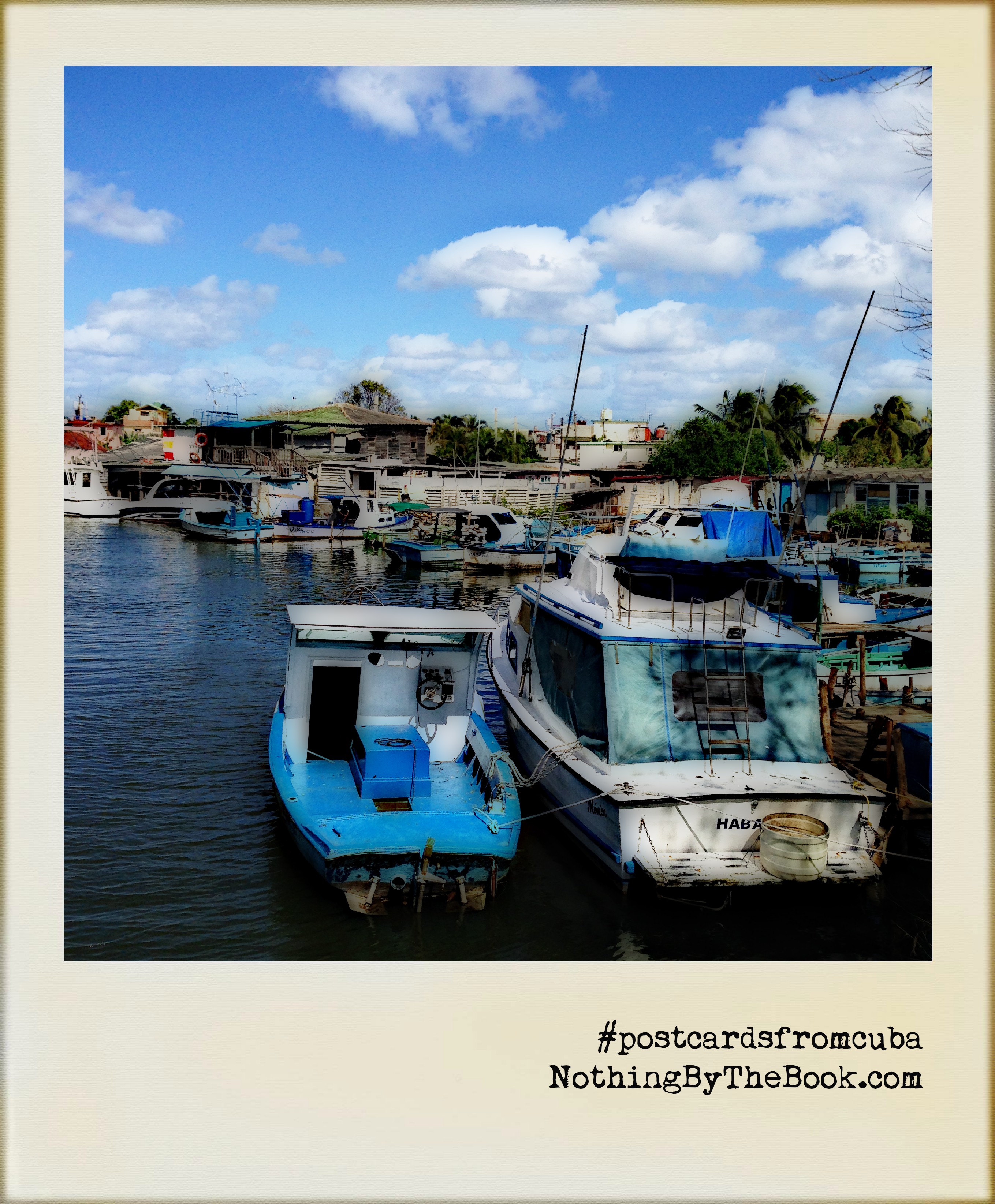
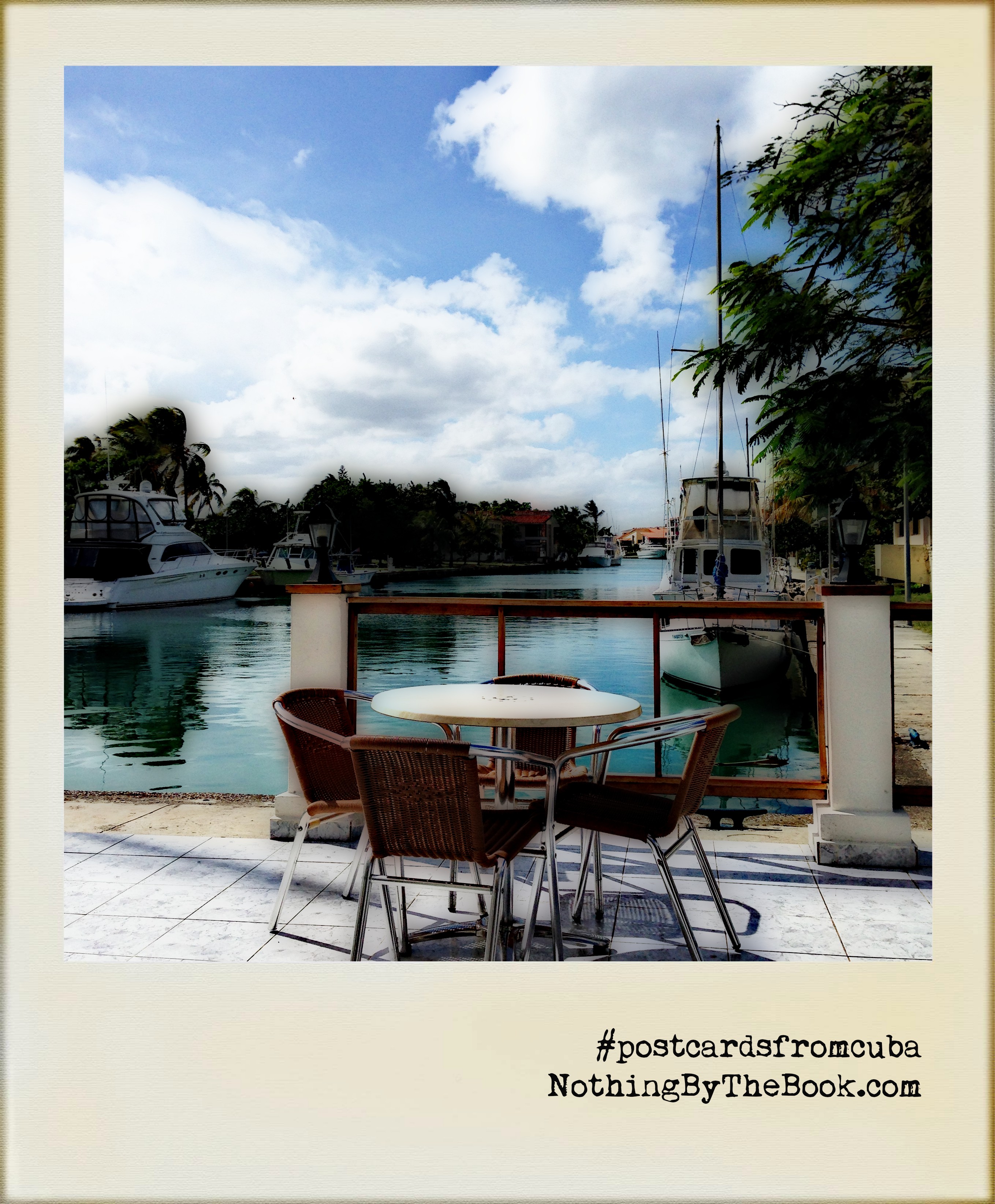
We explore. A restaurant in which we can’t afford to eat. A “clubhouse” that looks like something out of a Hollywood movie. And boats, boats, boats. Sailboats. Yachts.

And what is that monstrosity?

Cinder: “I think that one is bigger than our house.”

Flora: “I think that one is bigger than our house, and Babi and Dziadzia’s house, and possibly their neighbour’s house combined.”

It’s a behemoth. Beyond a behemoth. Christ…

This part of the marina is quite well up-kept and reeks of money. And I’m thrust into my recurring Cuban paradox. How was this, ever, justified? I actually understand why Fidel let Havana fall into ruin, why the public places were allowed to deteriorate. The people were fed and educated… during the Special Period, not fed… everything else was icing…

But this…
Marina12

Flora: “So is visiting the Hemingway marina making you a better writer, Mom?”

Jane: “It doesn’t work like that, you know.”

Flora: “Then why did we come here again?”

Ender: “Fish! Fish!”

The marina’s carved into a coral reef, and life perseveres, fights, continues, among the boats of excess.

The further in we go, the less maintained the buildings, the grounds. There’s a derelict playground, a run-down bowling alley.

A ruin of a hotel, at the peninsula’s tip—stunning views, the building thoroughly battered by the sea and its winds, falling apart—although, the scaffolding indicates, under renovations.

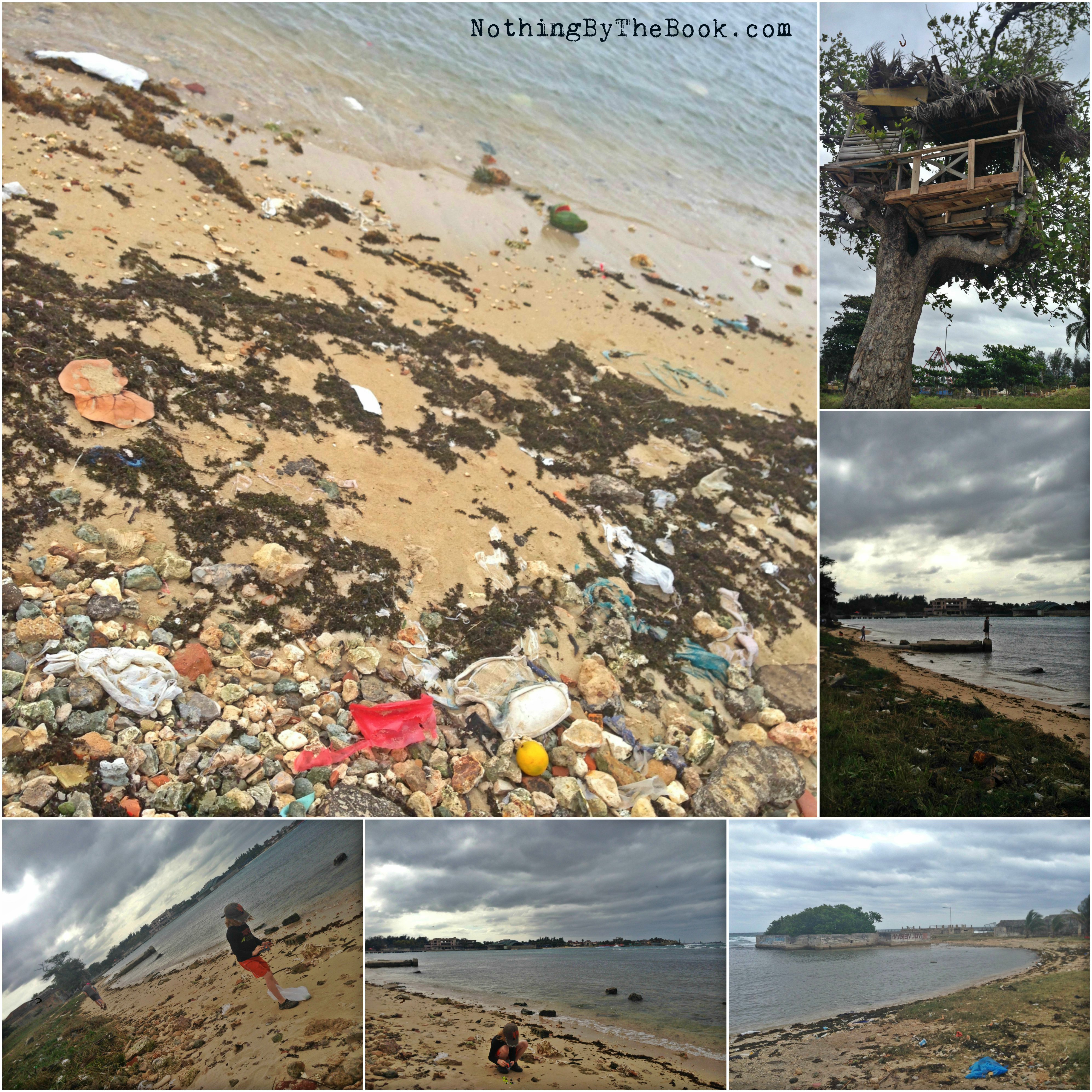
The kids taste the spray of the ocean. Search for life on the rocky beach.

Find garbage.

Cinder: “Can we go now?”

OK.

Marina18

VI.

I ask the security guards about buses. We’re actually at the Marina because I thought it was near Mercado 70—the best stocked supermarket in Havana—but judging by the death march I took the children on, we’re 10 k away, maybe more—and even if the children were willing to walk…

Cinder: “We’re not, we have made that clear, right?”

Jane: “Abundantly.”

…I don’t think I am.

While one security guard explains to me how to get to the bus stop and which bus to take—and that then, I’ll have to switch—I know this, that’s fine—another listens, incredulous.

Guard: “Are you crazy? I’ll get you a taxi.”

Jane: “I don’t mind taking the bus. It’s cheap.”

Guard: “I’ll get you a cheap taxi.”

Cinder: “Mom? Taxi. Please.”

I did just make them march almost 10 kilometres in 28 degree heat.

OK.

Marina23

VII.

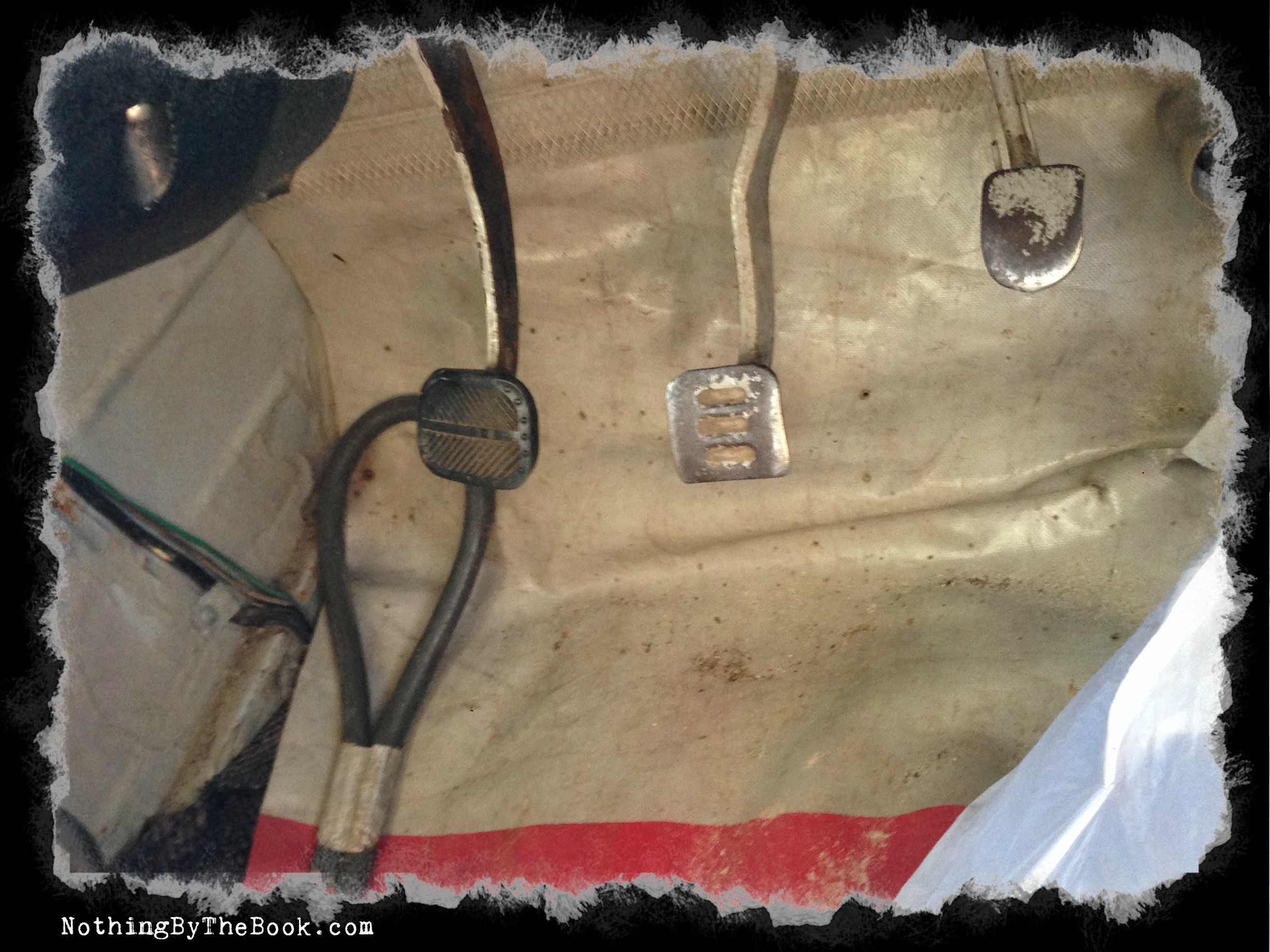
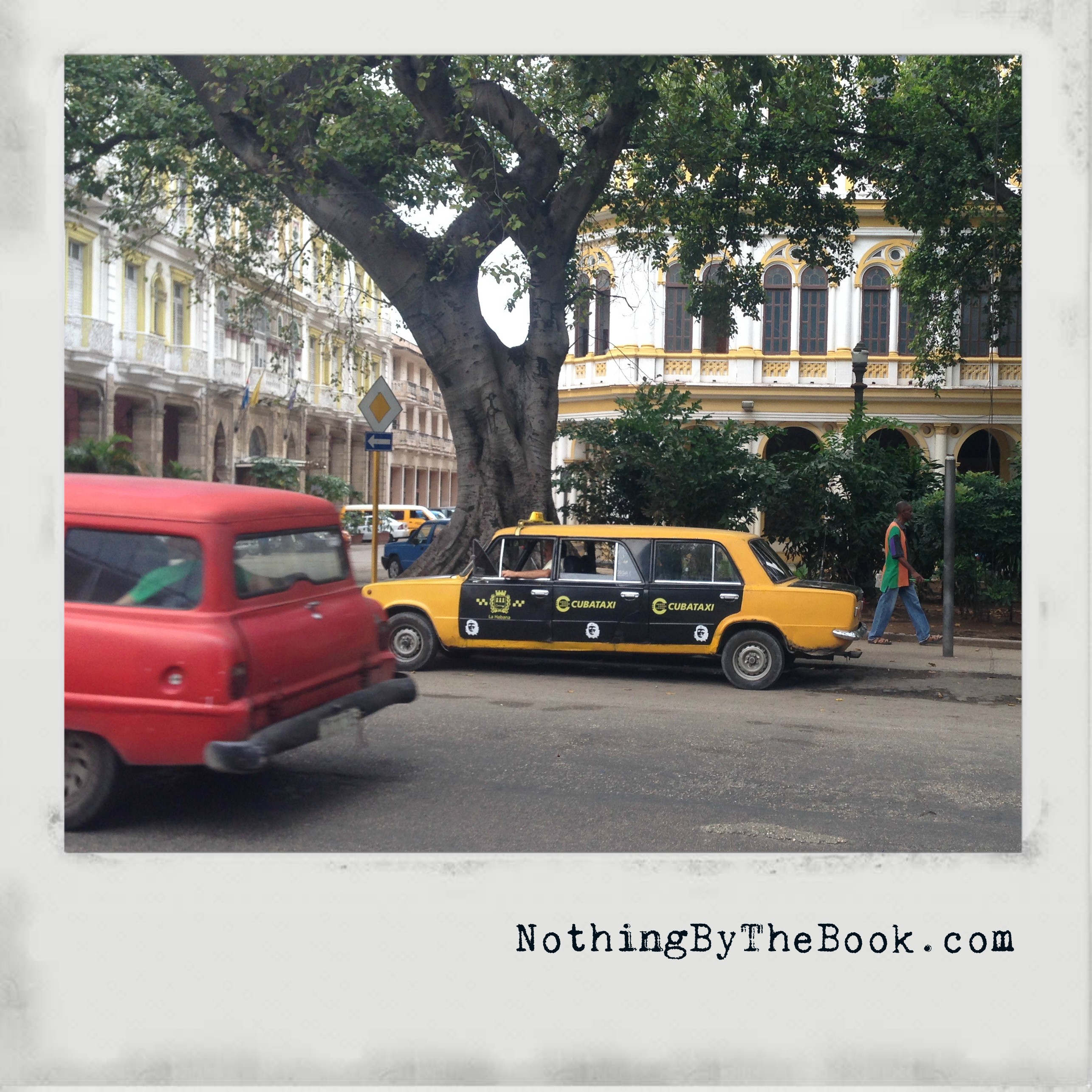
The taxi is a 1957… something or other. I’m not so good with cars. It’s a beautiful shining red on the outside… and virtually naked on the inside.

Jane: “She’s beautiful.”

Cab driver: “Do you want to buy him? I’m not quite sure what’s holding him together anymore.”

(D’ya see what happened to the pronouns there? Translation…)

When Hemingway left Cuba, he left behind a red-and-white 1955 Chrysler New Yorker—willed to his doctor. It disappeared, reports Christopher P. Baker, author of Moon’s Havana, to be found in 2011 in “near derelict” condition. Actor/director David Soul (of Starsky & Hutch fame) is restoring the beast, and Barker and Soul are plotting a movie about the restoration process.

How’s “near derelict” different from derelict, exactly, I wonder? Does “near derelict” mean savable… and “derelict” spells the end?

Marina5

VIII.

Cinder: “O-M-G, we’re home, we made it, and you didn’t make us take the bus from the supermarket, I love you, Mom!”

I do know how far I can push them. Also, riding the #179 bus at off-work rush hour with $90CUC worth of groceries including two five-liter water bottles… I’m cheap and crazy, but not that crazy.

This taxi’s a Fiat, and the driver wants $7CUC to drive me to Kohly.

Jane: “Last time it was five.”

Driver: “Really?”

I’m totally lying. I’ve never taken a cab from the market to Kohly. It seems to me it ought to be five.

Jane: “Mmm-hmmm.”

There’s five guys behind him, and they all stand up. If he won’t take me for five, any of them will. (Workers of the world, unite!)

Driver: “Ok, ok.”

I give him six. I’d have given him seven, because he carried my bags, walked Flora across the street, and didn’t mow down any pedestrians while driving us, except that when I was taking the groceries out of the trunk of the cab, the wooden stick holding up the hatch slipped and the hatch hit me on the head while the stick poked me in the ribs.

Driver: “This is very bad service by me.”

Jane: “It might be karma.”

Driver: “What?”

Jane: “Never mind. No harm done.”

After I unpack the groceries and hydrate the children, I take Papa, rum and a cigar to the verandah.

“Interviewer: What would you consider the best intellectual training for a writer?”

Hemingway: Let’s say that he should go out and hang himself because he finds that writing well is impossibly difficult. Then he should be cut down without mercy and forced by his own self to write as well as he can for the rest of his life. At least he will have the story of his hanging to commence with.”

True story: I suddenly want to edit Hemingway. Strike out that “commence.” Replace it with “begin.”

IX.

In the morning… actually, you know what? I’m going to let Hemingway tell this part. He did it better, and I don’t want to edit it at all:

“When I am working on a book or a story I write every morning as soon after first light as possible. There is no one to disturb you and it is cool or cold and you come to your work and warm as you write.  You read what you have written and,  as you always stop when you know what is going to happen next, you go on from there.

You write until you come to a place where you still have your juice and know what will happen next
and you stop and try to live through until the next day when you hit it again.

You have started at six in the morning, say, and may go on until noon or be through before that.
When you stop you are as empty, and at the same time never empty but filling,  as when you have made love to someone you love. Nothing can hurt you, nothing can happen, nothing means anything until the next day when you do it again.

It is the wait until the next day that is hard to get through.”

Marina24

*

For more on Hemingway and Cuba:

The Atlantic: Hemingway in Cuba— 2016 reprint of a 1965 article reflecting on a 1954 interview with Ernest Hemingway

The Smithsonian: Hemingway’s Cuba—August 2007, a look back at the writer’s final years in Cuba by his last personal secretary (and post-humous daughter-in-law)

The Telegraph: Ernest Hemingway House in Cuba to be Preserved with US Money–June 2015  piece that highlights the perverse US-Cuban financial-cultural relationship…

*

BONUS: Retro 1970s Style Slideshow

This slideshow requires JavaScript.

*

Trio on benches at laundry park3

The best things in life and on the Internet are free. Feeding and sheltering three children, whether in Cuba or Canada, is not. If you enjoy the Postcards project, please express your delight and support by making a donation via PayPal:

PayPal - The safer, easier way to pay online!

You: “But how much should I give?”

Jane: “I get $1 each time a sell a traditionally published book, so my bar’s set really low, love. Want to buy me a cup of coffee? That’s $4.75 if you’ll spring for a mocha or latte. Bottle of wine? My palate’s unsophisticated: $19.95 will more than cover it.”

If you’d like to make a contribution but have PayPal issues, email me at nothingbythebook@ gmail.com and we’ll work something out.

Or, ya know. Just hang out with us and enjoy. That be cool too.

xoxo

“Jane”

NothingByTheBook.com / Tweet tweet @NothingBTBook / Instagram NothingByTheBook

*

catch up

I was in Cuba before Obama. And I want to tell you all about it… in pictures… in words… through sound:

PfC: introduction

So, I introduce the project, and then…
…I shower you with pictures:

PfC: I haven’t found a post office yet… (image)
PfC: what are you looking at? (image)
PfC: Acuario Nacional de Cuba (image)
PfC: zombie Fiat (image)
PfC: sharp edges & powerlines (image)

Then (drum roll, please) release the first listening postcard:

PfC: blame it on Hemingway (post + photographs + podcast)

It’s not really about Hemingway, but you know, #hemingway is a good hashtag.

Next I show you:

PfC: the ugliest building in Havana (image)

& then I teach you some

PfC: Cuban math (post + photographs + podcast) & I also pick up / get picked up by a 25 year old Cuban boy. Seriously. Check it out, and then check out

PfC: this is also Havana (image)

& find out why I’m going to hell:

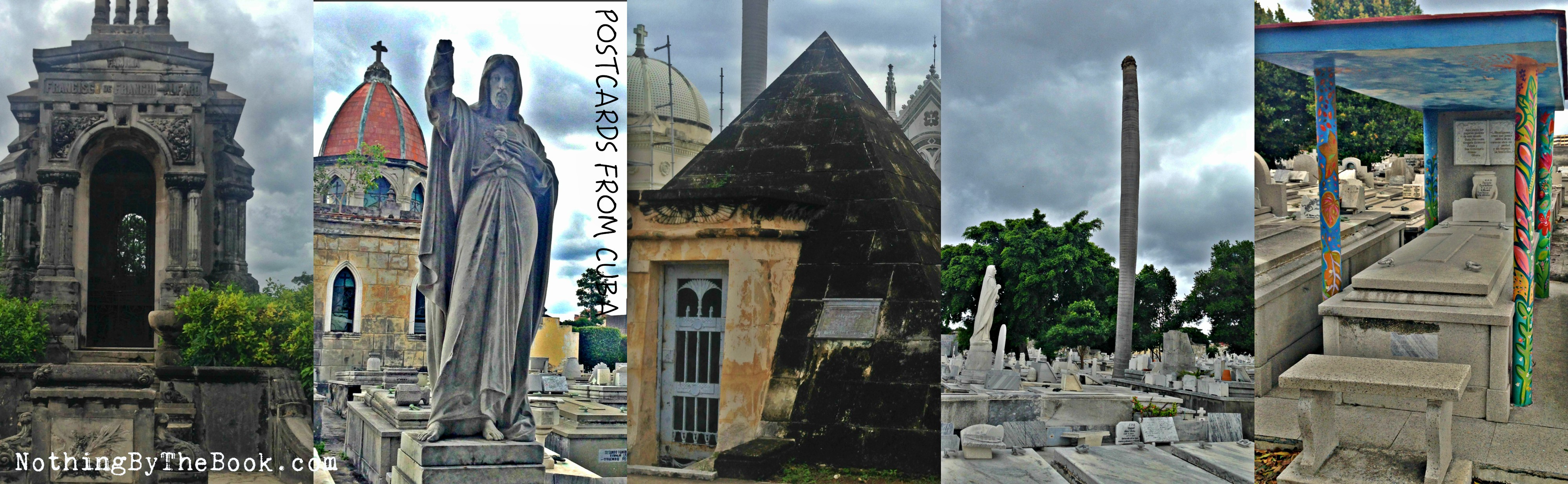
PfC: Necropolis (images + riffs)

after which you can watch how the entire country of Cuba is trying to prevent me from buying eggs:

PfC: egg hunt (post + photographs + podcast)

then try to figure out what this photo’s all about:

PfC: the view from here (image)

& then pray for me. Just pray:

PfC: we will survive (post + photographs + podcast)

Thank you. Now come with me to a beach. No, not that kind of the beach. The kind of beach that isn’t kept pristine for tourists:

PfC: but you’re not going to make us swim there, are you? (image)

& now you’ve got to meet Jack Gilbert, and understand what having children (in Cuba, anywhere) really means:

PfC: and she asks, is being childless good for a poet (post + photographs + podcast)

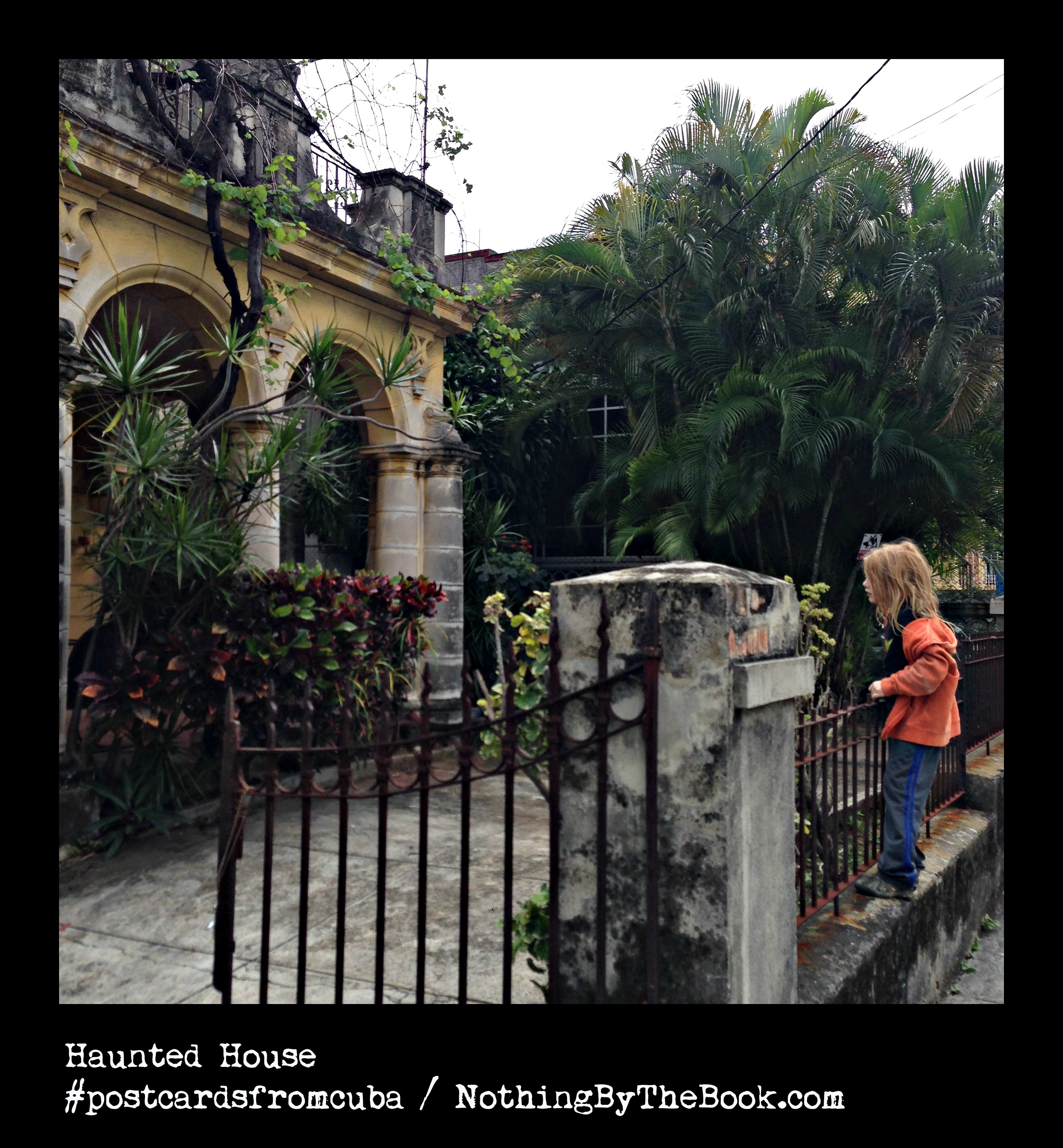
Now, have a look at a haunted house:

PfC: haunted house (image)

& then cringe as I explain to Flora the relationship between poverty and crime:

PfC: but is it safe? (post + photographs + podcast)

Then meditate on this photo

PfC: through bent bars (image)

& listen to me try to buy matches:

PfC: matches (post + totally unrelated photographs + podcast)

then take on a hustler:

PfC: get out of my dreams get into my car & pay me 2.5X the going rate pls (images + riff)

& then fall in love:

PfC: Lazaro’s farm (post + photographs + podcast)

and then decompress with:

PfC: a splash of orange, three versions (images)

Now get ready to get all political and cultural with:

PfC: flora, fauna + waiting (post+ images + podcast)

then look at pretty things:

PfC: behind closed eyelids (images)

& take a ride…

PfC: on the bus (short podcast + post + images)

to explore a castle: PfC: castillo means castle (slideshow + postcard images)

& consider PfC: a boat is not a boat (image)

And how you’re caught up.

Until next week.

POSTCARDS FROM CUBA: a boat is not a boat

For Peter. Do you still remember that ferry ride from hell? I do…

27-OnTheFerryCollageFinal

That’s Ender on the Havana ferry dock, looking in awe at the cruise ship that dwarfs the city and the harbour… and asking… “Is that our boat?”

No, son, no it isn’t.

Flora: “The Havana ferry was basically a board with an engine.”

It wasn’t quite that bad. There was a roof.

Also… it was $0.20 centavos (moneda nacional) a person.

Non-sequiteur: The sight of that cruise ship in the Havana harbour was obscene. I have no other word for it–its size, compared to the size of the dock, the harbour, the city… obscene. Wrong. If you ever have a chance to take a cruise ship to Havana–don’t. OK? Please?

Coming next: the boat theme continues with listening postcard from  Marina Hemingway.

*

LANDED here for the first time? Let me catch you up:

Series 1 of Postcards from Cuba is now fully live. Check out the annotated table of contents for a tour, or, if you prefer, hop over to the chronological table of contents.

And if you like what you read/hear/see, please consider expressing your delight by becoming a patron of this project via PayPal:

PayPal - The safer, easier way to pay online!

You: Why?

Jane: Because you’ve always wanted to be a patron of the arts, and you know that artists can’t pay for groceries with exposure.

You: How much?

Jane: Buy me a cup of coffee, a Cuba Libre, or a Cuban cigar.

You: That’s all?

Jane: My avarice is happy to match your affluence. But I get $1 in royalties for each copy my other self sells of a traditionally published book. It is impossible to disappoint me.

If you would like to make a contribution, but have PayPal issues (I get it), please email me at nothingbythebook at gmail.com, and we’ll work something out.

Thank you!

“Jane”

NothingByTheBook.com / Tweet tweet @NothingBTBook / Instagram NothingByTheBook


POSTCARDS FROM CUBA: castillo means castle

For Valentino, who said, “It is forbidden, but…”

This slideshow requires JavaScript.

Or, this way:

27-Castle All

short guide to Havana’s castles

In Old Havana:

La Punta, or Castillo San Salvador de la Punta: boooring. You’ll probably walk past it as you meander the Malecon, but don’t make a special trip. What? Fine. Go. Then tell me I’m right.

El Castillo de la Real Fuerza: in the heart of Havana Vieja, next to all sorts of other touristy things, this is the one you will probably visit. It’s old. It’s ok. It’s not as good as what’s across the bay.

On the other side of the Harbour:

Castillo de los Tres Reyes Del Morro: Everyone just calls it Morro. Amazing views! Usually hosts a featured artist & art exhibit in one of its chambers–don’t miss that! You’re not supposed to climb into the lighthouse but it can probably be arranged, wink, wink. Nobody cares if you climb on the roof and cannons or into the moat.

Fortaleza de San Carlos de la Cabaña: Fucking huge. I mean–ENORMOUS. It just doesn’t end. Much less exciting than the smaller Morro… unless you accidentally climb onto the roof. Which might happen, because there are no signs. And no one will stop you. Also, make sure you find your way underground–highlight of the adventure for the kids. Biggest mystery: why and from where did they get the giant pink tongue slide AND WHAT WHERE THEY THINKING?

How to get there: $5-6CUC taxi ride from Old Havana OR catch a bus going across the Harbour from Parque Fraternidad–ask which bus will take you to El Morro, a kind stranger will show you–OR (best choice) take the little so-cheap-it’s-free ferry from Old Havana to Casablanca, climb up the stairs from Casablanca into the park that abuts that giant Casablanca Christ statue (Christo de la Habana), peek into (or not) Che Guavarra’s house, and then follow the road first to  Fortaleza de San Carlos de la Cabaña and then Castillo de los Tres Reyes Del Morro. It is walkable–even with three children–if you run out of steam, a taxi, a horse-drawn buggy, or a local with a car will inevitably offer you a ride. My recommended way of doing the circuit: take a taxi to El Morro, and then walk your way towards the ferry, and take the ferry home. It’s nice to end the day with a boat ride.

*

Trio on benches at laundry park3

The best things in life and on the Internet are free, but content creators need to pay for groceries with money. If you enjoy the Postcards project, please express your delight and support by making a donation via PayPal:

PayPal - The safer, easier way to pay online!

You: “But how much should I give?”

Jane: “I get $1 each time a sell a traditionally published book, so my bar’s set really low, love. Want to buy me a cup of coffee? That’s $4.75 if you’ll spring for a mocha or latte. Bottle of wine? My palate’s unsophisticated: $19.95 will more than cover it.”

If you’d like to make a contribution but have PayPal issues, email me at nothingbythebook@ gmail.com and we’ll work something out.

Or, ya know. Just hang out with us and enjoy. That be cool too.

xoxo

“Jane”

NothingByTheBook.com / Tweet tweet @NothingBTBook / Instagram NothingByTheBook

*

LANDED here for the first time? Let me catch you up:

Series 1 of Postcards from Cuba is now fully live. Check out the annotated table of contents for a tour, or, if you prefer, hop over to the chronological table of contents.


POSTCARDS FROM CUBA: on the bus

For Mom. Who reminded me I come from a people who know how to shove.

*

Before you read and listen: 

The Northern Alberta fires are still raging. If you want to help—CASH IS KING. It gets people all the other stuff they need (and evacuees don’t have a place to put stuff anyway). If you have friends and family who are directly affected—or know that family or friends of friends  are directly affected—put cash or gift cards directly into their hands. Now.

Otherwise—give to the Red Cross. If you’re in Calgary, please consider visiting the Pop-Up Bake Sale Fundraiser for Fort McMurray organized by Sunnyside and Hillhurst kids on SATURDAY, MAY 7, 11 a.m. to 4 p.m. at Kensington Road and 11th Street N.W. (between Pages Book Store and Peacock Boutique). 100% of the proceeds will be donated to the Red Cross Alberta Fires emergency fund.

For other ways to help from Calgary specifically, here is a list of “How To Help Fort McMurray” resources curated by the CBC. It includes Facebook groups that will connect you directly with evacuees looking for housing, clothing etc.

You can also donate to the Red Cross just by texting:

26-Fort McMurray

Our government is matching all donated funds. Text “REDCROSS” to 30333 to automatically donate $5; “REDCROSS” to 45678 to donate $10. Visit MobileGiving or the Red Cross Alberta Fires Emergency Appeal for more information.

*

Thank you. And now, your listening postcard…

…and its written version:

*

On the weekends, half the Cuban men who have a car are flat on their backs under it or bent in a J over its engine, finding ways of making it go. Half of the men who don’t have cars are doing the same thing, at the side of their brothers, uncles, or friends.

All the other men—and women and children—are crammed onto the bus.

Not a bus.

The bus.

This bus.

This bus I am trying to get onto myself, with three children who don’t know how to shove.

Every time we get on—and we do get on every time—it feels like a major miracle.

26-Bus Stop Sign

II.

The first time we attempt to get off the bus, we have this conversation:

Jane: “The plan is—if you ever don’t get off the bus with us, get off at the next stop and WAIT there. I will be running in your direction as quickly as I can.”

Flora: “Shouldn’t I run to meet you?”

Jane: “No, god, no. Suppose the bus turns and you don’t? Stay at the stop. I will find you.”

III.

The third time we ride the bus:

Ender: “I miss Daddy. And I miss Maggie.” (That’s our piddly Boston Terrier.) “But what I really miss is our car.”

26-Ender riding shotgun

IV.

The twenty-fourth (or so ) time we ride the bus:

Cinder: “You know what my favourite thing about being back home will be?”

Flora: “Flushing toilet paper down the toilet after you wipe your ass?”

Cinder: “No. That will be my second favourite thing. My first favourite thing will be not riding the bus.”

Jane: “Really? Cause I rather like it.”

V.

They don’t believe me. Do you?

Listen. This is what you see on a bus in Havana:

(a)

He’s carrying a flat of 30 eggs, and yes,
he’s going to do it, he is going to get on that bus
–how else will he get home?
Permiso, and bodies surge, squish, make room.
“Those eggs won’t survive,” says my son
and I see us, covered in yolks, head to toe
–but they survive, they must, he bought them
and he is going to get them home, he is.

(b)

We won’t get on. I don’t see how, there are
too many people and you’re so little, no,
we’re going to get squished and die—Nino!
someone yells, the sea of people parts, and
we flow onto the bus—I count heads, yes,
all three children made it, no thank you,
I don’t need a seat—oh, for the little one,
yes thank you, can I hold your bag, gracias.

(c)

It looks like a date, and he is so in love with her
and she with him, hands dancing around
each other’s bodies, faces, tangled in her hair
–he makes sure she does not fall when
the curves and sudden stops come, and she
leans into him much more often than she needs to
but now, she’s getting off here, Ciao, no kiss
–could they have just been strangers?

26-Kidsonbus

VI.

But what I will remember the most, I think… is this:

Ender, bored, exhausted, sinking onto the floor of a filthy Havana bus… and poking his fingers into the holes of Flora and Cinder’s crocs.

Cinder: “Can you make him stop?”

Jane: “At least he’s not touching other people’s feet.”

Ender: “Can I?”

26-PastorsforPeace

*

This is the part where I usually beg for money.

This week, instead of asking you to donate to the Postcards from Cuba project, I’m asking you to make a small donation to the Red Cross to support the people affected by the on-going wildfires in Northern Alberta. Our government is matching all donated funds. Text “REDCROSS” to 30333 to automatically donate $5; “REDCROSS” to 45678 to donate $10. Visit MobileGiving or the Red Cross Alberta Fires Emergency Appeal for more information.

If you’re in Calgary, please consider visiting the Pop-Up Bake Sale Fundraiser for Fort McMurray organized by Sunnyside and Hillhurst kids on SATURDAY, MAY 7, 11 a.m. to 4 p.m. at Kensington Road and 11th Street N.W. (between Pages Book Store and Peacock Boutique). 100% of the proceeds will be donated to the Red Cross Alberta Fires emergency fund.

*

catch up

I was in Cuba before Obama. And I want to tell you all about it… in pictures… in words… through sound:

PfC: introduction

So, I introduce the project, and then…
…I shower you with pictures:

PfC: I haven’t found a post office yet… (image)
PfC: what are you looking at? (image)
PfC: Acuario Nacional de Cuba (image)
PfC: zombie Fiat (image)
PfC: sharp edges & powerlines (image)

Then (drum roll, please) release the first listening postcard:

PfC: blame it on Hemingway (post + photographs + podcast)

It’s not really about Hemingway, but you know, #hemingway is a good hashtag.

Next I show you:

PfC: the ugliest building in Havana (image)

& then I teach you some

PfC: Cuban math (post + photographs + podcast) & I also pick up / get picked up by a 25 year old Cuban boy. Seriously. Check it out, and then check out

PfC: this is also Havana (image)

& find out why I’m going to hell:

PfC: Necropolis (images + riffs)

after which you can watch how the entire country of Cuba is trying to prevent me from buying eggs:

PfC: egg hunt (post + photographs + podcast)

then try to figure out what this photo’s all about:

PfC: the view from here (image)

& then pray for me. Just pray:

PfC: we will survive (post + photographs + podcast)

Thank you. Now come with me to a beach. No, not that kind of the beach. The kind of beach that isn’t kept pristine for tourists:

PfC: but you’re not going to make us swim there, are you? (image)

& now you’ve got to meet Jack Gilbert, and understand what having children (in Cuba, anywhere) really means:

PfC: and she asks, is being childless good for a poet (post + photographs + podcast)

Now, have a look at a haunted house:

PfC: haunted house (image)

& then cringe as I explain to Flora the relationship between poverty and crime:

PfC: but is it safe? (post + photographs + podcast)

Then meditate on this photo

PfC: through bent bars (image)

& listen to me try to buy matches:

PfC: matches (post + totally unrelated photographs + podcast)

then take on a hustler:

PfC: get out of my dreams get into my car & pay me 2.5X the going rate pls (images + riff)

& then fall in love:

PfC: Lazaro’s farm (post + photographs + podcast)

and then decompress with:

PfC: a splash of orange, three versions (images)

Now get ready to get all political and cultural with:

PfC: flora, fauna + waiting (post+ images + podcast)

& now you’re all caught up. Until next week…

xoxo

“Jane”

NothingByTheBook.com / Tweet tweet @NothingBTBook / Instagram NothingByTheBook

*

LANDED here for the first time? Let me catch you up:

Series 1 of Postcards from Cuba is now fully live. Check out the annotated table of contents for a tour, or, if you prefer, hop over to the chronological table of contents.


POSTCARDS FROM CUBA: behind closed eyelids

This week, instead of asking you to donate to the Postcards from Cuba project, I’m asking you to make a small donation to the Red Cross to support the people affected by the on-going wildfires in Northern Alberta. Our government is matching all donated funds. Text “REDCROSS” to 30333 to automatically donate $5; “REDCROSS” to 45678 to donate $10. Visit MobileGiving or the Red Cross Alberta Fires Emergency Appeal for more information.

26-Fort McMurray

*

To discuss another time: should we bother to make art, share art during a crisis? I’ve struggled with the release of this postcard for a couple of days. It’s frivolous, really. Pretty pictures. Why bother?

Because… life is complicated, and we need to find the beautiful amidst the hard.

So, for you: from behind closed eyelids.

& especially for Mark. Who would have seen it another way yet.

*

This is what I saw:

25-Vshape Changed

This is what it really looked like:

25-Vshape Original

This is the part of the image that’s permanently carved behind my eyelids when they’re closed:

25-Vshape Close Up

*

LANDED here for the first time? Let me catch you up:

Series 1 of Postcards from Cuba is now fully live. Check out the annotated table of contents for a tour, or, if you prefer, hop over to the chronological table of contents.

And if you like what you read/hear/see, please consider expressing your delight by becoming a patron of this project via PayPal:

PayPal - The safer, easier way to pay online!

You: Why?

Jane: Because you’ve always wanted to be a patron of the arts, and you know that artists can’t pay for groceries with exposure.

You: How much?

Jane: Buy me a cup of coffee, a Cuba Libre, or a Cuban cigar.

You: That’s all?

Jane: My avarice is happy to match your affluence. But I get $1 in royalties for each copy my other self sells of a traditionally published book. It is impossible to disappoint me.

If you would like to make a contribution, but have PayPal issues (I get it), please email me at nothingbythebook at gmail.com, and we’ll work something out.

Thank you!

“Jane”

NothingByTheBook.com / Tweet tweet @NothingBTBook / Instagram NothingByTheBook

25-Banner


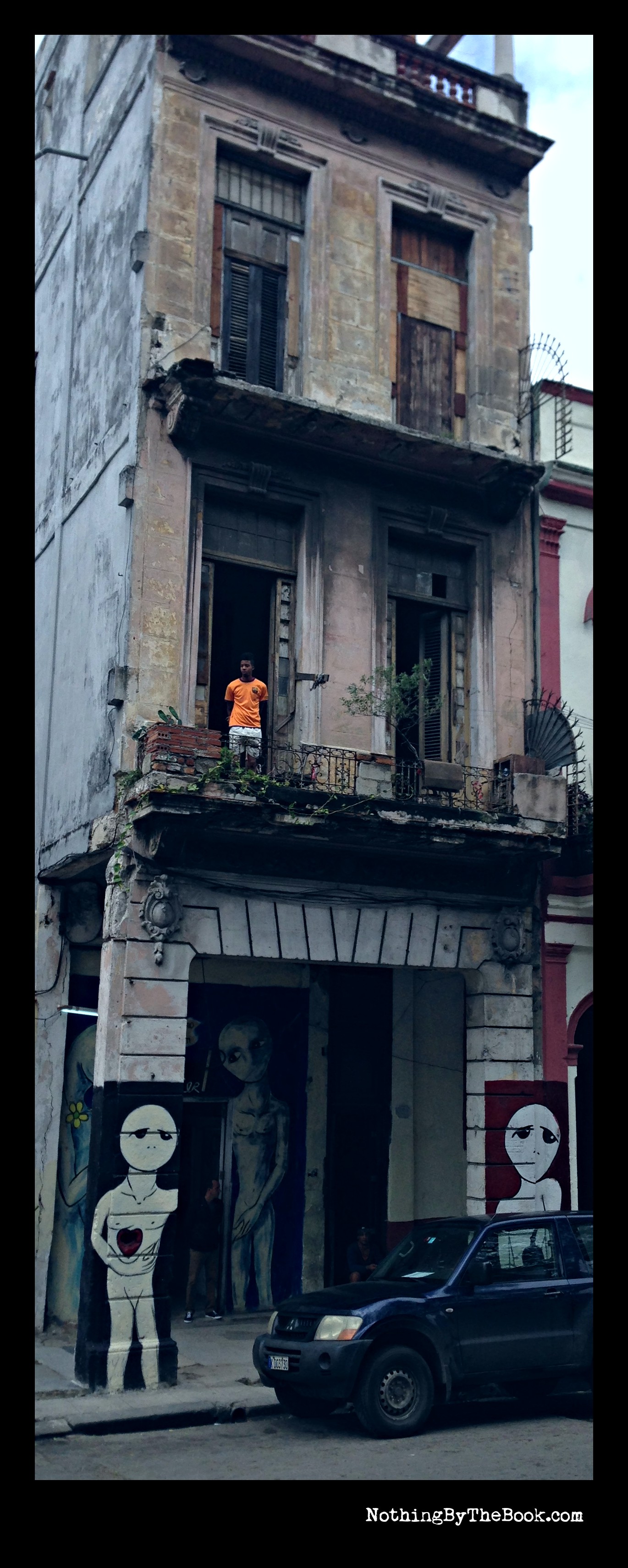
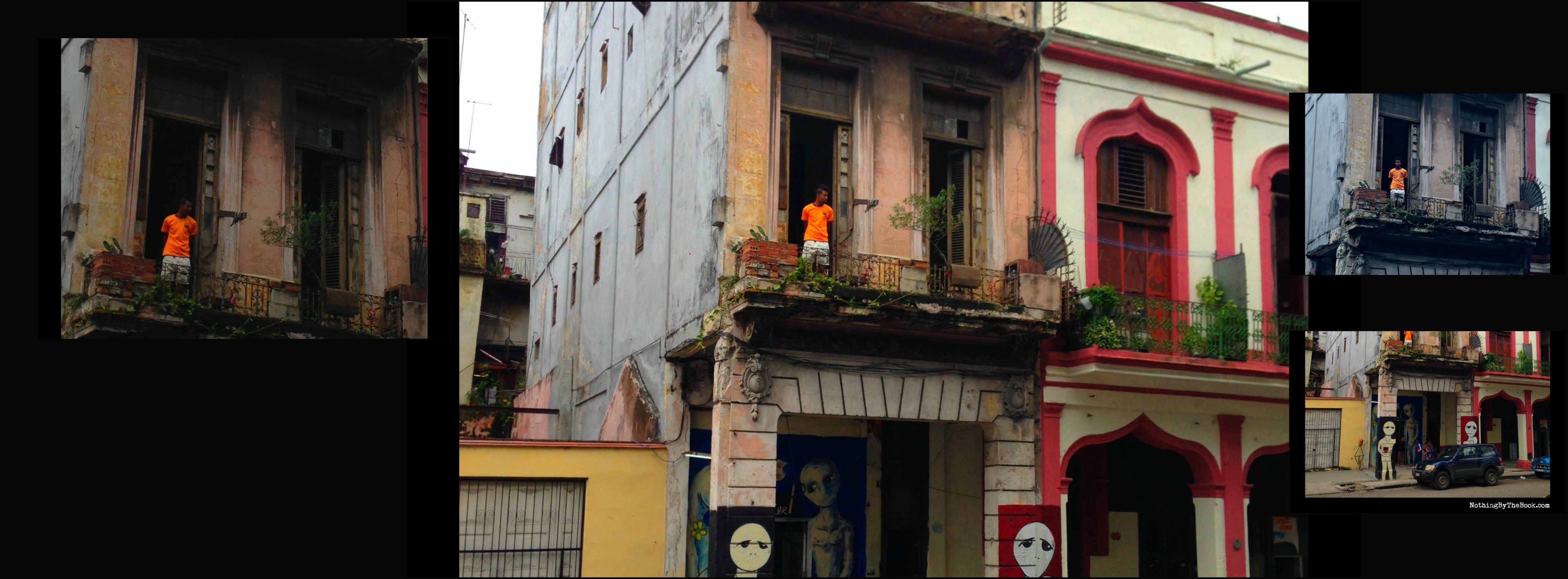
POSTCARDS FROM CUBA: splash of orange, three versions

For O., the boy who loves orange.

Square:

23-Guy In Orange Shirt2

Uber-vertical:

23-Guy In Orange Shirt 1

Wishing I had a zoom lens:

23-Guy In Orange Shirt 3

*

LANDED here for the first time? Let me catch you up:

Series 1 of Postcards from Cuba is now fully live. Check out the annotated table of contents for a tour, or, if you prefer, hop over to the chronological table of contents.

And if you like what you read/hear/see, please consider expressing your delight by making a contribution:

PayPal - The safer, easier way to pay online!

You: Why?

Jane: Because you’ve always wanted to be a patron of the arts, and you know that artists can’t pay for groceries with exposure.

You: How much?

Jane: Buy me a cup of coffee, a Cuba Libre, or a Cuban cigar.

You: That’s all?

Jane: My avarice is happy to match your affluence. But I get $1 in royalties for each copy my other self sells of a traditionally published book. It is impossible to disappoint me.

If you would like to make a contribution, but have PayPal issues (I get it), please email me at nothingbythebook at gmail.com, and we’ll work something out.

Thank you!

“Jane”

NothingByTheBook.com / Tweet tweet @NothingBTBook / Instagram NothingByTheBook

23-Guy in Orange Shirt banner


POSTCARDS FROM CUBA: Lazaro’s farm

For Lazaro, Nidia and Melissa, with all the loves there be.

I think this is probably the most important of the postcards that I’m going to send you. I hope you enjoy it. I’m thrilled to be sending it to you on Sean and mine’s 16th wedding anniversary, because—well, you will see—and I’m thrilled to welcome Kris and Tamara of Blue Mountain Biodynamic Farm as its sponsors. Blue Mountain is an amazing farm near Calgary, which operates as a CSA (community supported agriculture) and which has been providing “hen crafted” eggs to my little piece of urban paradise for years. Check them out–because growing food sustainably? It’s super important. Just ask my friend Lazaro…

Listen:


… and read:

I.

I fall in love with Lazaro in about three, maybe four minutes, even though in those first three, four minutes he calls my boys girls and then, while explaining the reason for his assumption—usually boys have short hair and girls have long hair, that’s the Cuban way—assures me, “You’re beautiful even though you have short hair.” He also tells me I act like a child, not like a lady and a mother—but that’s at the end of our first day’s acquaintance, a full 15-minute cab ride later.

It doesn’t matter. I love him, I trust him, I am happy. My self relaxes and drops all her defences.

My children notice immediately.

Cinder: “Look, Mom finally made a friend here.”

Flora: “Thank god. Maybe she’ll stop giving me lectures on Communism now.”

22-Roses

II.

In a rather bizarre book of pop psychology-self help-quasi history called How Should We Live? Great Ideas from the Past for Every Day Life, Australian-British lifestyle philosopher Roman Krznaric attempts to introduce his modern day Western reading public to the six types of love practiced by the ancient Greeks:

  • eros, the passionate love that drives you mad and makes you wanna get naked with the other
  • philia, the love between family members, venture partners, battlefield comrades, friends
  • ludus, the playful affection between children, casual lovers (dance partners? serial flirters, maybe?)
  • pragma, the mature love and deep understanding that evolves between people (married couples, others) over time, characterized by support, patience, tolerance, compromise and reciprocity
  • agape, a selfless love “extended altruistically to all human beings… offered without obligation or expectation of return—a transcendent love based on human solidarity”; and,
  • philautia—essentially, self-love… both in its good, self-affirming and in its negative, Narcissistic forms.

Got that? There might a quiz at the end…

How We Should Live is not a great book, by the way. Krznaric is an inconsistent writer, and he’s pretty conventional, really. He tries to be provocative, but he stays pretty firmly inside the box in which most of the Western middle class is trapped. Still. Every once in a while, he says something insightful.

Which, I think, is all we can hope for when we write…

An extended quote:

One of the universal questions of emotional life has always been, “What is love?” I believe that this is a misleading question, and one which has caught us in futile knots of confusion in an attempt to identify some definitive essence of “true love.” The lesson from ancient Greece is that we must instead ask ourselves, “How can I cultivate the different varieties of love in my life?” That is the ultimate question of love that we face today. But if we wish to nurture these varieties, we must first dispel the potent myth of romantic love which stands in the way.

Roman Krznaric, How Should We Live

But myths have their uses, do they not? Love at first sight. It’s a thing.

III.

What?

OK, fine.

You know I don’t believe in love at first sight any more than I believe in the Easter Bunny or Zeus’s throne on Mount Olympus, and yet, with each of my enduring loves, I fell in love in that first moment, during that first gaze. Don’t contradict, my love, it is true for you too—I loved you the first time I saw you. I know you had seen me, known me, wanted to connect with me before—but I was not able to lift up my eyes from my navel just then. The first time they rose and met yours—yes. There it was. That is how we begun.

The first time I meet Lazaro’s eyes, I already know he is a good person, because he is stepping in to rescue me from an awkward, potentially volatile situation—offering to drive me home for a fair market price in defiance of an aggressive colleague who is attempting to bully and intimidate me. He sees my children are exhausted, and I’m barely standing—it has been a long day of going to all the places, doing all the things—and he has the means to help us and so he does.

I am too tired to really talk, and after reassuring him that two of my girls are boys, I sink back into the car seat—the car is a 1950s something or other—this matters a great deal to Lazaro, the something or other that the car is, but so little to me that the name—and it can only be one of two, three names, right? Ford, Chrysler, Chevrolet?—slides in one ear and out the other—doesn’t even slide into one ear, but floats over it—but I do hear, “It could have been my grandfather’s car,” Lazaro says with pride, and that “could have been”—not “was”—is so intriguing, it captures my attention, wakes me up. “My mother in law just hated it, hates it,” Lazaro is saying. “When I bought it, she just wouldn’t stop saying, I hate that car, why did you buy that car? And I kept on saying, “Mama, why do you keep on saying that? I don’t care if you hate this car, I bought it for me, and I like it.”

“She is difficult person,” he confides, “my mother-in-law.”

“Are they not always,” I laugh. But his father-in-law, his father-in-law is more a father to him than his own has been.

By the time Lazaro tells me about the farm, I have in the periphery of my imagination outlines of the people who live on it, work it—his wife, her parents. The fourteen year-old-daughter who, on the days her father cannot drive her, hitchhikes eight kilometres to get to school. “Transportation is a challenge in Cuba,” he tells me very seriously as we pass three buses bursting at the seams with people—and stopping to pick up more. “But my daughter, she is very diligent, devoted. She is never late. She always finds a way to do it.”

I see these people in my head, and so I need to see them in life. So I ask to see the farm.

“Why?” Lazaro asks. “There is nothing interesting to see there. It’s just an old house. And some land.”

“Everything here is very interesting to me,” I say. And I can’t quite explain—he has painted a picture with words that now exists in my head, and I don’t want the picture in my head to be fake. I want to see what it really looks like.

That’s when he tells me I’m a child. I shrug. He looks at me, perplexed.

“Are you sure?”

I’m sure. And so the next day, at ten minutes to 10, he is waiting outside the gate to my castle—and is relieved when I run down the stairs, children behind me.

“Are you sure?” he asks again. “I told my wife you wanted to come and see it, and she thought maybe I misunderstood you. There is nothing interesting there. It is just where we live.”

22-Birdcage

IV.

By the way—do you do this too?—one of my most frequent typos is to write “love” instead of “live.” As in, “It is just where we love.” I love that.

V.

Before we get in the car and take off, Lazaro goes to check out the local supermarket and bodega. He is hunting for spaghetti—which has been plentiful in this neighbourhood the whole time I’ve been here—but which makes its way to his village shop very inconsistently.

“My wife needs it to make the lunches,” he explains. His wife, Nidia, is—was—a nurse. The former regional head of a rather important health program—I’m fudging some details here, love, because I’m not sure how identifiable I want to make these beautiful people, because, well, totalitarian regimes make me paranoid—as they should, because that is, after all, their intention. That government job paid her the equivalent of about $30 American dollars a month.

Lazaro is—was—a doctor. His state salary was about the same. I promise not to digress into another math lesson here, only consider this: the day that he drove me home from Old Havana for $10CUC, in that 15 minutes, he made one third of his monthly salary as a fucking life saving physician.

22-Verandah with birds

VI.

After the revolution, Cuba abolished private enterprise and private property on a scale unrivalled in the European Communist world. Poland, for example, always retained some private enterprise. Taxed and regulated to death, thankless, arduous it was—but there were slivers of it here and there. Cuba killed it all. Not, by the way, for ideological reasons, not really. This is really, really important to understand: Fidel Castro was not a socialist. He was—I will not deny this—a patriot. He was also a power-hungry psychopath, and state control of the means of production—the ownership of property—was not so much about giving power to the people as it was about giving power to Fidel.

In 2008, Raoul Castro loosened the restrictions and allowed small-scale ownership of property. People could buy land—and cultivate it.

Dr. Lazaro, the near-famine of the Special Period still vivid in his memory, jumped at the chance.

“The best way to ensure you will have food is to grow your food,” he tells me. There is a pause and a tension in his voice. His grandfather died during the Special Period. He was 95—a good full life. But he died hungry.

“He died hungry.”

So now, the doctor and the nurse own a farm.

22-Stripping the roses 2

VII.

When we get to the farm, Nidia is cleaning up the outdoor kitchen, with the help of her mother and a hired maid, after preparing the midday meal for several dozen farm labourers. These lunches are one of the family’s critical income streams—as critical as the tourist taxi dollars Lazaro gathers on weekends.

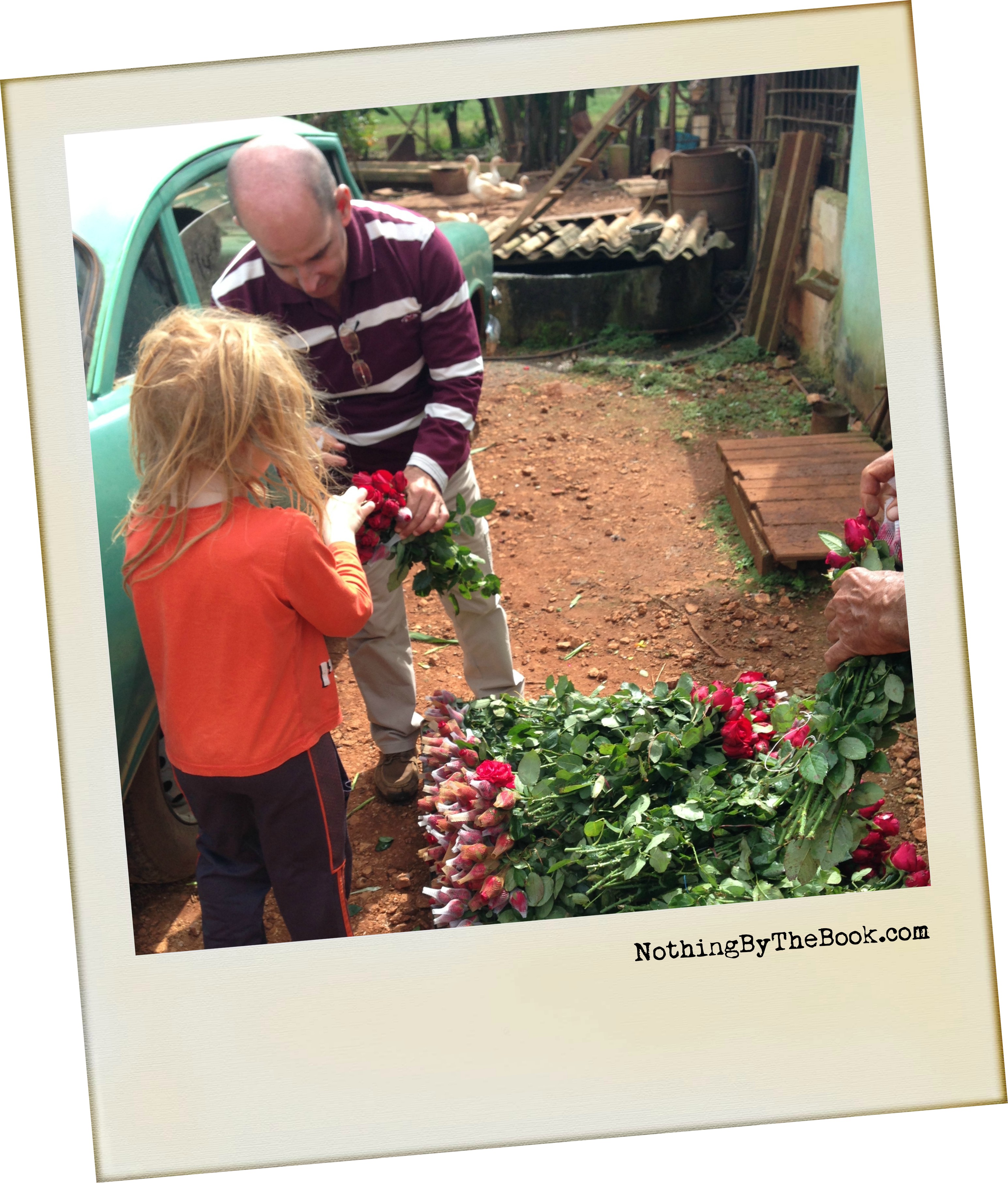
Another consists in renting a refrigeration unit to a nearby rose farmer.

“We are very lucky here—we have good water and we have reliable electricity,” Lazaro explains. The rose farmer doesn’t—he stores his harvested flowers here until it is time to deliver them to vendors.

I have to tell you—every time I see someone selling, buying, carrying flowers in Havana—and I see it a lot—my heart lifts, and I think—this is good. When people have the capacity to love and have something as frivolous, non-utilitarian as flowers—this is good.

(Yes, that means you should buy me flowers more often. I’ll do the same for you.)

Shortly after we arrive, the rose farmers arrive to do a pick up. Ender helps them peel the bloom protectors off. The little mesh things—I call them flower condoms, but there is probably a technically proper name for them—are slipped over the rose buds as soon as they appear on the plants, and keep the blooms tight, extending their lives. In Canada, they would be a disposable item. In Cuba, imported from Brazil—a cause of hassle each time they come across the border—they are precious, and the rose farmers, Lazaro, and Ender carefully remove each one before the roses are ready to be taken away—naked—to the resellers.

22-Coconut

VII.

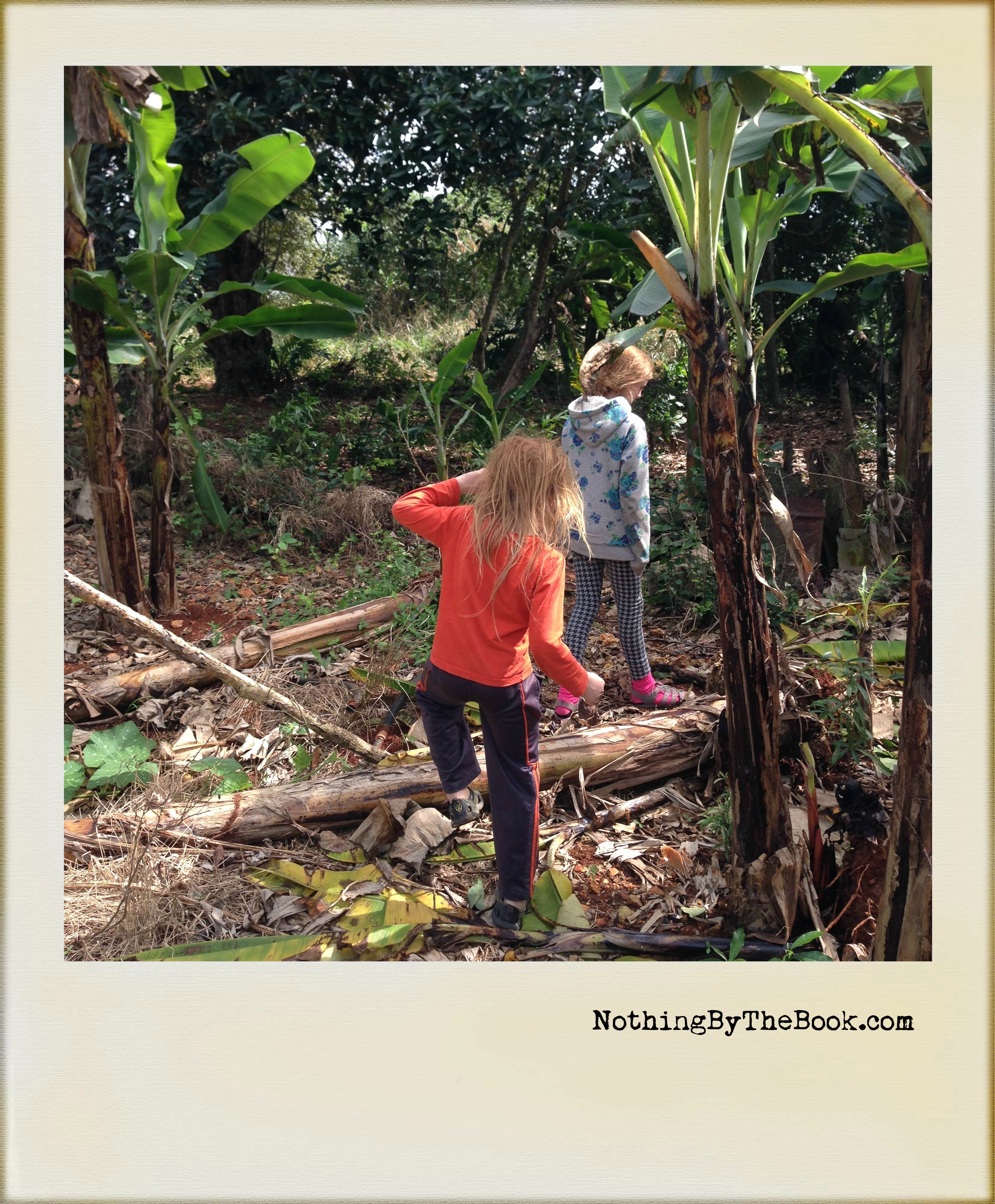
After the rose farmers leave, a neighbour and her children arrive, and Lazaro’s father-in-law gets all the children coconuts.

The coconuts are one of the farm’s weed crops, as are the banana palms, always producing, near indestructible. The avocado and mango trees are more seasonal and require more care. Lazaro also grows squash and pumpkin, beans, peppers. This year’s late and intense rains cost him a pepper crop.

“It is frustrating,” he understates. Shows me a shriveled up pepper.

The land on which he farms used to be part of a government-owned orange plantation, destroyed by a foul blight more than a decade ago. The first thing he had to do when he got the land was uproot and destroy the dead orange trees.

The land he farms surrounds the 100-year-old house where he lives with his wife, their daughter—and his wife’s parents. It used to belong to his wife’s grandparents.

So did some of the land Lazaro has been buying back from the government.

Viva la revolucion.

22-Living Wall

IX.

I love the house. Lazaro is a little worried about managing my expectations, because he sees where I’m living in Havana—and it’s a palace by Cuban standards, and, frankly, by mine. “It’s, like, three times as big as my house in Calgary,” I tell him. “I am not a princess.”

“We like our house,” he assures me. He does not want to look insecure. “It is a good house. But it is just an ordinary, old house.”

Ordinary, simple—efficient. Cement blocks forming thick walls. Glassless windows covered with thick shutters. Designed as perfectly, for the climate, as a Spanish villa. The day is hot, but the temperature inside is perfect.

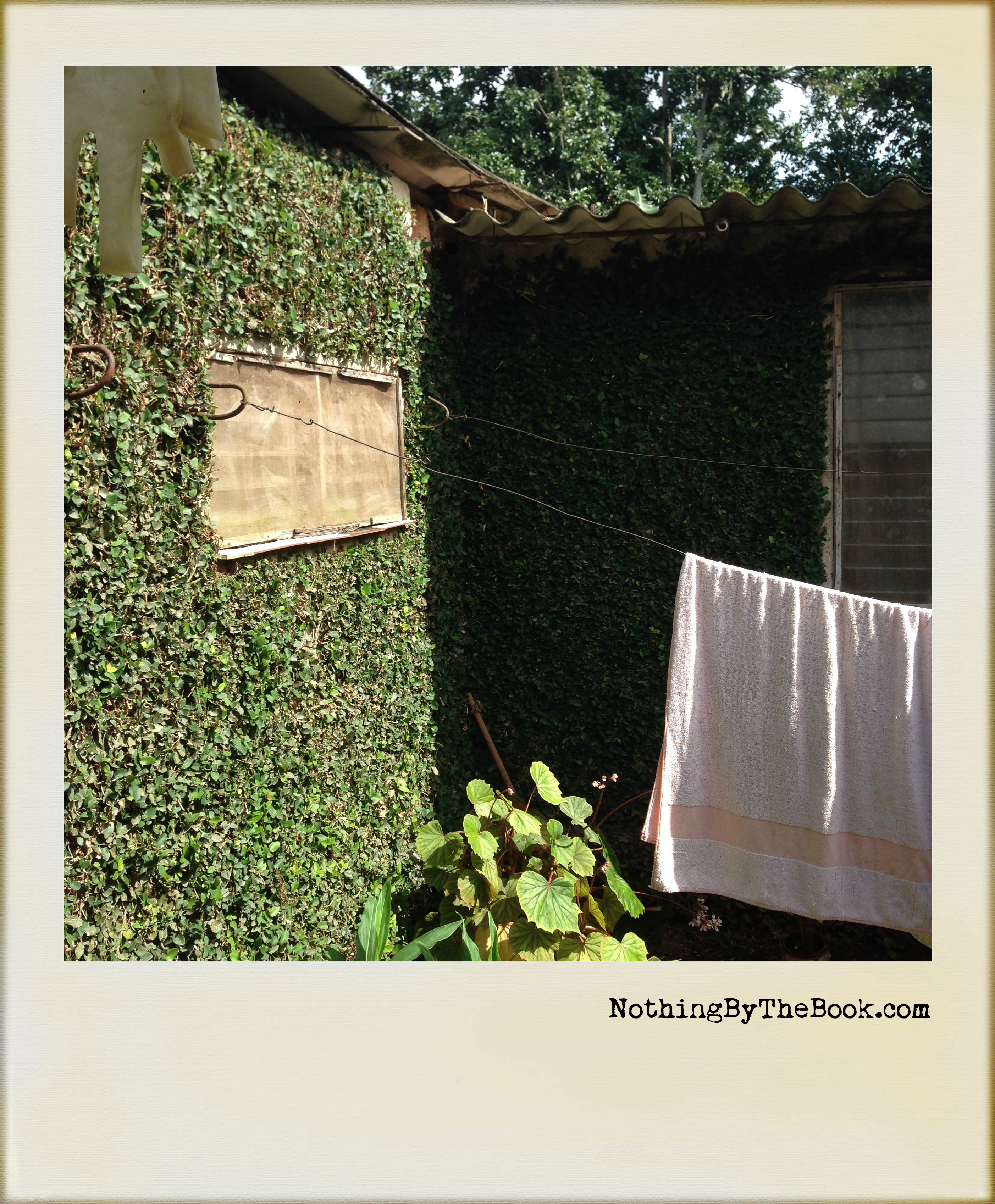
Outside, two of the house’s four walls are covered with a creeping plant.

“It’s a living wall!” I exclaim.

“It’s my air-conditioning,” Lazaro says with pride.

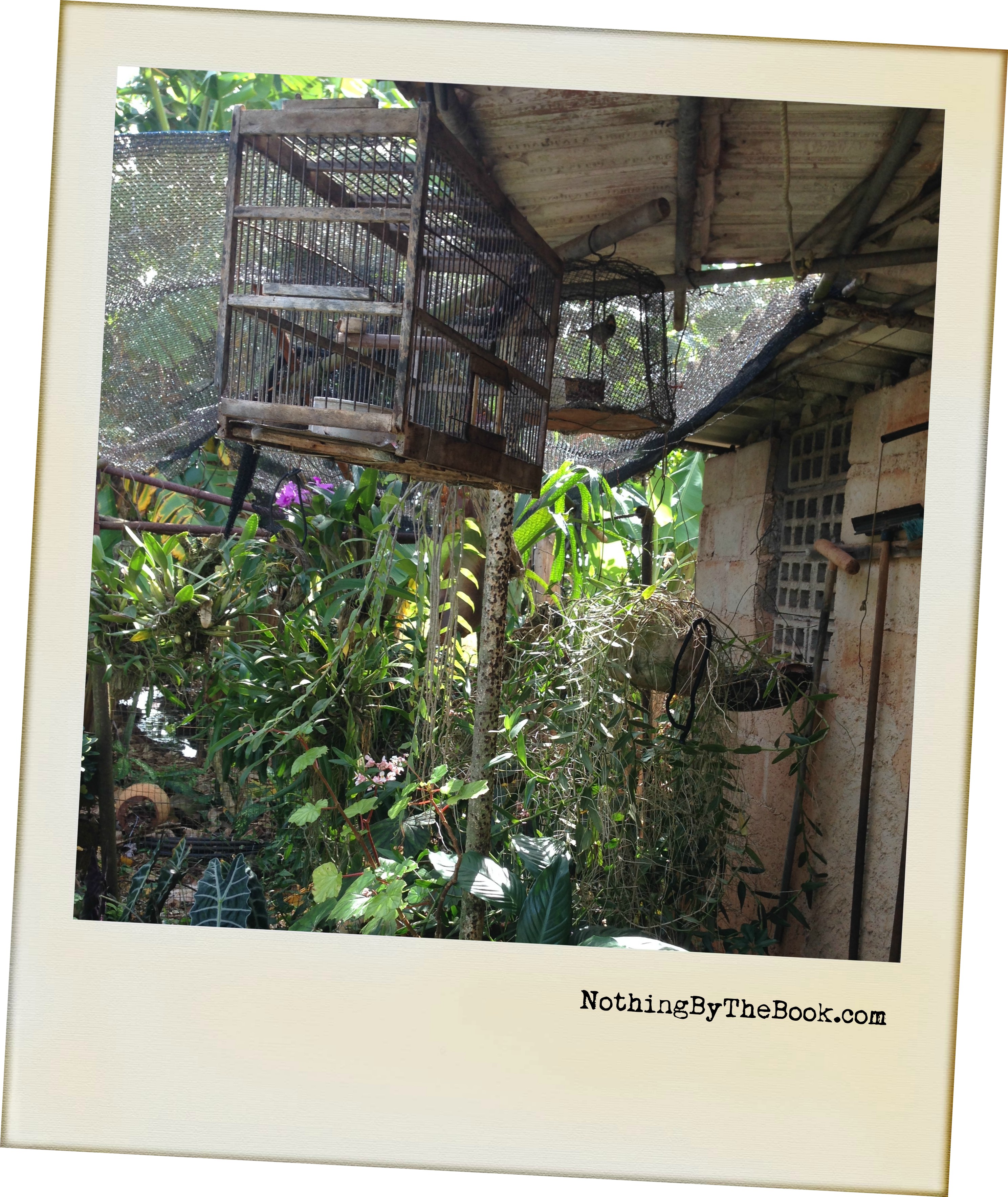
Inside is a large comfortable living room, a well-organized kitchen, three bedrooms, a bathroom. Outside—a huge outdoor kitchen. A verandah filled with bird cages.

The farmyard. The kids go crazy over the poultry. Chickens, of course, but also ducks, geese and a young turkey. A dog to guard them all—and, three young pigs.

“They’re so cute!” Flora exclaims.

“They’re for eating,” Lazaro whispers to me. “But maybe don’t tell her.”

I laugh. Do you see why I love him? He already knows her.

22-piglets

X.

The children explore, and we eat coconut, guava, and talk. Nidia makes me coffee cut with chicory—Cubans like it like that, Lazaro says, a hint of irony in his voice, which is fortunate, because most of the coffee produced in the country is intended for export, and every time the government decides it wants more coffee for export, there’s more chicory in the coffee left available for Cubans.

Nidia tells me her nursing work was a vocation. She misses it. “But….” I nod. I understand.

Lazaro talks about things I don’t understand—irrigation, quality of the soil. Things he is learning about as systematically as he once learned medicine—from books, from more experienced neighbours. He is dreaming of an irrigation system that delivers controlled quantities of water to individual plants. Also a greenhouse. He met a German woman a few months ago who was interested in investing in the farm, providing him with the funds to get a greenhouse. (After I leave, he writes me, elated, he has met with her again: the plan is a go, he will get his greenhouse, and he is closer to his irrigation system—he is happy, and I am so happy for him. If I am ever not destitute, I will buy him a tractor, I tell him. He laughs. The one man in the neighbourhood who owns a tractor makes a good living lending its power from farm to farm. “It might be a complicated gift,” he says. “That tractor breaks all the time. At least it is not my problem to fix it!”)

The kids get bored. It’s time to head back… Before we go, do I want to drive around the area, Lazaro asks.

Of course, of course.

And, we go… and…

Fuck, I wish I hadn’t.

22-Exploring

XI.

It’s not true, of course. I’m glad I have. It’s important to know. To see.

Right. You don’t know what I saw.

I can’t show you. I didn’t take pictures.

I’m afraid to draw them for you with my words.

I don’t know where to start. Because you need to know about the palestinos and L’Oriente first.

L’Oriente means the East—and L’Oriente used to be the name of the Easternmost province of Cuba. In 1976, it was split into five administrative provinces. But this is not important. This is: L’Oriente was importing slaves into the late 1800s—slavery wasn’t abolished in Cuba until 1886. When Cuba finally gained independence from Spain in 1899, L’Oriente was a mess and continued to be a mess into the 20th century. And the 21st. It should be rich, producing agricultural land—it used to be coveted for its sugar and coffee crops. It is now one of Cuba’s poorest regions. After the revolution, tens of thousands of impoverished people from L’Oriente flocked into Havana. They did so again during the Special Period. And again, now.

They are mostly Afro-Cubans. Habaneros call them palestinos. It is not a term of endearment.

“This is where, how they live,” Lazaro says. The houses are cobbled together from whatever. Boards, palm trunks, leaves. Tarps. Sheet metal.

Not that far away—brand new apartment buildings. Erected for the army.

In the middle of it all—a very beautiful, freshly painted house.

“He’s done ok,” Lazaro says as we drive by. “He works for the government. He’s had the chance to steal a lot.”

His voice is interesting. A twinge of contempt. Also, jealousy. Also, understanding.

Another house barely fit for human habitation.

“It is difficult,” Lazaro says. “And I look at it, and I think, how can you live like this, are you animals? And then I think—what must they be leaving behind, running from, if they are willing to live like this?”

Yeah.

XII.

I can’t talk for the rest of the ride home; I kind of lay curled up in the front seat of the car, my head pounding. We pass, on the way, a couple of beautiful houses surrounded by lush trees—and very tall fences.

They belong to the Castros.

It’s cute how Fidel wore that green army uniform all the time, and not Armani suits.

But in the end, I think he had more in common with Battista than with Che Guavara.

“Are you okay?” Lazaro asks me. I shake my head.

“Tell me a beautiful story,” I ask. “I need something beautiful.”

So he tells me how, twenty three years ago, he fell in love with his wife. She came in with an injured leg, to the hospital in which he was doing his residency. “And she wore this incredible tight dress,” he says, “I was with another patient, and my head just snapped, like this!” I laugh. “And I left my patient and followed her. I took the clipboard with her chart and information on it, and I looked at it, and I looked at her, and I said, ‘I’m going to be keeping an eye on you.’ And she said, ‘And who are you?’ And I said, ‘Your future husband.’”

“Love at first sight?” I ask.

“And love twenty three years later,” he says. “She is such a good person, my wife. Her face—she has such a sweet face. And her heart—she reminds me of her grandmother. A good, good person. You know, in Cuba these days, people don’t stay together very long. They get together for a few years, maybe have a child, maybe not—split up. Me, I’m going to stay with my wife.”

I smile at him and reach out to put my hand on his. The capacity to love. That is a beautiful, beautiful thing.

“Is that a good story?” Lazaro asks.

“That is the best story,” I say.

Eros. Philia. Ludus. Pragma. Agape. And—yes–philautia.

Do you see why I fell in love with him?

22-Lazaros Farm Banner

*

Thank you thank you thank you to Blue Mountain Biodynamic Farm for sponsoring this post. Please take some time to check out their website, and think about how you get your food–from whom–and why…

*

LANDED here for the first time? Let me catch you up:

Series 1 of Postcards from Cuba is now fully live. Check out the annotated table of contents for a tour, or, if you prefer, hop over to the chronological table of contents.

And if you like what you read/hear/see, please consider expressing your delight by making a contribution:

PayPal - The safer, easier way to pay online!

You: Why?

Jane: Because you’ve always wanted to be a patron of the arts, and you know that artists can’t pay for groceries with exposure.

You: How much?

Jane: Buy me a cup of coffee, a Cuba Libre, or a Cuban cigar.

You: That’s all?

Jane: My avarice is happy to match your affluence. But I get $1 in royalties for each copy my other self sells of a traditionally published book. It is impossible to disappoint me.

If you would like to make a contribution, but have PayPal issues (I get it), please email me at nothingbythebook at gmail.com, and we’ll work something out.

Thank you!

“Jane”

NothingByTheBook.com / Tweet tweet @NothingBTBook / Instagram NothingByTheBook

22-Lazaros Farm Banner


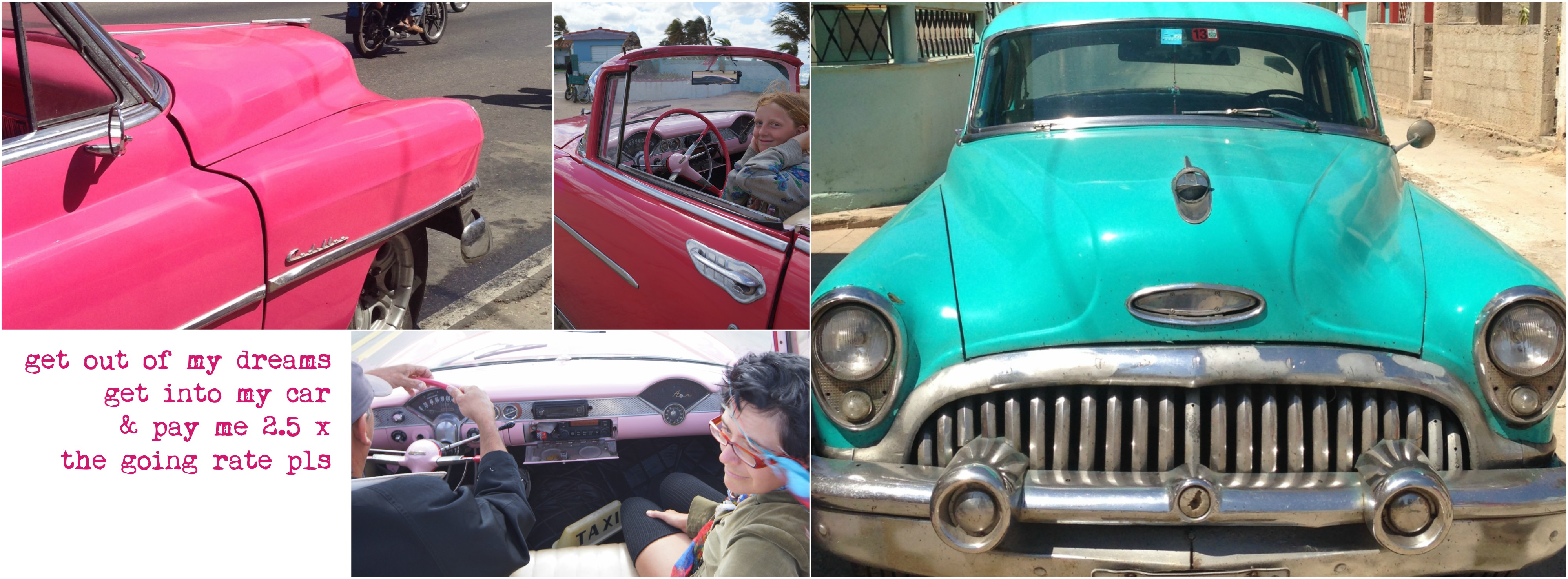
POSTCARDS FROM CUBA: get out of my dreams, get into my car & pay me 2.5x the going rate pls

For Billy Ocean, with apologies.

21-Get out of my dreams get into my car

The game is Pick The Client / Pick The Driver, and it goes like this:

Driver 1: “Taxi?”

Jane: “Yes. To Alemandares area. Near Hotel Kohly.”

Driver 1: “Of course. This way, this car.”

The car is beautiful, one of the renovated 1950s machines tourists love to drive in.

Jane: “How much?”

Driver 1: “To Hotel Kohly? 25 CUC.”

Jane: “You’re kidding. 10 CUC.”

Driver 1: “To Hotel Kohly? 25, absolutely.”

Jane: “Every other time I’ve taken a cab from here to there, it’s been 10 CUC.”

Driver 1: “Then those drivers were stupid because you have a pretty face. 15.”

Jane: “10.”

Driver 1: “No way. 15. No one will take you to Kohly for 10 CUC.”

Driver 2: “I’ll take you.”

Driver 1: “…except for my stupid friend here who doesn’t know how to make money.”

And that’s how I meet Lazaro.

I’ll introduce you to him later this week. In the meantime… if you’re enjoying PostCards from Cuba… think about buying me a cup of coffee…

PayPal - The safer, easier way to pay online!

*

LANDED here for the first time? Let me catch you up:

Series 1 of Postcards from Cuba is now fully live. Check out the annotated table of contents for a tour, or, if you prefer, hop over to the chronological table of contents.

xoxo

“Jane”

NothingByTheBook.com / Tweet tweet @NothingBTBook / Instagram NothingByTheBook


POSTCARDS FROM CUBA: matches

For Golriz. Who also bums matches off hobos.

Listen:


and read:

I.

Jane: “Ok, nobody get a massive cut or break an arm.”

Flora: “What did you do?”

I used the roll of gauze and the tensor bandage from the first aid kit to make a strainer for their little star-shaped pasta. What? They’re pretty sturdy children. Odds they have an injury requiring THAT much gauze are pretty slim.

And I’ve not been able to find either a colander or a cheese cloth in Cuba, so…

It’s both my favourite and most infuriating thing, about here, about any new place. All the things one takes for granted back home—gone. Potable water from the tap? Water fountains from which you can refill your water bottles? Grocery stores full of groceries? Gone, gone, gone—everything is new, everything is an adventure.

Cinder: “That is not fun. It’s fucking infuriating.”

Well, it’s both, right?

Cinder: “No. And, by the way, you told me to remind you, we’re running low on matches.”

Right. Matches. Must get matches.

II.

20-Dime24HrCafeteria

Jane: “Ok, this is fucking ridiculous. Half the people in this country smoke, and everyone has gas cookers. Where the hell do they buy matches?”

Here is where they do NOT buy matches:

  • the supermarket,
  • the 24/7 convenience store
  • the inconvenience “never know when the fuck it’s open” store
  • the pizza place that’s never really open but sells pop out of one of its windows
  • the cigarette booth
  • the newspaper and cigarette booth
  • the rum, cigarette, pop and shampoo (!!!) kiosk
  • the bodega where I can’t shop for anything anyway
  • the hotel lobby…
  • oh, and–yes–the cigarette lighter fixing shop.

When I see the giant “Fosforo” sign over the balcony, I leap into the air and pirouette with joy. That morning, we husbanded our last two matches very carefully. First, I lit a candle. Then I used an incense stick to light the gas stove off the candle. Blew out candle. Relit it before turning off the stove. Etc. We still have one match left, but seriously—where does one buy matches here?

So. Expedition. We need to buy buns—and matches.

Buns—check. We’ve got the getting bread thing nailed.

Matches—not here. Not here.

Jane: “Where?”

Dude on the street: “Try around the corner, in front of the pizza place.”

Like on the sidewalk in front of the pizza place? Where there is… sidewalk? And a sewer?

Dude on the street: “Sometimes, there are matches.”

I want to weep.

But then.

Fosforo! Phosphorus! Also, the Spanish word for match! I have found them!

Yes!

I jaywalk across the street with alacrity, Ender’s hand in mine, the other two following me quickly. (It’s not really jaywalking in Havana, it’s just crossing the street, but it still feels wrong, and terrifying, every single time.)

Jane: “Could I buy a box of matches here?”

Fosforo Man: “No.”

I look over his shoulder into the room, at the rows of lighters and canisters of lighter fluid.

Jane: “Can I buy a lighter here?”

Fosforo Man: “No, I only fix them.”

Jane: “For the love of god, can you tell me where I can buy matches?”

Fosforo Man: “Matches?”

Am I just saying matches really really badly?

Jane: “Matches. A box of matches.”

He explodes into an effusiveness of Cuban Spanish and I squint my eyes and ears and fingers and toes and try very hard to follow. Get lost immediately.

Cinder: “What did he say?”

Jane: “Honestly, I have no idea. I think he said, go back one block, turn right, then turn left, and you’ll see some old men sitting on the street, and they have matches, but that can’t possibly be right.”

Flora: “So… he sent you off to bum matches off hobos?”

Cinder: “Well… we might as well try that, right?”

Right.

We do.

And there they are.

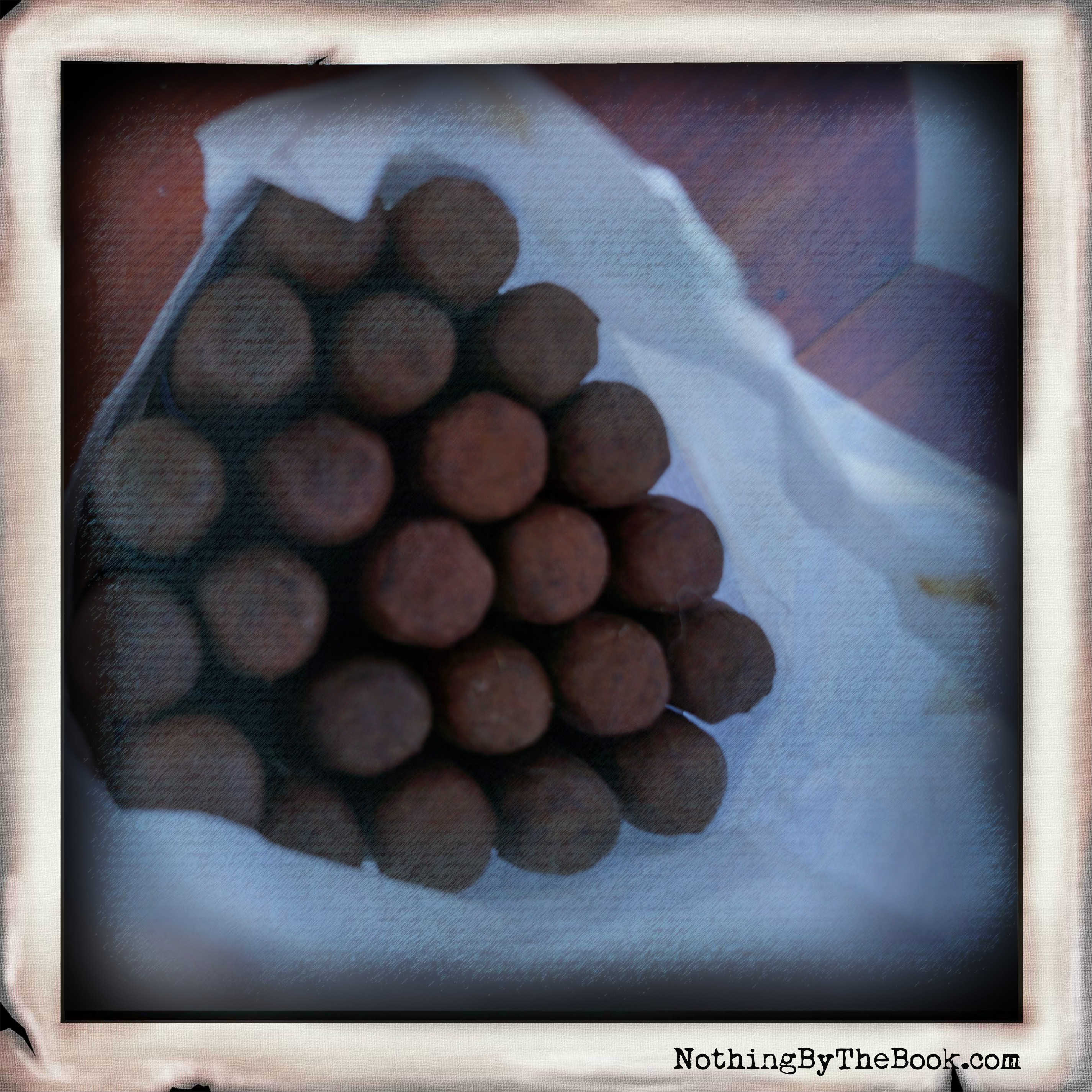
A row of elderly men, sitting or crouching against the wall and steps of the building, each with a cloth spread out in front of him. On each cloth—a few match boxes, a couple of lighters, a handful of straight razor blades, a pile of cigars.

One dude also has plastic combs. Another, an assortment of screws.

The prices are in moneda nacional, and everything, for me, is essentially free: I don’t have change small enough to pay for what they’re selling. I take a box of matches and five cigars. Give a CUC.

He tries to give me seven more cigars.

Jane: “No, no, not so much, not today. Keep the change—I’ll come back for more cigars when I smoke these.”

Him: “Smoke quickly.”

As it turns out—I run out of matches first.

20-Matches no picture

III.

Cuban matches suck.

Yes, this is a First World Whine. I’ve been a good sport. This, I am whining about. If you can’t design a goddamn match that works…

I go through a third of the box of matches before I finally manage to light the stove. They bend. Break. The sulphur falls off during the scraping process. The sulphur tips fall off during the taking the match out of the box process. When I finally manage to light one—it goes out before it reaches the stove.

I weep.

Cinder: “Let me try.”

He ruins six matches before deciding that it is the matches, not I, that are incompetent.

Deep breath.

OK, I’m clearly doing this wrong. These are the local matches. The people here manage to use them. What’s my problem?

The matches bend. The heads fall off. OK. So?

I grasp the match just underneath the head. Strike it—and—yes! Fire! Fingers burning!

I slide the fingers down the match stem quickly. Light the stove.

VIC-TO-RY!

Jane: “I figured it out, I figured it out! Look! You hold the match right underneath the head, and strike it like that, and then you shimmy your fingers down the stem as quickly as you can…”

Cinder: “That’s idiotic.”

Well. I didn’t say it was optimal design. But I figured out how to make it work.

20-Matches cigar image 2

IV.

I never figure out the can opener. That’s not the Cubans’ fault—like the oven that I’m afraid of, the can opener is of Soviet design. Apparently, that means it has to be substantially different than the Western-designed can openers with which I’m familiar that, you know, actually open cans.

Flora: “It’s a special ‘preserve the food you’ve got’ can opener.”

Cinder: “Yeah, the food lasts forever because you can’t get at it.”

Jane: “Shut up. I’m trying to concentrate.”

I first try to use the can opener when my engineer father is in Havana. Now, this is the man who during the US trade embargo on Libya did to Libyan agricultural machinery what the Cubans do to 1950s American cars—and, well, pretty much everything else. He can fix anything, make anything go.

He can’t figure out how to use the can opener.

Jane: “Did you get it to work?”

Dad: “Here. I opened the can.”

Jane: “But did you get the can opener to work? Show me how.”

Dad: “No, I used this knife. Here. Let me show you how to open a can with a knife.”

Life skills, life skills.

20-Matches One of the shops

V.

The rice cooker is of Chinese design. We have no problems.

VI.

The toilet paper is from Vietnam. “New flushable design!” the packaging proudly proclaims. I’m excited—when I lived in Korea, I had to deposit the toilet paper in a little waste basket beside the toilet, and it was the most disgusting…

What?

Landlord: “…and please don’t put the toilet paper in the toilet.”

Jane: “Not even this toilet paper?”

Landlord: “No. The plumbing can’t handle it.”

Jane: “But by the time I use this toilet paper, it’s not so much paper as it is a disgusting liquid mess that I can’t wait to drop…”

Landlord: “Drop it into the waste basket.”

Sigh. I instruct the children.

Cinder: “I never thought that the thing I’d miss most about home would be the ability to flush toilet paper down the toilet.”

Flora: “Just think how happy you will be when you get home. Every time you wipe yourself, you’ll be like, ‘This. Is. So. Great.’”

Cinder: “This. Is. So. Disgusting.”

First World Whiny children.

This is good for them, right?

VII.

Jane: “I’m just going to go have a cigar, and then…”

Cinder: “You are not, Mom. We are running low on matches again.”

Jane: “But I know where to get them now.”

Cinder: “There is no guarantee they will be there tomorrow.”

Jane: “I’ll light the candle first and…”

Cinder: “No. I can’t flush toilet paper, you can’t have a cigar.”

Jane: “Until we have more matches?”

Cinder: “Fine. Hey, where are you going?”

Jane: “I’m going to go bum matches off the hobos.”

Come home with matches. And more cigars.

To a waste basket full of poopy toilet paper.

Ok. This. Is. Disgusting.

But it’s good for me.

Right?

20-Matches cigar image 1

*

LANDED here for the first time? Let me catch you up:

Series 1 of Postcards from Cuba is now fully live. Check out the annotated table of contents for a tour, or, if you prefer, hop over to the chronological table of contents.

And if you like what you read/hear/see, please consider expressing your delight by making a contribution via PayPal:

PayPal - The safer, easier way to pay online!

You: “But how much should I give?”

Jane: “Go wild. There is no upper limit to my avarice. But realistically, $1 is more than I have now, $5 is beautifully generous, and the equivalent of buying me a cup of coffee.  While we’re on beverages, my favourite cheap wine costs $14.75, which is also about the cost of one audiobook on Audible.com… OK, I’ll stop now. $5. The average patron gives $5 and reports she feel AWESOME afterwards.”

If you’d like to make a contribution but have PayPal issues, email me at nothingbythebook@ gmail.com and we’ll work something out.

Or, ya know. Just hang out with us and enjoy.

xoxo

“Jane”

NothingByTheBook.com / Tweet tweet @NothingBTBook / Instagram NothingByTheBook

20-matches banner

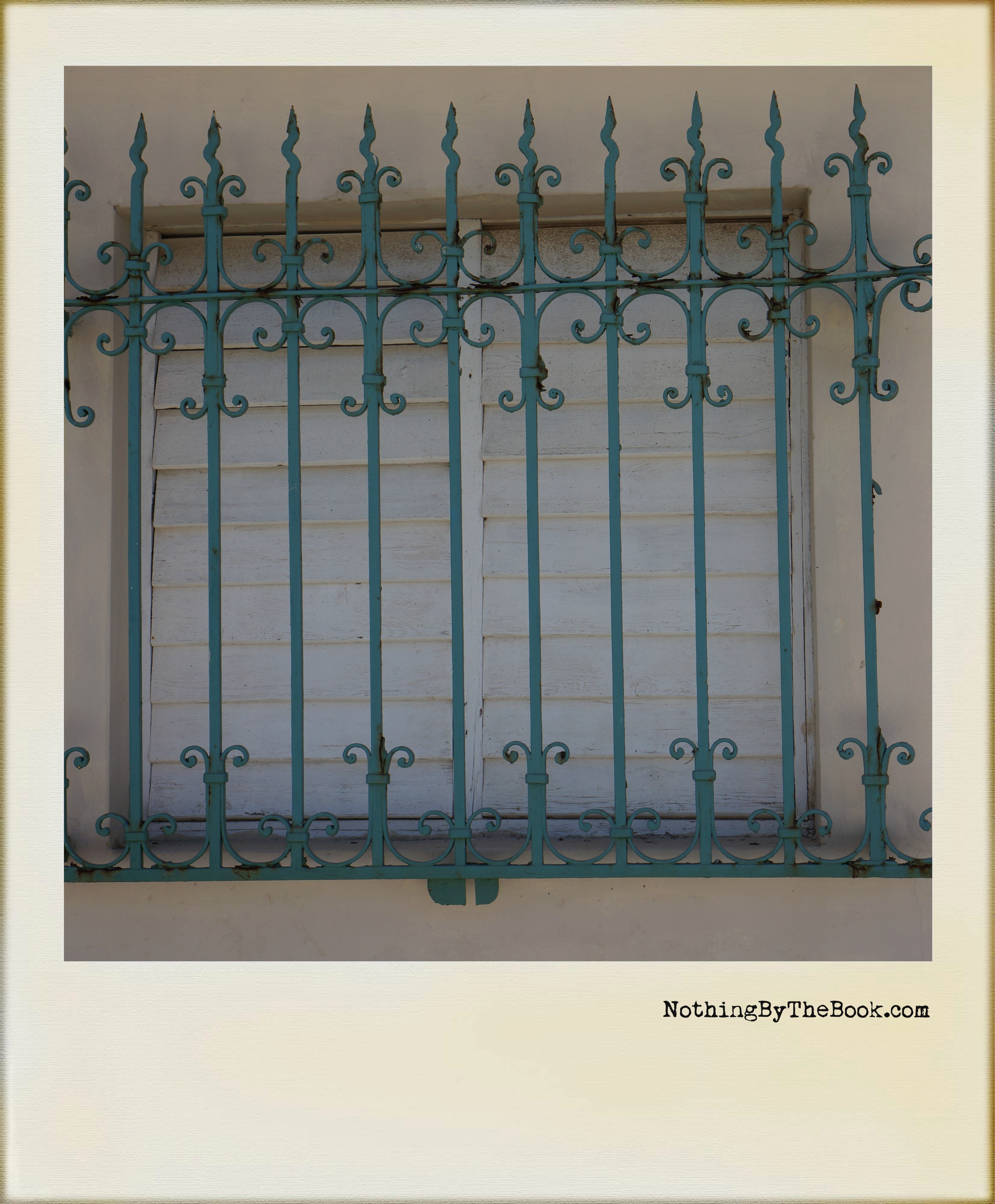
POSTCARDS FROM CUBA: through bent bars

For Dorrie. Who’d get that garden cleaned up pronto.

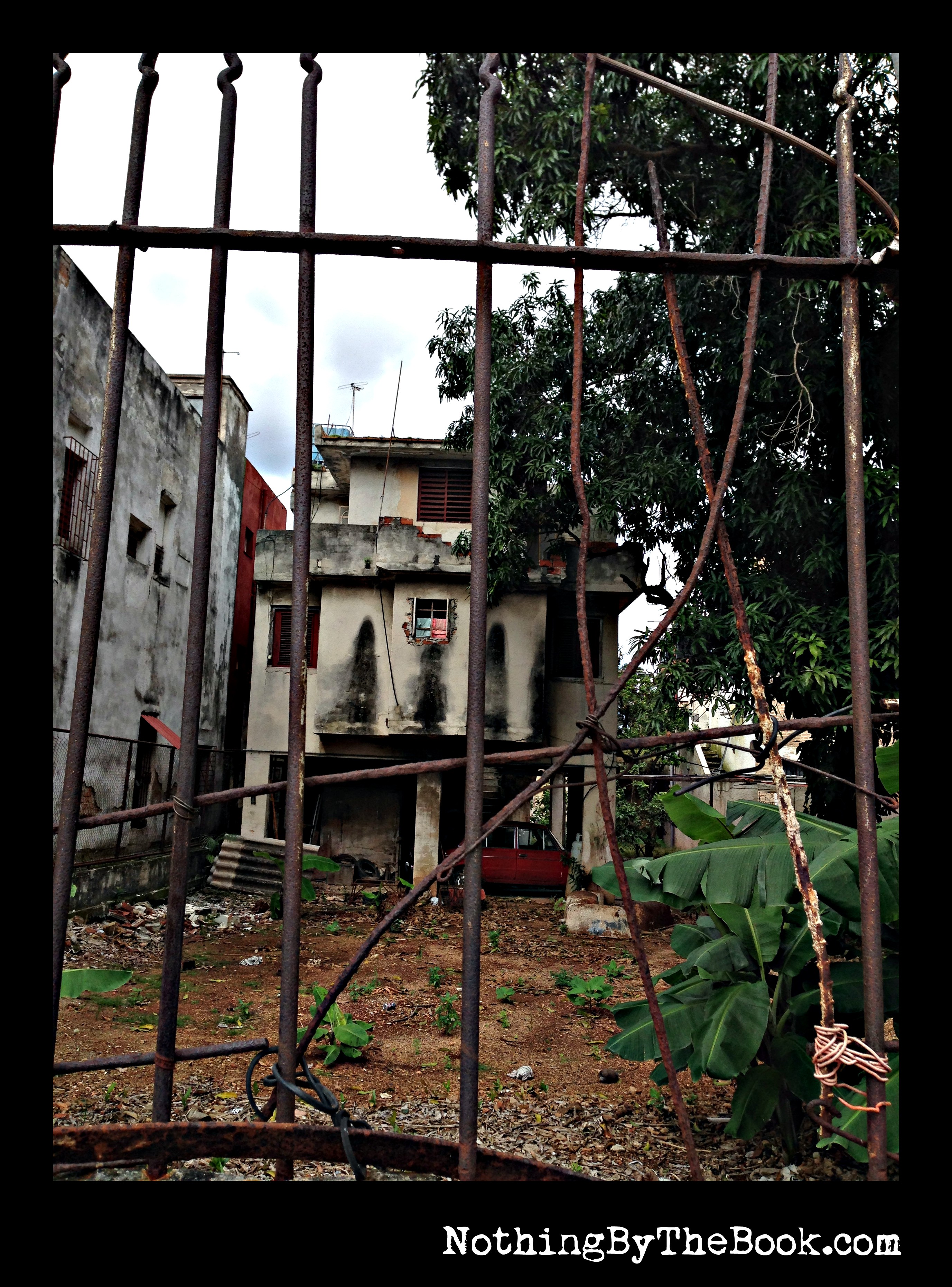
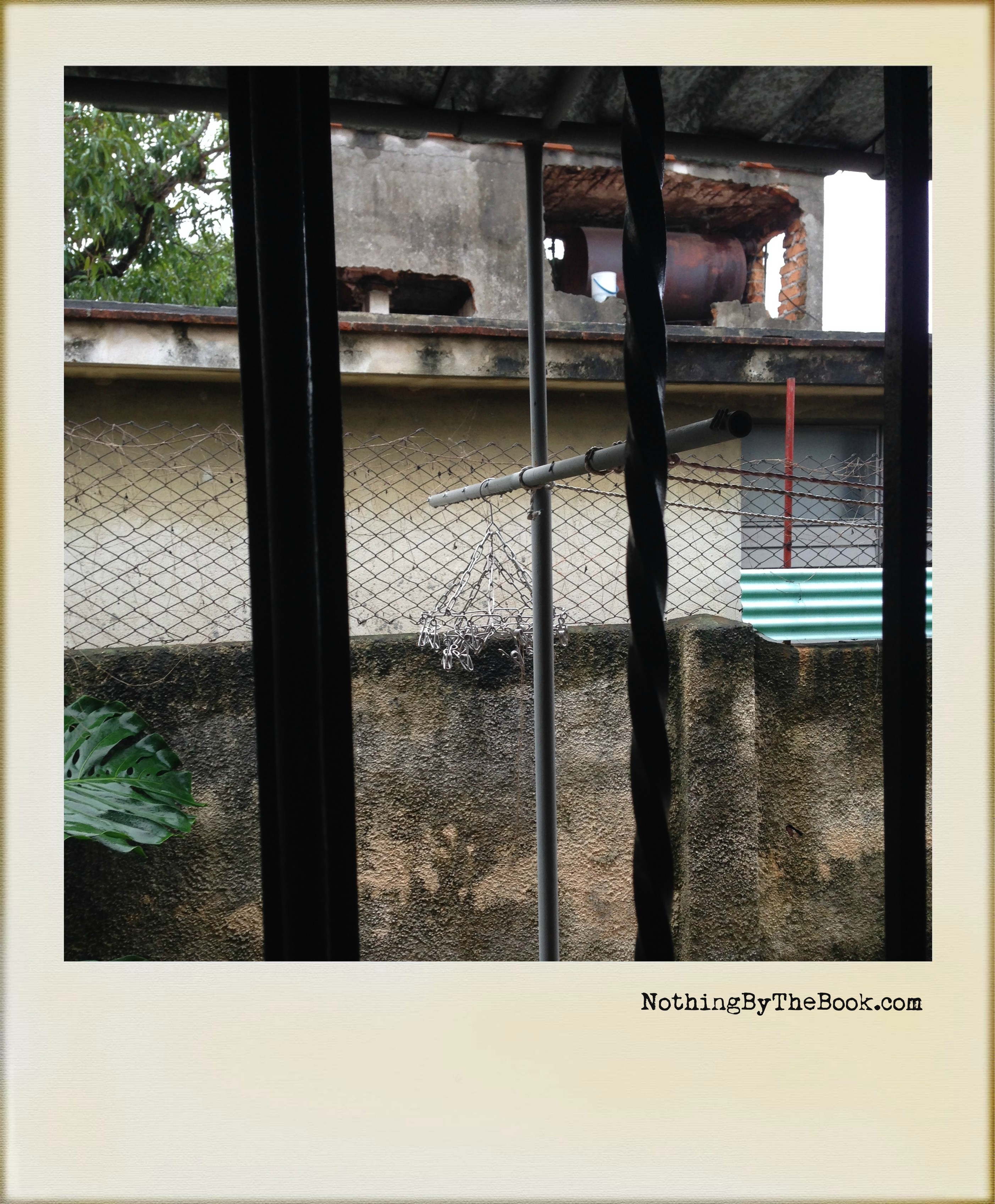
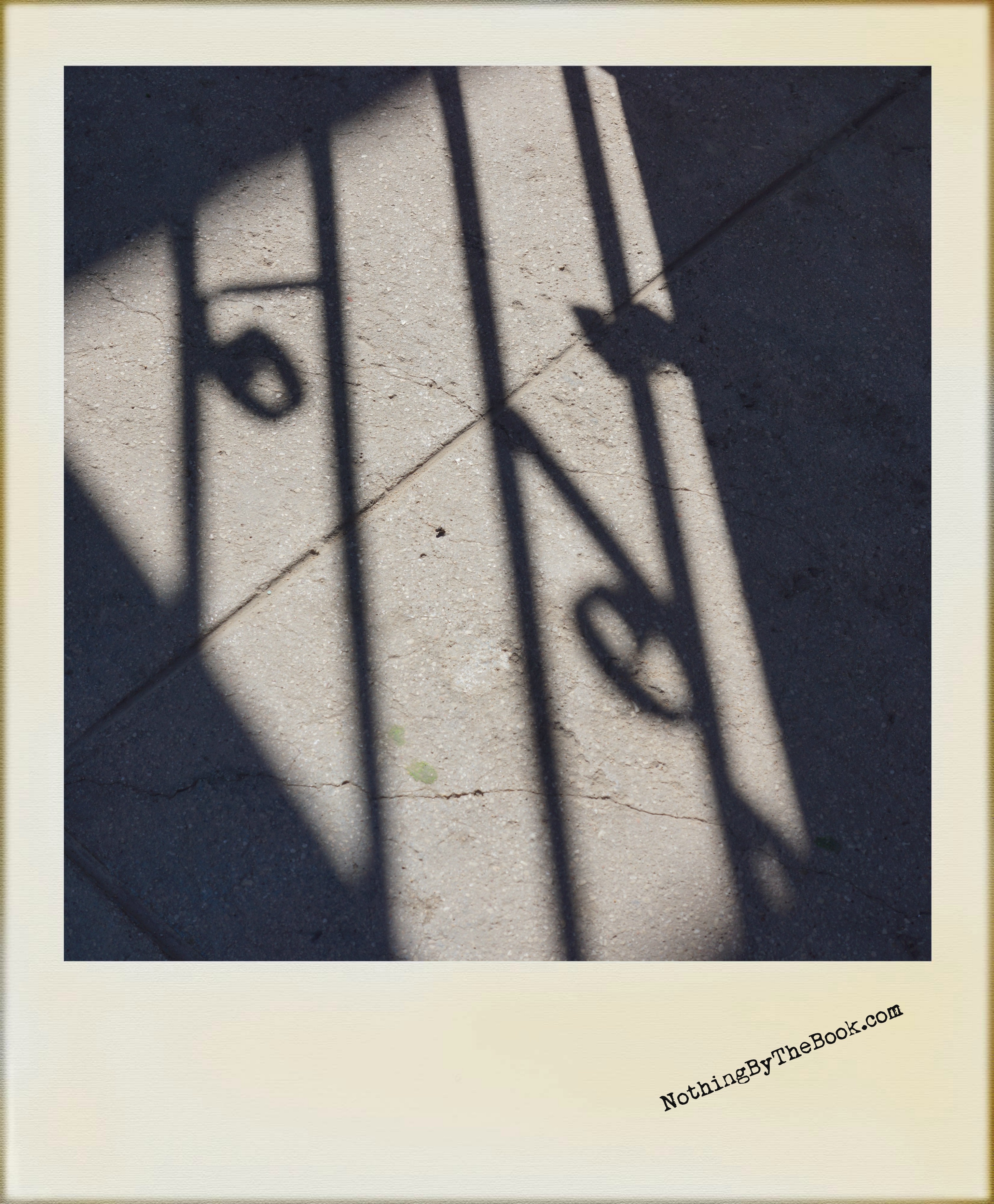
19-Security

*

LANDED here for the first time? Let me catch you up:

Series 1 of Postcards from Cuba is now fully live. Check out the annotated table of contents for a tour, or, if you prefer, hop over to the chronological table of contents.

And if you like what you read/hear/see, please consider expressing your delight by making a contribution:

PayPal - The safer, easier way to pay online!

You: Why?

Jane: Because you’ve always wanted to be a patron of the arts, and you know that artists can’t pay for groceries with exposure.

You: How much?

Jane: Buy me a cup of coffee, a Cuba Libre, or a Cuban cigar.

You: That’s all?

Jane: My avarice is happy to match your affluence. But I get $1 in royalties for each copy my other self sells of a traditionally published book. It is impossible to disappoint me.

If you would like to make a contribution, but have PayPal issues (I get it), please email me at nothingbythebook at gmail.com, and we’ll work something out.

Thank you!

“Jane”

NothingByTheBook.com / Tweet tweet @NothingBTBook / Instagram NothingByTheBook

19-Bars photo banner


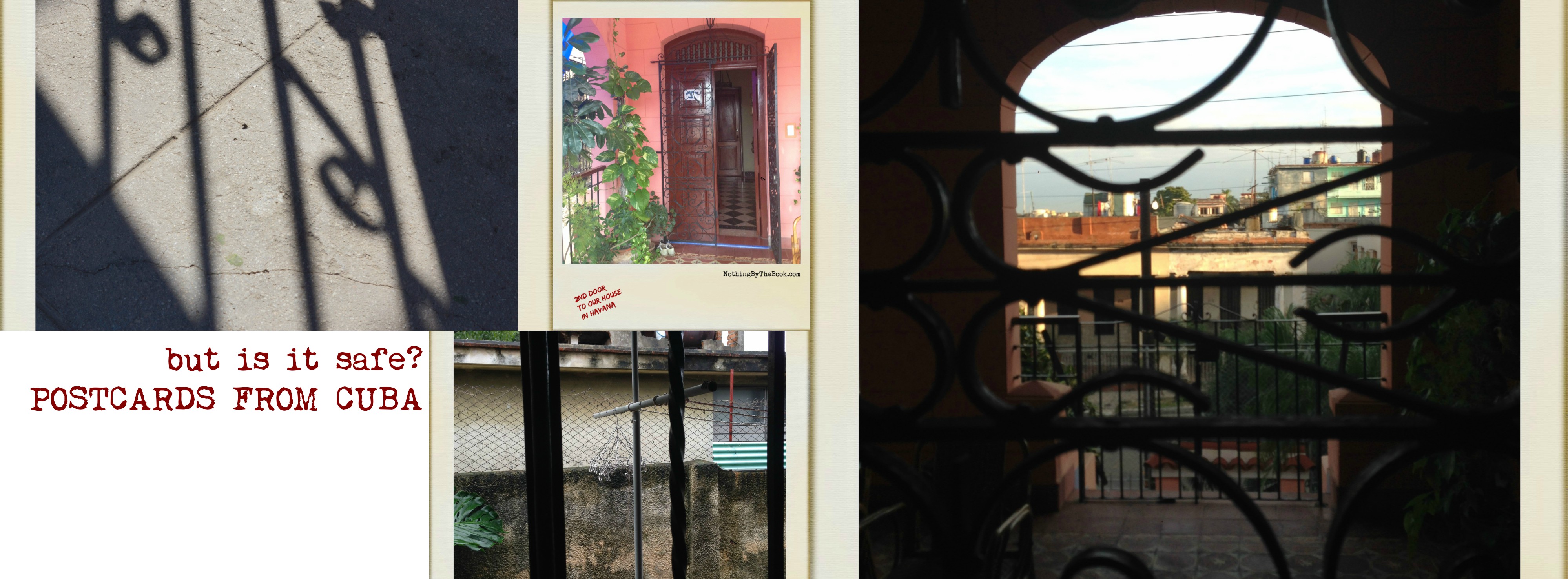
POSTCARDS FROM CUBA: but is it safe?

For Flora, who forces me to think. About everything.

Listen:

and read:

I.

It’s not quite 6 p.m. when I leave the supermarket and not quite pitch dark but dark enough that I walk faster along these streets I still don’t know very well. I don’t feel unsafe but I want to get home quickly, if you know what I mean—at least in part because I’ve left the kids on their own for what I said would be a 10 minute run to get water, and I’ve been gone more than an hour.

There’s been a neighbourhood-wide shortage of bottled water the last few days—no water in the supermarket, nor in the convenience store, nor in any of the half-a-dozen places that sell liquor.

Cinder: “It’s fine, Mom—we can drink the gross boiled water.”

Except, of course, when they call it the gross boiled water, I know they’re not drinking enough of it—I know I’m not—and, particularly on the hotter days, I worry. And I ply them with Fanta…

The first place I go to for water—where I’ve been able to get it most reliably—is supposed to be open until 10 p.m., but it’s closed. So closed it looks like it never existed, and I wander about the block looking for it, certain I’ve missed it. The second place still has no water. I decide to run to the supermarket before it closes—it actually stays open reliably until its posted closing time of 6 p.m., 2 p.m. on Sundays. I checked it for water in the morning—no luck—but maybe there’s been a delivery? And if not, I can get “juice” instead.

But—yes! I score water! Also, a container of chocolate pudding and some yoghurt imported from the Middle East. The prices, in CUCs, are extortionate: easily twice what you’d pay in Canada in Superstore or Safeway at the regular marked-up pre-sale prices.

So. My mission is a success.

But now I’m walking home in the dark.

I’m not scared.

Not really.

OK, maybe a little.

18-Viewthroughwindows

II.

During the four days my parents are here, I take my mom out for a night on the town one day, and my dad for a night on the town the next. They’re pretty mild nights, but they involve a great deal of walking in the dark and moving between bars and a little bit of getting lost.

There is no sense of danger, at all. Just a bit of adventure.

But then… I’m not alone, and I know my kids are home safe with a loving adult.

III.

Part of my preparations for the trip involves drafting a letter, in English and Spanish, laminated on an index card, for each of them: “My name is… I’m visiting Havana with my Mom and siblings. I’m lost. I live at… Can you help me get there? My landlord’s name and contact information is… “

Cinder gets an extra one. “My name is… I think something’s happened to my Mom… I need to call my dad right away. His telephone number and email…”

Cinder: “When do I use this?”

Jane: “If I go out for an hour, and don’t come back for three.”

Cinder: “Three hours is the time?”

Jane: “Yes.”

Cinder: “Sounds reasonable. I’d probably start to panic at three hours.”

I laugh. Add this:

Jane: “Don’t tell Flora, ok?”

He nods. I don’t have to say more. Flora, with her uber-vivid imagination, does not need to start spinning scenarios of what she would do and how if I didn’t come home.

18-Wirefenceonbalcony

IV.

My casa in Havana is a bit of a castle. I have to unlock three doors, and open two additional gates, before I’m finally in the living area proper—and there are two more locks on the door that leads into the back balcony. Bars on all the windows, as decorative as only the Spanish can make bars, but fully functional of course.

The ring of keys I carry with me would make an Abbey key master proud.

Landlord: “There are many, many keys, because this is a very safe place.”

I laugh.

The keys and locks make me feel safe and worried at the same time. What, exactly, are they protecting me from?

They have an interesting impact on the children.

Cinder: “Man, the people here sure don’t trust their neighbours. Look, there’s even a fence up on that roof.”

We look up. And around. Bars, gates, and chain link fences everywhere, yes.

Flora: “Why is that? Are there a lot of break-ins here? Are we safe?”

18-DoortoCasona44

V.

Every Saturday, a breath-takingly beautiful woman comes to change the sheets and to thoroughly clean and air out the house. The first time she comes, Jorge, my landlord, assures me she is very trustworthy, has cleaned for him for years, and he will be there the whole time she is cleaning.

Jane: “That’s fine. I’m not worried. I don’t have anything worth stealing.”

Landlord: “In Cuba, everything is worth stealing.”

I shrug. That’s not quite what I meant, but now is not the time to explain my currently detached (and, I’ll concede, dysfunctional and fucked up) relationship with material possessions. The only thing worth anything to me, really, is my laptop, and that, for its content—all of which is backed up elsewhere. And I’ve written nothing new here yet, nothing worth keeping, saving. So…

… worthless …

VI.

But I think it’s only possible to be detached from your possessions when you know, if you had to—you could replace them—if you really wanted something… you could go get it. Cubans have lived in a state of involuntary deprivations for so long, they want, want, want.

I’m generalizing. Don’t listen to me.

Flora: “I want to know. Are we safe? Are there a lot of break-ins here?”

Jane: “We are safe, and no, no there aren’t.”

Cuba, actually, has a very enviable crime rate—perhaps because the government does not release official crime statistics—or perhaps because there are virtually no guns around. But theft… theft is a way of life.

Flora: “You mean the people here steal a lot?”

No. Yes. Fuck. How do I explain this to a child, even this brilliant child? The relationship between poverty and crime—theft in particular—and the particularly perverse correlation among theft, poverty and systems in which everything belongs to everyone and thus nobody has anything?

Before I tell you what I tell her, I need to say this: Cuban poverty is not like poverty in the Congo or Eritrea—or, closer to Cuba, Haiti, the favelas of Brazil. Socialism has a definite upside.

In the form in which it was implemented across the Soviet Union and its spheres of influence, Cuba included, socialism also fosters a culture of stealing.

It goes like this: Viva la revolucion! We the people own everything! Ummm… wait. If we own everything, how come I don’t have anything? Oh. I see. The government owns everything. But these things that it owns are actually mine. I’m going to take some, because I need them.

And it’s not stealing. Because—we the people own everything.

It’s a victimless crime, right? Taking the toilet paper from the government-owned hotel—you’d buy some if you could, but there isn’t any in the store—diverting a load of cement from the government-owned building site to your house, because that’s the only way you can get it for a desperately needed repair—liberating a few blocks of cheese from the supermarket delivery truck to share among your friends and neigbours—or to sell at a profit through the black market—why not do it, victimless crimes, who suffers?

Nobody—except for the centrally planned economy—and so… everybody.

Flora: “I did not understand a word you just said. Except that I think you said people here steal everything and they suck.”

Jane: “No, no, they don’t! People are just people… and they do the things they need to do in survive. And poverty… even perceived poverty…”

I trail off. How the hell do I explain this to her? Can I explain it to you? To myself? Without making her feel unsafe—or making her think that Cubans are thieves?

Jane: “I think it goes like this. When some people have absolutely nothing, and some people have way too much—and the people who have absolutely nothing have no way of making things better for themselves—they have no way of legitimately earning more, saving more, getting more—it’s just not possible—they look at the people who have way too much with more and more anger and resentment, and one day, they just take their things. And when it’s one person taking one person’s things, that’s theft, that’s crime… but sometimes, a whole bunch of people—an entire underclass of a nation—reaches its breaking point and goes mad, and takes everything from the people who had things…”

Flora: “That’s how revolutions happen.”

Precisely, my brilliant child. Also, riots.

Post-revolutionary and pre-new-capitalism Cuba is in a slightly different place. Most people don’t have very much. But look—that guy over there? He has a great new shiny thing. Lucky bastard. His cousin in Miami sent it to him. I’d sure like one too. I wish I had a cousin in Miami to send me shit. It’s so unfair. I can never have one. No matter how much I work, no matter what I do, I can never have one. So unfair. Why should he have one? He didn’t do anything to deserve it. He didn’t work hard for it. He just got it.

Well, fuck him. I’m going to take it.

Jane: “Do you understand how someone could think like that?”

Flora frowns. Goes off to her room to draw, process.

Comes back.

Flora: “Do the people here think we didn’t work hard, don’t deserve the things we have?”

Ha. What do I do with that?

18-BarsfromBoca2

VII.

My street is lively, and it clearly has a have and have-not side. The houses on my side look down on the lower-placed houses across the asphalt. They’re better kept up, too—there’s more fresh paint here, more plants, less rubble. There’s not a lot of car traffic—a bus comes every once in a while, motorcycles, handfuls of private cars, two competing vegetable carts. I like to sit on the verandah and watch.

One night, I see this: the house directly opposite is having a party—people keep on coming in, door opening, light flashing. A man arrives on a motorcycle. Pulls up onto the sidewalk. Opens the gate to the verandah, wheels the motorcycle inside. The host opens the door for him. They embrace… wheel the motorcycle into the house.

I look at their well-lit, completely empty porch… and before I go to bed that night, take all of our shoes off the verandah and into the house.

Just in case.

I’m not being paranoid.

I don’t really think anyone will scale the very high fence to steal our very cheap shoes.

But. Well. I put them away anyway. This experience would sure start to suck if we had to navigate the streets of Havana barefoot—as some Cubans still do. Oh, there are shoes in the stores now, plenty of them. But I have some experience buying shoes in a centrally planned economy. I’m 99 per cent sure none of us would find sandals or flip flops that fit.

(Winter boots, though, there’d be plenty of–all in women’s size 13 and men’s size 6.5.)

VII.

Here’s why stealing from the government is not a victimless crime: my ten minute run to get water has kept me running around for an hour for an ordinary commodity, which didn’t get delivered to any of the places around here for days—why? Perhaps because too many cases got “liberated,” for personal use or resale, along the way?

Also, this:

To enter the supermarket, I need to leave my purse and my shopping bags in the outside bag check. A security guard examines me as I walk in, to ensure I’m not carrying in something within which I could carry something out. Most of the smaller items—toiletries, candies—are not on shelves but behind counters. Navigating it all—and this is a tiny supermarket—is exhausting.

After I pay and before I exit, another security guard compares the contents of my plastic shopping bag to my receipt.

Every time I go shopping at the supermarket, I feel like a potential criminal… surrounded by potential criminals… and I’m really happy that I have bars on my doors and windows at home…

…and I’m kind of demoralized and I think people suck.

And now, it’s late, the sun is setting, and I’m walking these streets I don’t know very well in the dark, and I’m walking faster, and I don’t take a fully deep breath until I reach home.

18-BarsfromBoca

IX.

Jane: “I’m back!”

Cinder: “Good! I didn’t think you were dead, by the way!”

Flora: “Why would Mom be dead?”

Jane: “I got water and chocolate pudding and yoghurt.”

We’ve been here long enough now, and they’ve been inside enough stores, that they are suitably impressed.

After I ply them with chocolate pudding—and yoghurt—I head out to the verandah with a cup of tea (no cigar today) to enjoy the last few minutes of not-totally-dark. Watch the people on the street—who do not suck, who are not criminals, and who are doing their best to have a decent life. Wave to the vegetable cart guy doing his last run down the street, and smile at the next door neighbour’s visitors.

See two of the across-the-street neighbours wheel their motorcycles inside their houses for the night.

Sigh.

Kick our shoes inside the door.

Not paranoid. Prudent. Right?

*

LANDED here for the first time? Let me catch you up:

Series 1 of Postcards from Cuba is now fully live. Check out the annotated table of contents for a tour, or, if you prefer, hop over to the chronological table of contents.

And if you like what you read/hear/see, please consider expressing your delight by making a contribution:

PayPal - The safer, easier way to pay online!

You: Why?

Jane: Because you’ve always wanted to be a patron of the arts, and you know that artists can’t pay for groceries with exposure.

You: How much?

Jane: Buy me a cup of coffee, a Cuba Libre, or a Cuban cigar.

You: That’s all?

Jane: My avarice is happy to match your affluence. But I get $1 in royalties for each copy my other self sells of a traditionally published book. It is impossible to disappoint me.

If you would like to make a contribution, but have PayPal issues (I get it), please email me at nothingbythebook at gmail.com, and we’ll work something out.

Thank you!

“Jane”

NothingByTheBook.com / Tweet tweet @NothingBTBook / Instagram NothingByTheBook


18-but is it safe banner2

POSTCARDS FROM CUBA: haunted house

For Cheryl. I thought this kinda looked like your dream house. 

17-Haunted House

There are two audio postcards coming this week, “Safety” and “Matches,” and they both need sponsors! Drop me a line if you’re interested in helping out. Sean Lambert at Aspect Tarot returns to sponsor this week’s images–thank you very much! He takes individual reading bookings by appointment (contact details here) but his speciality is parties, corporate events and fundraisers.

*

LANDED here for the first time? Let me catch you up:

Series 1 of Postcards from Cuba is now fully live. Check out the annotated table of contents for a tour, or, if you prefer, hop over to the chronological table of contents.

And if you like what you read/hear/see, please consider expressing your delight by making a contribution:

PayPal - The safer, easier way to pay online!

You: Why?

Jane: Because you’ve always wanted to be a patron of the arts, and you know that artists can’t pay for groceries with exposure.

You: How much?

Jane: Buy me a cup of coffee, a Cuba Libre, or a Cuban cigar.

You: That’s all?

Jane: My avarice is happy to match your affluence. But I get $1 in royalties for each copy my other self sells of a traditionally published book. It is impossible to disappoint me.

If you would like to make a contribution, but have PayPal issues (I get it), please email me at nothingbythebook at gmail.com, and we’ll work something out.

Thank you!

“Jane”

NothingByTheBook.com / Tweet tweet @NothingBTBook / Instagram NothingByTheBook

17-Haunted House Banner

POSTCARDS FROM CUBA: and she asks, is being childless good for a poet?

“for the women I have
been privileged to
in extreme.”

Today’s postcard is very special. Listen:


and/or read… and tell me what you think.

I.

I’m on the verandah, smoking a cigar—yes, again, no, I’m not violating the spirit of our agreement at all—and…

Actually, first this:

II.

I’m in the bathroom, about to sit on the toilet and…

Jane: “Why? Why? Why? Why do you guys always come in and ask me questions when I’m trying to pee? Can’t it wait?

Flora: “Well, it could. But you see, when you’re peeing, you’re sitting down and not moving and not writing, and so it’s pretty easy to get your attention.”

Jane: “Get! Out!”

Cinder: “She’s cranky. Maybe she needs to poop.”

Jane: “Out! Out! Just wait for me outside the door.”

Cinder: “We’d do that, Mom, but we’ve figured out…

Flora: “…that sometimes you go to the bathroom just to hide.”

Well. True that.

16-Kidsinfrontoffountain

III.

So. I’m sitting on the verandah, smoking a cigar, because…

Ender: “Are you done yet?”

Jane: “No, not yet.”

…they’re good 21st century children and they know second-hand smoke, as well as the smoking act itself, gives you cancer, and so…

…for the time that it takes me to smoke a cigar, I am on the verandah, completely, blissfully…

Ender: “Are you done now?”

Jane: “Not quite.”

…alone.

Well, mostly.

IV.

My reading while here is the Paris Review Interviews, and I’ve now left Ernest Hemingway for Jack Gilbert—it’s okay if you haven’t heard of him, I haven’t either until the interview—and now I wonder how it is possible I have lived a life, at all, without him in it, and so you must meet him too.

A quote from Jack:

“Being alive is so extraordinary I don’t know why people limit it to riches, pride, security—all of those things life is built on. People miss so much because they want money and comfort and pride, a house and a job to pay for the house. And they have to get a car. You can’t see anything from a car. It’s moving too fast. People take vacations. That’s their reward—the vacation. Why not the life? Vacations are second-rate. People deprive themselves of so much of their lives—until it’s too late. Though I understand that often you don’t have a choice.”

I fall for Gilbert but hard. But then, there’s this exchange:

“Interviewer: Is being childless good for a poet?

Gilbert: I could never have lived my life the way I have if I had children. There used to be a saying that every baby is a failed novel. I couldn’t have roamed or taken so many chances or lived a life of deprivation. I couldn’t have wasted great chunks of my life.”

Um.

Er…

Jack, sweetheart…

Actually, it’s not the answer. It’s the question.

Despite the brilliance and aliveness of Gilbert’s responses, I’ve been struggling with the quality of the interviewer’s questions from question two (“Did you ever think you’d live this long?”—what the fuck?), and at this “is being childless good for a poet” question, before I read Gilbert’s answer, I want to throttle her. (What will she ask next? “Is being a man good for a poet?” “Has being a vegetarian affected your writing?” “Do you write better in cold weather or hot weather?”)

After I read Gilbert’s answer, I laugh.

Like most breeders, I find the childless so sweetly naïve.

I would never, ever presume to tell anyone to have children. (Although, to be frank, I have at times been tempted to tell people they should not have children, frequently after they’ve already reproduced without asking me whether they should do so, but I do keep my mouth shut then as well, most of the time.)

If you do have children already, I do want to tell you this: do not use them an excuse to NOT do the things you need to do.

Because… martyrs make terrible parents. Not particularly good lovers or life partners either.

16-KidsonMaleconfromback

VI.

I want you to forgive Jack, though, in case you got angry with him when you read that quote—did you, my love?

Listen:

Doing Poetry / Jack Gilbert

Poem, you sonofabitch, it’s bad enough
that I embarrass myself working so hard
to get it right even a little,
and that little grudging and awkward.
But it’s afterwards I resent, when
the sweet sure should hold me like
a trout in the bright summer stream.
There should be at least briefly
access to your glamour and tenderness.
But there’s always this same old
dissatisfaction instead.

Precisely, that, yes. And also, this:

The Great Fires / Jack Gilbert

Love is apart from all things.
Desire and excitement are nothing beside it.
It is not the body that finds love.
What leads us there is the body.
What is not love provokes it.
What is not love quenches it.
Love lays hold of everything we know.
The passions which are called love
also change everything to a newness
at first. Passion is clearly the path
but does not bring us to love.
It opens the castle of our spirit
so that we might find the love which is
a mystery hidden there.
Love is one of many great fires.
Passion is a fire made of many woods,
each of which gives off its special odor
so we can know the many kinds
that are not love. Passion is the paper
and twigs that kindle the flames
but cannot sustain them. Desire perishes
because it tries to be love.
Love is eaten away by appetite.
Love does not last, but it is different
from the passions that do not last.
Love lasts by not lasting.
Isaiah said each man walks in his own fire
for his sins. Love allows us to walk
in the sweet music of our particular heart.

…oh, and just one more. This is one of his first, first poems, from 1962, before he had really lived…

Between Poems / Jack Gilbert

A lady asked me
what poets do
between poems.
Between passions
and visions. I said
that between poems
I provided for death.
She meant as to jobs
and commonly.
Commonly, I provide
against my death,
which comes on.
And give thanks
for the women I have
been privileged to
in extreme.

VI.

You’re not tempted to ask, are you, what any of this has to do with Havana and Cuba? Because the answer is—everything—but I sure as fuck am not planning to connect Jack Gilbert to Che Guavara.

Flora, by the way, keeps on forgetting Che’s name and calls him “That hipster-looking cute guy who’s on all the posters? You know, the one who had the good luck to get assassinated before he got old and ugly? ”

16-HavanaBuildings

VI.

Back to Jack Gilbert:

“This is hard—when I try to explain, it sounds false. But I don’t know any other way to say it. I’m so grateful. There’s nothing I’ve wanted that I haven’t had. Michiko dying, I regret terribly, and losing Linda’s love, I regret equally. … But I still feel grateful. It’s almost unfair to have been as happy as I’ve been. I didn’t earn it: I had a lot of luck. But I was also very, very stubborn. I was determined to get what I wanted as a life.”

Me too, Jack. Me too.

VII.

On the verandah, cigar smoke sticking to my dressing gown, Ender in my lap. We watch geckos crawl on the ceiling, and the moon peek over the powerlines and old school television antenae.

Jane: “You ready to read books and do bedtime, dude?”

He nods. Negotiates for the right to light the incense stick. I read, caress, love. Turn out the light and sit beside him until I hear his breath turn to sleep. Something like a poem dances to the beat of our conjoined breaths; it goes…

My son’s breathing,
soft-yet-loud, my lullaby
as my heartbeat is his.

…look, it’s not quite a haiku. I laugh, love. Tiptoe out of the bedroom, and gather up the elder two. Read them their bedtime novel—which is The City of Ember, by Jeanne DuPrau—a post-apocalyptic young adult novel, strangely apropos to be reading in Havana, but more on that in another postcard)… and then, back to the verandah.

Rum. Laptop. Notebooks.

Words.

I’m in Havana

I. Am. In. Havana.

16-Favourite light

I am so stupidly happy in this moment, I’m having a hard time breathing.

It’s not the diesel stink from the street, or the fumes from generator that’s just kicked in ‘cause we’ve had another blackout.

It’s exhilaration and gratitude.

I realize this will be in violation of the spirit if not the letter of our agreement… but I think I might… I think I might smoke one more cigar now.

You understand why?

*

LANDED here for the first time? Let me catch you up:

Series 1 of Postcards from Cuba is now fully live. Check out the annotated table of contents for a tour, or, if you prefer, hop over to the chronological table of contents.

If you enjoy the postcard project, you can express your delight and support by  sponsoring a Postcard or  making a donation via PayPal:

PayPal - The safer, easier way to pay online!

Be a patron, not just a consumer.

(All the cool kids are doing it. Truth.)

($1 is about what a writer gets every time she sells a traditionally published book. $5 is over the top generosity. Feel free to add as many zeros as your affluence allows. 😉 )

If you’d like to make a contribution but have PayPal issues, email me at nothingbythebook@ gmail.com and we’ll work something out.

Or, ya know. Just hang out with us and enjoy.

xoxo

“Jane”

NothingByTheBook.com / Tweet tweet @NothingBTBook / Instagram NothingByTheBook

16-Childless Poet Banner

POSTCARDS FROM CUBA: but you’re not going to make us swim there, are you?

For Paul, Sam, Damian and Alexi, who would have totally gone swimming.

Caption: Havana’s West Beaches, where the tourists don’t go, and so nobody ever cleans the garbage.

15-WestBeachMedley

*

LANDED here for the first time? Let me catch you up:

Series 1 of Postcards from Cuba is now fully live. Check out the annotated table of contents for a tour, or, if you prefer, hop over to the chronological table of contents.

And if you like what you read/hear/see, please consider expressing your delight by making a contribution:

PayPal - The safer, easier way to pay online!

You: Why?

Jane: Because you’ve always wanted to be a patron of the arts, and you know that artists can’t pay for groceries with exposure.

You: How much?

Jane: Buy me a cup of coffee, a Cuba Libre, or a Cuban cigar.

You: That’s all?

Jane: My avarice is happy to match your affluence. But I get $1 in royalties for each copy my other self sells of a traditionally published book. It is impossible to disappoint me.

If you would like to make a contribution, but have PayPal issues (I get it), please email me at nothingbythebook at gmail.com, and we’ll work something out.

Thank you!

“Jane”

NothingByTheBook.com / Tweet tweet @NothingBTBook / Instagram NothingByTheBook

15-West Beaches Banner

POSTCARDS FROM CUBA: we will survive (audio + post of my FAVE story)

For Cathy, in celebration of our much less dangerous road trip.

Today’s (audio)post is brought to you by Empowerment Personal Training, aka Damir Mulalic. I hobbled into his gym four years ago, on two canes and all the painkillers and placebos (un)known to science, and said, “If you give me back my mobility, I will find a way to work through the pain.” And, well. There be no pain anymore, I can do things with my body I barely dreamt of when I was an indestructible 18 year old, and I got these carved arms and back in the process. Thank you, thank you, thank you, Damir.

I asked Damir & Empowerment PT to sponsor this post because it is also about gratitude… for being alive. Listen:

…and read:

*

The cab driver is 75, and the car is a Soviet piece of shit from 1975 never meant to last the 40 years that it’s been trolling Havana’s streets.

Cinder: “I don’t think it’s going to make it.”

I’m not sure we’re going to live, but we’re in the cab and it’s moving—well, coasting down the hill—the driver doesn’t turn on the engine under we’re about to plateau—when he does, there is a sputter and then a deafening rumble…

Flora: “Is it supposed to make that noise?”

Jane: “Don’t think about it.”

14-CabofDeath1

The car—a Lada—doesn’t seem to be able to go faster than 40 km/hour—or maybe the driver can’t see farther out than 40 km/hour, he seems to be leaning forward and peering through the windshield way too intently. Its slow speed is, initially, somehow reassuring. If its brakes don’t work—and frankly, judging by the interior, the noise of the engine and… there it is, that’s the squeak of old, worn-out brakes, the brakes probably don’t work—most of the time we’re going slowly enough that I could probably brake Flinstone style.

Cinder: “And if we rear-end anything, we probably won’t cause too much damage.”

Flora: “But the car will completely fall apart. Into tiny little pieces.”

Cinder: “It’s already in tiny little pieces. See that voodoo doll hanging from the rearview mirror? That’s what’s holding this car together.”

Flora: “At least there’s a rearview mirror. Have you noticed there’s only one side mirror?”

Jane: “At least it’s on the driver’s side.”

Ender: “If something rear-ends us, we will all die.”

Jane: “Don’t think about that. Think ‘We will survive’ thoughts.”

Cinder: “I hope you know, Mom, if we die in a horrific car crash in Cuba, Daddy will never forgive you.”

Jane: “Don’t think about that. Think ‘We will survive’ thoughts.”

14-CabofDeath6

It’s really not that bad.

Until we go through the tunnel under the Havana harbor… and out onto the freeway where everyone else is allowed to go 80 km / hour and those that can are zipping along at 100… and we’re still going at 40.

And taking up two lanes, because our driver can’t seem to see the center line.

Flora: “This is definitely the most dangerous thing we have done in Cuba so far.”

Um… yeah. Probably.

Worst thing: when I was negotiating on price… I negotiated for the return trip too. We’re going from Havana to the Playas del Estes, and that’s 20 km away from Havana proper and 10 more from our digs, and I don’t know if there are buses, or how easy it is to find a taxi, so I thought I was being prudent. Fuck, fuck, fuck.

That’s fine. I will bail. I’ll give him an extra $5 CUC—thanks for your trouble, we’ll find a different way back—and oh-my-fucking-god… no, it’s good, it’s all good, we’re fine.

Jane: “So I’m thinking we won’t take this cab back.”

Cinder: “Ya’ think? I think it will be a miracle if this cab makes it there.

We finally wind off the highway—thank every god I don’t believe in—and onto the sleepy road along the playas.

Flora: “I don’t know, Mom. This town is dead. I haven’t seen a single other car. Maybe it’s good to have a ride back confirmed.”

Flora’s my anti-risk taker. But what’s a bigger risk? No ride back, or this ride back?

We’re driving along the 9 km stretch of beaches— such beautiful names—Tarará, El Mégano, Santa María del Mar, Boca Ciega..  I wanted to go to Megano or Santa Maria, which are supposed to be the best stretches of beach for swimming—he misses both turn-offs—goes to the end of the road. “It’s very beautiful and tranquil here,” he assures me.

14-CabofDeath5

Cinder: “Let’s just get the hell out of this car!”

As I’m trying to figure out how to not go back to Havana in the Soviet piece of shit that I know plans to kill us before it finally dies itself—I can see the intention in its beady, evil little lamp lights—the ancient driver unloads my children and our beach bag.

“I will wait for you right here,” he says. And my heart sinks. Of course he will. Gasoline in Cuba is at a whopping $1CUC a liter—that’s $1.40 Canadian, and not even when oil was touching $150 a barrel were we paying that much for it in Alberta—and this beast burns… let’s just say, fuel efficient it’s not. Driving me back means he’s making money; driving back empty means he’s paying for gas.

Fuck.

And he’s old. And kind. And clearly, not well off at all, or…

Fuck, fuck, fuck.

Cinder: “What’s going on, Mom?”

Jane: “The driver’s going to wait for us.”

Flora: “Good. Because otherwise we’d probably have to walk home, and it would take forever.”

Cinder: “But we would definitely be alive at the end of it.”

Jane: “Think ‘We will survive thoughts.’ In the meantime… enjoy the beach.”

The beach is beautiful, except for all the fat, old, ugly white men with breathtakingly gorgeous young black-and-brown Cuban boys, which couplings make me meditate too much on prostitution—and on the prostitution-like undercoat of much of the tourist experience—and finally have me plunge myself into the warm, turquoise water with a stiff admonition to my brain to shut the fuck up and just swim.

14-CabofDeathPlaya

As, four hours later, we trudge back, exhausted and a little sun-burned, to where we left car and driver, I have several hopes:

Hope 1: He got tired of waiting and left. The beach is not abandoned—I have seen plenty of other tourists, seen signs leading to hotels and restaurants, and I will find another set of wheels.

Hope 2: The car will not start. We will have no choice but to seek another set of wheels.

Hope 3: He’s had a heart attack and died, and I will have to call an ambulance and we can probably get a ride to Havana with the corpse.

14-CabofDeath4

Fuck.

There he is.

“Good day?” he asks. I nod, resigned. Que sera, sera. We will live, right?

Maybe the car won’t start.

It starts. The cab driver turns it around. Sleepy town. Highway. Center lane. Shoulder.

Cinder: “At least it’s never into on-coming traffic.”

At least there’s that.

I start to think… this would be a good time to start believing in God. All the gods. And make deals with them. “Please let me get back to Havana alive…” No, wait, I need to be more specific—if there’s anything I’ve learned from the world’s mythologies is that wish-granting deities are all nasty bastards and will look for the loophole in any wish. “Please let all of us, here in this car, get back to our home alive, unharmed and happy.”

The car starts to sputter and make noises that sound vaguely familiar… slow down even more…

Shoulder. An intentional stop.

The gods work in mysterious ways. We are out of gas.

14-CabofDeath3

Unfortunately, our driver is prepared for this eventuality—the gas gauge in the Lada stopped working a long time ago. He goes to the trunk for a canister.

Fortunately, it’s empty.

Unfortunately, there’s a gas station across the highway. He trudges across the four lines of traffic.

I ponder making a run for it. Turn my head.

Flora and Ender are curled into each other, deep asleep.

14-CabofDeath8

All right then.

Think, ‘We will survive’ thoughts.

I think ‘We will survive’ thoughts ardently, passionately, religiously as we rejoin the traffic (sparse, thank you, gods) on the highway. I continue to think them as we maneuver through the tunnel, and all the way along the Malecon, during every torturous left turn and oh-so-slowly made right merge. I pray so intensely and intently I barely notice when we pull up at our destination… and the car sputters, splutters, and stops.

Jane: “Thank you, thank you, thank you.”

To the driver, to the gods?

To anyone who will receive the gratitude.

The driver’s son—or, as I am affectionately thinking of him, the bastard who convinced me to put my children in this cab of death—is waiting for his father and the car anxiously.

“Hey, my baby made it!” he says joyfully, but also with some surprise.

It’s ok. I won’t be angry.

We are alive.

Unharmed.

Happy.

I pay them.

Thank-you-thank-you-thank-you-thank-you.

Cinder: “Let’s never, ever, take that cab again.”

There’s a spluttering noise.

Flora: “I don’t think that will be an issue.”

I turn my head. Father and son are both in the car—son in the driver’ seat now. Keys in ignition, foot—I imagine—on pedal.

Grrr-grrr-grrrr-grrr-grrr.

Grr-grrr-grrr-grrr.

Grrr.

G…

Thank. You.

*

LANDED here for the first time? Let me catch you up:

Series 1 of Postcards from Cuba is now fully live. Check out the annotated table of contents for a tour, or, if you prefer, hop over to the chronological table of contents.

And if you like what you read/hear/see, please consider expressing your delight by making a contribution:

PayPal - The safer, easier way to pay online!

You: Why?

Jane: Because you’ve always wanted to be a patron of the arts, and you know that artists can’t pay for groceries with exposure.

You: How much?

Jane: Buy me a cup of coffee, a Cuba Libre, or a Cuban cigar.

You: That’s all?

Jane: My avarice is happy to match your affluence. But I get $1 in royalties for each copy my other self sells of a traditionally published book. It is impossible to disappoint me.

If you would like to make a contribution, but have PayPal issues (I get it), please email me at nothingbythebook at gmail.com, and we’ll work something out.

Thank you!

“Jane”

NothingByTheBook.com / Tweet tweet @NothingBTBook / Instagram NothingByTheBook

14-CabDeath Banner


POSTCARDS FROM CUBA: the view from here

For Cinder. Who’s still appalled I got in… and didn’t get out.

13-CabofDeath1

Today’s photograph is a teaser for tomorrow’s (audio)post, “We will survive.” It is graciously sponsored by the uber-talented Nick Devlin, whose Cuba No Colour (2015) photo collection has set a new standard for capturing Cuba visually. Some of his amazing photographs are  available for viewing here: Nick Devlin.com/ — please have a look!

*

LANDED here for the first time? Let me catch you up:

Series 1 of Postcards from Cuba is now fully live. Check out the annotated table of contents for a tour, or, if you prefer, hop over to the chronological table of contents.

And if you like what you read/hear/see, please consider expressing your delight by making a contribution:

PayPal - The safer, easier way to pay online!

You: Why?

Jane: Because you’ve always wanted to be a patron of the arts, and you know that artists can’t pay for groceries with exposure.

You: How much?

Jane: Buy me a cup of coffee, a Cuba Libre, or a Cuban cigar.

You: That’s all?

Jane: My avarice is happy to match your affluence. But I get $1 in royalties for each copy my other self sells of a traditionally published book. It is impossible to disappoint me.

xoxo

“Jane”

NothingByTheBook.com / Tweet tweet @NothingBTBook / Instagram NothingByTheBook

13-CabofDeathBanner


POSTCARDS FROM CUBA: egg hunt

For Tamara, who keeps us in eggs, and Crystal, for “taking over.”

With gratitude, again,  to Janine Morigeau of Tarot By Janine. Janine is one of the longest practicing Tarot card readers in the Calgary area–she takes phone and Skype readings too, by the way–and amazing in every way. I am so grateful you are in my life.

Listen…


…or read…

I.

I have been trying to buy eggs for about a week. I know there must be eggs, because, first—all the roosters that start crowing at four in the morning? Surely they’re not just loved family pets, right? Second, the cafeterias and street stalls frequently sell egg sandwiches, and all the bakeries sell flans—and, most convincingly, on the second or third day that we were here, my mother scored us a flat of eggs.

Where are they?

Neither in the supermarket nor the agro, and no one’s walked down my street yelling “eggs.” (They have walked down the street yelling “Crackers,” “Peanuts,” “Buns,” “Brooms,” “Fruit” and, I think, “Puppies.”) I ask at the supermarket. “Not here,” they say. “Where?” I ask. She shrugs, he shrugs. They laugh. I try not to take it personally.
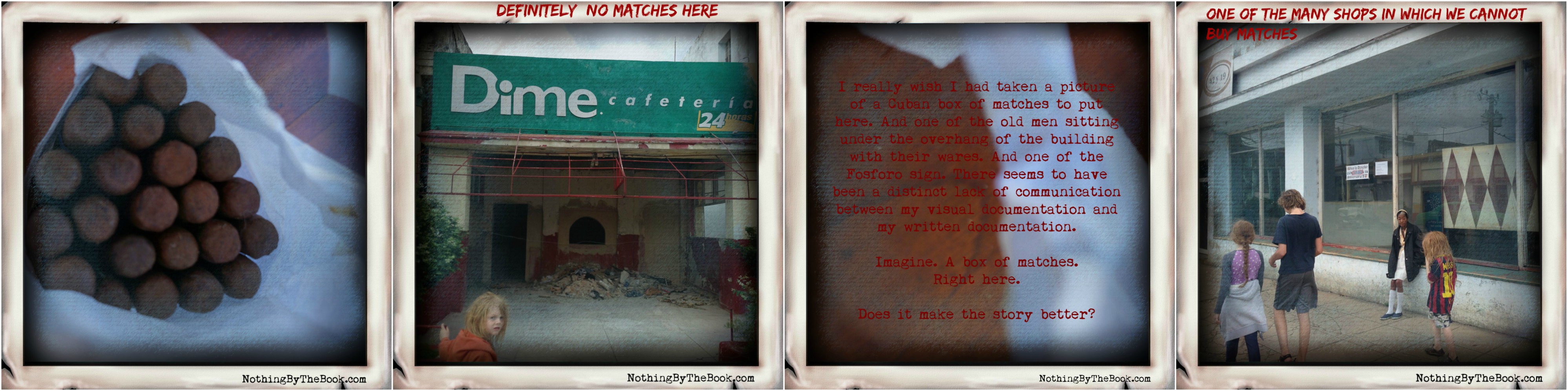
On Sunday, I see a man walking down my street with a flat. Yes!

Jane: “Excuse me! Where did you buy these?”

“At the mercadito, two streets over, the one on the corner,” he says. “Ask at the front.” I run to the mercadito—which is a bring-your-ration-card-and-pay-with –moneda-nacional-only kinda store—in time to see a bike, its back loaded up with eggs, drive away. “Wait!” I holler, but there is no way he can hear me over the Havana traffic.

“Are there ever eggs in this store?” I ask one of the people waiting in the line for god knows what.

“Maybe,” she says. “Sometimes.”

I go back to the street corner religiously every morning, but I see no egg guy, nor eggs. Pop into the mercadito. “Could you please tell me where I could buy eggs?” I ask. “Not here,” the dude behind the counter says. He’s young. And surly. Rude actually.

“But where?” I ask.

“Not here,” he says, and turns his back on me, starts moving sacks under the counter.

He’s my first encounter with a rude male Cuban—but neither my first nor last experience with a rude-angry-surly Cuban shop keeper. Customer service just ain’t a thing in a centrally planned economy, y’know?

II.

Cinder: “No eggs?”

Jane: “Plan B—if we don’t find eggs by Thursday, we’re going to go to one of those rooster houses and ask if they’ll sell us eggs.”

We could, you know, just not eat eggs. I’d like to make it abundantly clear: we are in no danger of starvation. There is plenty of food. Bread, rice, beans, chicken, carrots, tomatoes, cucumbers, cabbage, pineapple, cheese, ham, pasta (although I cannot buy just flour), intermittently milk.

I want eggs, goddammit.

12-Supermarkethaul

III.

I don’t have a great many memories of Communist Poland—I was six when we left, and spent a chunk of that period living in Communist East Germany, and the Germans were always less deprived under socialism than the Slavs—but I do have a lot of vivid memories of living under an American trade embargo in Libya. They include driving for two, three hundred kilometres to get some chickens (or eggs) from a farmer—once, a cow. Going into store after store full of empty shelves… then going into one that had flats of jam, and then watching my mother buy all of them—she would trade them later for whatever someone else scored at another store that had things. Sardines, maybe.

I remember eating a hell of a lot of sardines.

Also—I don’t know if this is true, it seems ridiculous, I must ask my parents—caviar. It seems there was often caviar…

Whenever any of the other Polish workers would come back to Libya after a trip back to Poland (at that time, under martial law, its socialism in death throes, although no one knew it then), they would invariably smuggle in a shitload of vodka… and sausage.

The sausage would be shared out—the lions’ share always going to the kids. Sliced oh-so-thinly to make it last.

I remember… the thin slices of sausage? They tasted like heaven.

IV.

Jane: “Plan C: the next time I see someone with a flat of eggs, I’ll ask them to sell them to me.”

Flora: “For how much?”

My mother got me the first flat for $3CUC.

Jane: “$5CUC.”

Although, in another week, I’ll probably go up to $10, dammit.

V.

The outrageously beautiful woman who cleans Jorge’s—temporarily my—house on Saturdays also comes on Thursdays to clean the porch. She washes down all the furniture—makes me feel really guilty as she does this—what the hell do I do to the furniture in the space of a week that makes it so dirty?—but, it’s not me, it’s not me—it’s the dust, the moisture, the diesel fumes—and she also scrubs the 100 year old tile.

She has two children, about Flora and Ender’s age. She must know all about the egg delivery system.

Jane: “Could you please tell me where, how I can buy eggs?”

Sometimes, she says, they’re at the market at the corner. Do I know which one? The one two streets over, on the corner? Yes, I know. They’re not there today, they weren’t there yesterday, and I can’t shop there anyway. Are there other places?

Translation: “For fuck’s sake, where the hell is the egg black market?”

She shakes her head. I sigh.

It’s really not that big a deal. I’ll feed my kids semolina cereal imported from Poland, boiled in packaged-in-Cuba UHT milk, sweetened with extortionately priced Spanish jam. Or buns with creamed cheese. They had cream cheese at the supermarket yesterday and I stocked up.

I. Want. Eggs.

12-We are not starving

VI.

No, I don’t think you really understand how badly I want eggs. I am, in this moment, a study of how and why the black market works… I’m not saying I’d sell my first born for a flat, but if you wanted to trade me eggs for a snip of Flora’s rare red hair…

Eggs. Eggs. Eggs.

I can’t think about anything else.

VII.

Jorge: “Jane? Jane? Are you there?”

Jorge is my landlord. He is about to become my god.

Jorge: “I have a gift for you and your children.”

It is a bowl full of eggs.

12-Eggs Imp

Eighteen beautiful white eggs, speckled with chicken poop and feathers.

Straight from the ration store… via his fridge.

I would pay him… anything. A small fortune in hard currency.

Jorge: “It’s a gift, it’s a gift. Enjoy. Please, enjoy!”

That first egg I fry? It is the taste of heaven…

…and yes, it tastes, an awful lot like a thin slice of smuggled Polish sausage.

*

Now please go check out  Tarot By Janine. Mother’s Day is coming up, and Mom’s on a diet and allergic to flowers? Get her a gift certificate for a Tarot card reading.

*

LANDED here for the first time? Let me catch you up:

Series 1 of Postcards from Cuba is now fully live. Check out the annotated table of contents for a tour, or, if you prefer, hop over to the chronological table of contents.

And if you like what you read/hear/see, please consider expressing your delight by making a contribution:

PayPal - The safer, easier way to pay online!

You: Why?

Jane: Because you’ve always wanted to be a patron of the arts, and you know that artists can’t pay for groceries with exposure.

You: How much?

Jane: Buy me a cup of coffee, a Cuba Libre, or a counterfeit Cuban cigar.

You: That’s all?

Jane: My avarice is happy to match your affluence. But I get $1 in royalties for each copy my other self sells of a traditionally published book. It is impossible to disappoint me.

xoxo

“Jane”

NothingByTheBook.com / Tweet tweet @NothingBTBook / Instagram NothingByTheBook

12-Egg Hunt Banner

POSTCARDS FROM CUBA: Necropolis de Cristobal Colon

For Sean, who loved it as much as I did.

11-Necropolis2

notes

Necropolis de Cristobal Colon: established in 1876, now with more than one million corpses occupying 800,000 graves, spread over 140 acres (57 ha).

Review: you should go. Repeatedly.

11-Necropolis3

riff

I love cemeteries. I love everything about them. This particular cemetery, partly kept-up, largely falling apart, Communist-era monuments built around/upon Imperialist ones—emptied crypts—graves of martyrs—repatriated bones and excavated coffins—it’s just filthy with history and I wallow in it.

Can’t help myself; inflict some of the history—Cuba and Havana’s beauty, drama, tragedy—on the children.

They don’t appreciate it.

Cinder: “Trust Mom to make a fun trip to a cemetery depressing.”

Flora: “Don’t listen. Do what I do. Nod, smile every once in a while, and keep on looking for headless angels.”

11Necropolis4

why I’m going to hell

I am raising irreligious children on purpose: if they ever decide to find god(s), religion, dogma, idealogy, I want them to do it as thinking, resilient adults and not impressionable, malleable “I’ll believe what you tell me because you are big and I am little” larval humans. I am doing this on purpose.

Sometimes, I forget… that what I’m doing leaves certain… shall we say… holes in their cultural education.

Ender: “Ugh, Mom, look, there’s an ugly skinny man hanging on that lamp post. And one over there. Why is that?”

Flora: “God, Ender, don’t you know anything? That’s Jesus Christ. And he’s sort of a zombie—he died but then came back to life… Mom explained it to me once.”

Apparently, really, really badly.

11-Necropolis6

(Yes. I know what it looks like. Why do you think Cinder took the photo?)

outtake

As we pass a grave surrounded by a swarm of flies:

Cinder: “Well, somebody wasn’t cremated…”

*

LANDED here for the first time? Let me catch you up:

Series 1 of Postcards from Cuba is now fully live. Check out the annotated table of contents for a tour, or, if you prefer, hop over to the chronological table of contents.

And if you like what you read/hear/see, please consider expressing your delight by making a contribution:

PayPal - The safer, easier way to pay online!

You: Why?

Jane: Because you’ve always wanted to be a patron of the arts, and you know that artists can’t pay for groceries with exposure.

You: How much?

Jane: Buy me a cup of coffee, a Cuba Libre, or a Cuban cigar.

You: That’s all?

Jane: My avarice is happy to match your affluence. But I get $1 in royalties for each copy my other self sells of a traditionally published book. It is impossible to disappoint me.

xoxo

“Jane”

NothingByTheBook.com / Tweet tweet @NothingBTBook / Instagram NothingByTheBook

11-NecropolisBanner2

POSTCARDS FROM CUBA: this is also Havana

For Nick, who taught me how to “see” lines and light (and nothing at all about editing and touching up  ;).)

Caption: We got on the wrong bus, and got off on the wrong stop, and, there we were…

10-Horseandbuggyinhavana

*

LANDED here for the first time? Let me catch you up:

Series 1 of Postcards from Cuba is now fully live. Check out the annotated table of contents for a tour, or, if you prefer, hop over to the chronological table of contents.

And if you like what you read/hear/see, please consider expressing your delight by making a contribution:

PayPal - The safer, easier way to pay online!

You: Why?

Jane: Because you’ve always wanted to be a patron of the arts, and you know that artists can’t pay for groceries with exposure.

You: How much?

Jane: Buy me a cup of coffee, a Cuba Libre, or a Cuban cigar.

You: That’s all?

Jane: My avarice is happy to match your affluence. But I get $1 in royalties for each copy my other self sells of a traditionally published book. It is impossible to disappoint me.

xoxo

“Jane”

NothingByTheBook.com / Tweet tweet @NothingBTBook / Instagram NothingByTheBook


POSTCARDS FROM CUBA: Cuban Math

For Ariel, with, still, a twinge of regret.

Today’s text and audio postcard, Cuban Math, is brought to you by the fabulous Janine Morigeau of Tarot By Janine. Janine is one of the longest practicing Tarot card readers in the Calgary area–she takes phone and Skype readings too, by the way–and an absolute inspiration to me in the way she lives her fabulous life.

She thinks most of you are going to listen to today’s postcard…

as you read it… Is she right? Let me know…

I.

This really happens:

Cinder: “When we have our next chill day, can we do some math, Mom? I don’t want to forget everything.”

Jane: “Um… OK.”

I know you don’t believe me. But it happened. And that, boys and girls, is how unschoolers learn math… in Cuba.

II.

So, let’s do some Cuban math:

The exchange rate sucks. One hundred Canadian dollars buys me $66 Cuban conv pesos (one time, in an air conditioned bank that also had couches and an orderly take a number system, almost $70 conv pesos, I swoon). The kids and I call the convertible pesos CUCs, as do most Cubans… unlike most Cubans, we routinely confuse CUCs with CUPs, the other Cuban peso, also known as moneda nacional. One CUC peso—that’s c-u-c—is worth about 25 CUP pesos—c-u-p.

Yes, Cubans refer to both currencies as pesos. Infuriating? Fuck, yes.

Often, they call the CUC peso a dollar, a nod to the fact that this fake currency is tied by the Cuban government to the American dollar. Originally, one CUC equaled one US dollar, but the Cubans have been doing some funky things to it, so now, the US dollar is discounted against the CUC by 10 to 13 per cent.

Confused? We’re just getting started…

9-Graffiti

III.

There is a myth, still prevalent in Cuba, that foreigners cannot use moneda nacional. It dates back to the Special Period, when Cuba first introduced the Convertible Peso, and back then, it was true.

An interlude for oversimplified history: The Special Period—full name “Special Period in Time of Peace” —is what the Cubans call the economic ruin and effective famine that Cuba experienced in the 1990s as a result of the collapse of the Soviet Union—when the Russians left, yanking all the trade and subsidy programs that supported Cuba during the Cold War.

(If you’re too young to remember what the Cold War was, google it. It was stupid, it sucked, and people around the world are still paying for it. In Cuba, in many other places.)

Among the ways Fidel Castro dealt with the disaster was to let in Western tourism—for the cold hard cash it would bring in. And he wanted to make sure the tourists brought in as much cold hard cash as he could possibly squeeze out of them—hence, in 1994, the arrival of the Cuban Convertible Peso—the CUC—a new currency and entirely new set of prices—also hotels, shops and restaurants—just for tourists.

The CUC had a dual purpose—to squeeze money out of tourists, of course—and also to keep foreigners and locals as separate as possible.

It half-succeeded. I think… like socialism and Communism both, the CUC was a good idea in theory. It got money flowing into the country, while keeping many things affordable for the cash-poor Cubans. And, it kept inflation under control—well, sort of.

But…

In practice, it dismantled Cuban socialism more effectively than the American trade embargo. Think about it.

Still thinking? Think some more… You might think Cuba’s still socialist. Some Cubans think so too. Apparently, the not-quite dead Fidel—never actually a socialist—believes it too in his less lucid moments.

It’s not.

And any pretence that it was ended with the introduction of the CUC. Think about it. No–you’re not done yet, think more. We can argue about it in a few weeks.

The CUC is in the process of being phased out, and the CUP, the moneda nacional, will be the one currency. Castro the second has been preparing his subjects for that wave of chaos for some time. In most places, you can pay for most things with either CUC or CUP.

Most shops give out change in some mixture of both currencies.

All Cubans carry and use CUC as well as moneda nacional.

All Cubans also spend a great deal of time lining up at banks and Cadecas exchanging CUCs into CUPs, possibly exchanging CUPs into CUCs, I don’t know, or into… well, this I do know: any real world currency they can get their hands on.

The plan was—perhaps still is—for the CUC to die in 2016. I guess it could happen. Cuba has some practice at cancelling old currency quickly—it killed the pre-revolutionary peso back in 1961, and did so overnight.

In the meantime, however, Cubans and foreigners alike can use CUCs and moneda nacional.

As a result, most Cubans are extremely good at math… and most foreigners are very confused.

Which is sort of what Castro intended, maybe?

9-Ruined Communism CUC

IV.

More Cuban math:

The prices here are fucked up. Like, totally. Look:

Taking the public bus costs $0.20CUP. That’s twenty moneda nacional centavos. That means that when I pay for the four of us with a CUC coin that’s worth about a US nickel—I’m overpaying.

The first bottle of rum I buy costs me $2CUC (granted, it’s a small bottle of rum—the big ones are $8CUC). That’s cheaper than pop or water. Really.

Three ice cream cones cost me $9CUP—which means I give the ice cream seller $1CUC and I get a bunch of change—enough to buy three more ice cream cones, and a tiny fake brownie. (It’s not made with cocoa; don’t ask what’s in it instead—I don’t.)

One day, the vegetable guy wants a peso for two nice, fat tomatoes. He doesn’t specify which currency, so I hand him a $10CUP bill. He laughs, holds out his hand. I start piling CUC dimes into it… finally hit $1CUC… but then he gives me a nickel back.

Vegetable guy: “I must teach you math.”

Jane: “Just don’t call them both pesos!”

Taking the “fixed route” taxi—1950s vintage, belting clouds of smoke, capacious enough to sit six including the driver comfortably, more if some of them are children, thin, or willing to sit in one another’s laps—costs $10CUP a head.

Jane: “So if I give you $3CUC for the four of us?”

Cab driver: “I ought to give you change, but I won’t.”

A taxi ride from any point to any other point within Havana Vieja or Havana Centro costs $5CUC. (Do not pay more.) A taxi ride from Havana Vieja to the Kohly/Almanderes suburb where I’m staying is $10CUC—for about a 10 km route.

Cinder: “So… is that expensive?”

Jane: “Not once. But if we did it there and back every day for 30 days…”

Cinder: “Fuck. Even without doing the math I can see where this is going. You’re going to make us take the bus back, aren’t you?”

Well… not today.

9-Money

IV.

We’ve been taking the buses everywhere since we’ve gotten here, for two reasons. First—they’re essentially free. Second—this is why I’m here. To ride the public bus, not the extortionate tourist bus ($10CUC a head for a day pass) or the tourist taxi.

And I love the bus rides. They’re insane. People are packed in like sardines, and you think there’s no fucking way they’ll fit one more body on the bus, but at the next stop… nobody gets off and twenty more people get on. And they say, “Permiso!” and squish in and past and around each other and are amazingly polite and forebearing about it all.

There are no bus route maps or any information about where the buses actually go or at what times in any of the guide books or on the Transtur website, so you ask the people at the bus stop or on the street, and…

…and the bus eventually comes…

…and amazingly we get on, every time…

…and eventually, arrive at someplace interesting—sometimes, even the place I intended to go…

I love it.

The children are less enamoured. Flora comes closest to sharing my spirit. Ender loves the first 10 minutes of every bus ride and then becomes a royal pain in the ass, until he exhausts himself and sits on my feet if we’re standing—or settles down to sitting on my lap if we’ve snagged a seat. Cinder endures. The crowds kill him, and he’d rather walk for 30 minutes, an hour, than ride for 10.

The buses to Havana Centro and Havana Vieja are the worst—crazy crowded by the time they hit our stop, swelling with more and more people the closer we get to Centro—offering a breath of relief only for the final few stops before Parque de la Fraternidad. And the ride is a solid 40 minutes, sometimes more. Lots of turns, sways, sudden stops.

Today’s ride is particularly rough, and when we get off, and I look at my son’s unhappy face, I promise: “Taxi ride back.”

Cinder: “For real? Not like the taxi ride back from the market that turned into a bus ride?”

Jane: “For real.”

Hey—I didn’t lie. We spent the taxi money on food. They could have put the pop back… A can of orange soda—Cuba’s version of Fanta—is about half a CUC at the supermarket. Multiply that by three and thrown in the can of Tu-Cola I need for my Cuba Libre, and we’ve drunk almost half our taxi fare.

Well, and then I bought rum…

Anyway. This time, I promise a taxi and we don’t spend our money on frivolities like drinks and food. So, after a fabulously intense day wandering through Old Havana, we start wandering in the direction where we saw all the taxis. A block away I pause. Look around undecided.

There’s about 20, more taxis around the corner and ugh, I don’t want to deal with getting one…

I know it makes no sense, really. Except. OK, see, there’s 20 of them. One of me. And they swarm me. And I need to pick one. And I need to negotiate the price. And it’s so fucking exhausting, and I’m so tired…

Jane: “Let’s find a place to sit and get a drink before we get the taxi.”

Cinder: “But we are definitely taking a taxi?”

I promised. Sigh.

Jane: “Yes.”

And, suddenly, there’s a man in front of me, and he says:

Dude on the street: “Taxi?”

It’s a sign from the gods, right?

9-BlueCar

V.

The time to find out what taxis ought to cost, by the way, is before you get into the taxi—preferably when you don’t need a taxi—so when I’m walking past the Hotel Kohly—one of the two hotels in my neck of the woods—I swing by the huddle of cab drivers, who always greet me with a chorus of “Taxi? Taxi? Taxi?”

Jane: “I don’t need one today, but how much should a taxi from here to Old Havana cost?”

They tell me, $10CUC. Other stuff too. One of them adds, in English, “And don’t ask at the hotel. Come here, and say, ‘Who’s next?’”

Jane: “Why?”

The hotel will call Cuba Taxi, one of the drivers explains, the national taxi agency that runs licensed taxis. The huddle of drivers outside are all privateers. Some of them might have private taxi licenses. Most probably do not. They report to no dispatcher. They don’t have to share their take with anyone… except the police. But that’s a story for another postcard.

Driver: “We make sure things are fair here, you know? We rotate, make sure the guy who’s been waiting the longest goes next.”

Very socialist of them, don’t you think?

VI.

Meanwhile, today, I’m negotiating for a taxi ride with a man who does not actually own a car. He makes his living… hooking up taxi drivers with marks like me.

Dude on the street: “Four people? To where?”

Jane: “Near Hotel Kohly.”

DOTS: “That will be $15CUC.”

Jane: “That will be $7CUC.”

DOTS: “All the way over there? No. Maybe I can find someone for $10CUC.”

That’s what it’s supposed to cost.

Jane: “$10 is okay.”

He smiles. We’re friends now.

DOTS: “I’ll be right back. Oh… what kind of car do you want?”

Before I tell you what I tell him… I just have to say… It’s hot. I’m very, very tired. And, dehydrated.

Jane: “I have no preference. But get me a beautiful driver.”

DOTS: “Stay. Right. There. I’ll be right back.”

He does all right.

VII.

Note to self: so it seems really funny to “order” a beautiful taxi driver in this culture of constant whistling, lip-smacking and a chorus of “Beautiful-beautiful-beautiful” as I walk down the street but it does make the taxi ride… awkward.

Jane: “No, I just wanted a taxi. Really.”

Driver: “I understand. The children make it difficult.”

Jane: “Um, no, I just… I was being funny. I just wanted a taxi. Really.”

Driver: “I will give you my cell.”

Jane: “That’s really not nec…”

Driver: “Call me. Anytime.”

Jane: “If I need a taxi.”

Driver: “For anything. Anytime. You call, and I will be there.”

Awkward, yeah?

Silence.

I decide to get him to drop us off a couple of blocks away from our house.

Jane: “Next right… and yes, stop right here. Thank you so much.”

Driver: “Here. My cell. My name. Can you read all the numbers?”

Jane: “Um. Yes. Thank you.”

Driver: “So. You’ll call me?”

Probably not.

The children make it difficult.

Although…

Sigh. He was so very beautiful.

Virtue seems vaguely unrewarding.

9-DoubleLada

VIII.

Cinder: “So how much money did we spend today?”

We tally up the CUCs spent on museum entrances and the cab–$36CUC all told, so about $50 Canucks. Then we add up the moneda nacional spent on the bus, the ice cream and the pizza. Which comes to about $2.50 Canadian—no, three full bucks—because each of the kids ordered two full size pizzas so they’d have snacks for later, because the bakery was out of bread…

Cinder: “This makes no sense. But you know what this means?”

Jane: “What?”

Cinder: “We should stop going to museums, and eat more ice cream.”

Jane: “And take fewer taxis?”

Cinder: “No. Taxis home from Old Havana are a non-negotiable necessity.”

OK then.

My spoiled Canadian child.

X.

I know you want to know, so I’ll tell you this: his name was Ariel, and I kept the business card with the cell number in my pile of papers throughout the trip. I might still have it. But I never called it.

Havana is thick with beautiful young black-and-brown men escorting not-so-beautiful middle aged white women around. (Ditto beautiful young black-and-brown-and-barely-painted-by-the-sun women escorting not-so-beautiful white men of all ages.)

I’d rather not be a cliché.

Do you understand?

*

If you’d like to better understand Cuban math, read Cuba’s New Money by Patrick Symms, in the April 1, 2015 edition of Bloomberg Online. It’s one of the most illuminating pieces on Cuba’s monetary situation I’ve come across.

*

A huge thank you, again, to Janine Morigeau of Tarot By Janine, for supporting today’s postcard. Even if you’re not in yyc, remember, she takes phone and Skype readings too, and she is amazing… even (especially) with the utterly sceptical.

Visual Postcards from Cuba from Cuba will continue to flow over the weekend, with the next audio postcard arriving on Monday.

If you enjoy the postcard project, you can express your delight and support by  sponsoring a Postcard or  making a donation via PayPal:

PayPal - The safer, easier way to pay online!

If you’d like to make a contribution but have PayPal issues, email me at nothingbythebook@ gmail.com and we’ll work something out.

*

LANDED here for the first time? Let me catch you up:

Series 1 of Postcards from Cuba is now fully live. Check out the annotated table of contents for a tour, or, if you prefer, hop over to the chronological table of contents.

And if you like what you read/hear/see:

PayPal - The safer, easier way to pay online!

xoxo

“Jane”

NothingByTheBook.com / Tweet tweet @NothingBTBook / Instagram NothingByTheBook