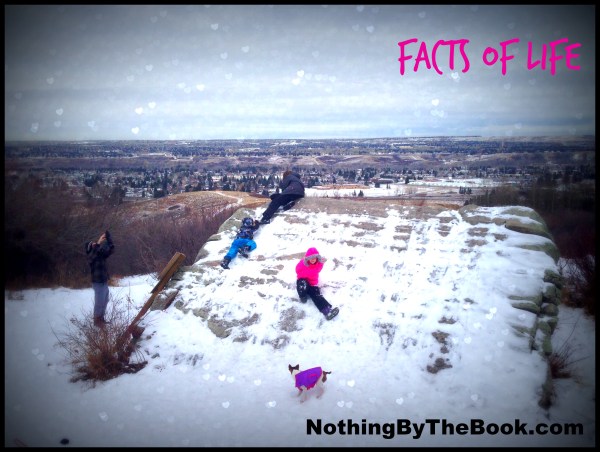
Facts of Life

I.

Ender hatched from an egg. That’s how they tell the story, anyway.

Flora: It was the cutest egg ever. Orange, all orange. But I’d decorate it with purple squiggles and rainbows.

Cinder: …and we all took turns sitting on you. Like, when Mom had to go somewhere, or even take a shower, Flora or I had to sit on you. But sometimes, when she was out for a long time, instead of sitting on you, we’d just throw you back and forth like a ball. You’re so lucky we didn’t smash you.

Flora: Mom was so mad was she caught us doing that once…

They’ve told him the story so many times, they’ve even got these details down:

Flora: …and after you hatched, I tried to keep the egg shells for my museum, but Dad said it would be unhygienic and he threw them out.

Cinder: But I kept one. Want to see?

(and the mystery to why he was rooting through the garbage earlier for chicken egg shells, and through Flora’s room for an orange marker, is solved)

Flora: You were the cutest little baby.

Cinder: Well. The cutest little maggot. You were all white and squirmy. You didn’t really look human until you pupated. That happened when you were two.

(he might have crossed the line here. Yes. Yes he did?

Ender: Mooom! Did I pupate when I was two?

What would you say? What should I say?

Isn’t all life just a really long metamorphosis?

II.

This is 100% true: While Ender was in the womb, we called him Two-Horned Rainbow Merlin Stinky Socks Marsh.

So it’s all our fault, really.

III.

I’m in a café, working, and there’s a new proud father at the table next to me, showing off his progeny to co-workers. “She’s such a good baby,” he says.

What he means is “easy.” And “convenient.”

She’s four months old.

In three to six weeks, he and her mother will look at each other, and one will ask the other, “When do things get back to normal?”

Ha.

Normal.

What they mean is “the way they were before.”

What they don’t want to hear: Never.

IV.

Jane: Do! Not! Call! Your! Brother! A! Maggot!

Ender: Yeah! I’ve pupated!

Ha.

xoxo

“Jane”

NBTB-Facts of Life


February Spring

I’m stumbling home in a February spring, coat open, gloves off, a warm wind winding in and out and around me. I am half-happy, half-mad, all-exhausted. Each step takes effort, is so slow—I want to want to run—but I can’t—I can barely walk—one foot in front of the other, and suddenly, dizzy, I stop…

I’m tired. I’m so-to-the-bone tired, an exhaustion I’d tell you I can’t describe except it would be a lie, because that’s exactly what I’m doing now. I’m so tired, I can barely walk, I can barely think.

I’m stumbling home…

I’ve spent the morning writing and juggling. First, loving the morning-loving-Ender, negotiating with him my need to write Morning Pages as soon as I wake up no-matter-what-no-I’m-not-going-to-build-Kapla-or-make-you-an-omelet-here-eat-an-orange-when-I-am-done-I-will-make-you-eggs-what?-yes-I-can-get-you-cold-spaghetti-from-last-night-but-you’ve-got-to-let-me-write…

Then, walking, so very quickly, to a café—I cannot work at home today, it is oppressing me, squeezing me, reprimanding me with all the things it wants from me and I hate it, I need to run away, will-you-watch-the-children-thank-you-I-promise-I-will-come-back.

Coffee. “Dark? Medium? What size?” “Surprise me. I have no superfluous decisions left in me today.” And it’s only 9 a.m….

(She gets me a large latte; I feel bad I don’t have money for a tip.)

You come to visit me for a while, and we talk about EVERYTHING, and this time, neither of us cries, and we laugh about it. You’re my fix of… what? Something undefined, but needed. I appreciate it. An injection of energy that gets me moving, and after you leave, I write.

I’m writing about a woman who’s going to change the world. As I write, I believe it. I love her, I envy her. When I finish, I despair. I’m pretty sure they’re not going to let her. They’re going to destroy her.

(Can I stop them?)

I have more to write. Difficult things, technical things, uncreative things, necessary things.

I’m suddenly tired, uninspired and I don’t want to.

A text. “Can you be home by… I need to…” “OK. I’m done writing anyway.”

In a minute, in a second, in a moment of time shorter than that, this happens: I switch from writing-producing-thinking-happy to… fallow-done-exhausted-barely-alive. The fog envelops me and deepens as I walk towards home. With each step, I get heavier. Slower. More stupid. So tired. Where does this exhaustion come from?

I stumble home, into the house, crawl up the stairs—I have a window of perhaps 20 minutes before kids—I fall into bed. Eyes closed. So-exhausted. What do people who cannot nap do?

I don’t know if I sleep. I simply don’t move.

Ping.

“Dropping kids off at the top of the hill, can you meet them?” “On my way.”

I am still tired. Stupid. I think, the thing I wrote this morning? Worthless. The things I still have to write? Pointless. When will I do it? How? Despair.

I stumble out of the house. One foot in front of the other. February spring, wind.

Oh.

I inhale.

An idea…

One foot in front of the other up the hill I see three little bodies, arms waving, legs and arms pumping, oh-the-energy, infect me!

We walk home together. I am still tired. But I am not stumbling. I am not stumbling.

There is food on the stove (I text: “Thank you, my love”). I do some things. A request: “Sit beside me, Mom.” I do. I open the lap top. Caress the keys. Maybe what I wrote this morning wasn’t so bad.

Maybe what I write next isn’t pointless.

“Hey, Mom, do you want me to make you some green tea? You look like a zombie.”

I am, just a little, tired.

But no longer so-to-the-bone tired I can’t walk-or-think.

Still. I am looking forward to bedtime. Immensely.

nbtb-Feb Spring

xoxo

“Jane”

P.S. You really liked this post: Dear un-Valentine: the way you talk to your partner tells me more about you than the way you kiss. Thanks!

Dear un-Valentine: How you speak to your partner tells me more about you than the way you kiss

It’s Flora’s fault.

She’s sensitive, empathetic, and ruled by her heart. And she’s only 10, so her heart makes black and white rules. Wait. I’m telling this story wrong. I should have begun… never mind. Let’s start with Flora. And what Flora says is,

“But how can you like someone if you hate the way they treat their husband or wife?”

I’m not sure how to respond to that—I’m never sure how to respond to anything she says, really. And she goes on:

“I mean, how can someone be a good person if they treat the people they’re supposed to love badly?”

And I still say nothing, but I don’t need to, Flora is following her own train of thought, and she finishes:

“If you’re mean to your own wife or your kids or your husband—and these are the most important people in the world to you, the people you love the most—how will you treat me? If I’m a stranger, and you don’t know me at all, and don’t love me?

I would want nothing to do with such a person.”

And then she takes a carton of green tea ice cream from the freezer, and moves on to other things.

Meanwhile, her mother stands in the middle of the kitchen, phone in one hand, spatula in the other (I was making tacos—not that it’s important, but, you know, if you’re trying to assemble a full picture of the moment), and stares off into space, and ponders…

…that what Flora said should be true. Right? I mean—to flip it a little—that the way we treat the people we love the most should be the best we’re capable of.

Except it’s not, is it?

So often, the people we love best… they’re the ones who get the worst of us. Get treated the worst by us. Day after day after day…

Why?

There are three reasons for this ass-backward behaviour, I think.

First—when we love unconditionally and fully (or just a hell-of-a-lot, because most love is conditional, but we’ll talk about that another day) and are loved in return, we trust that love will be there no matter what. And so, when we trust, we let ourselves go. We snap, snip. We let our loves see us at our worst—and they still love us—and so we do it again… and again…

Second—husbands, wives, children, lovers, families—we’re together all the time, in each other’s faces. We rub against each other in the stress of hurried everyone-get-out-the-door mornings. We’re in each other’s faces in the I’m-too-exhausted-to-give-a-fuck evenings. We’re out of energy for politeness, manners. We snip. Snap. Again… and again… and again…

Third—we do it again… and again… and again… and then it’s a habit, and the majority of human behaviour and interaction is, simply… habit. And so… we do the nasty thing, say the mean thing again. And again. And again…

We say things to the people we love the most that we would never, ever say to more casual friends—to strangers—because, Christ, how unthinkably rude, cruel. Nasty.

We accept hearing/receiving these unacceptable behaviours from people who love us, because…

Actually, so here’s the thing, because—why, exactly?

Because they love us? And so it’s ok for them to treat us disrespectfully?

Because I love you, it’s okay for me to mock you? It’s ok for me to knock you down, undermine you, speak to you in a tone so disrespectful I would never, ever use it on a co-worker (not even that really, really annoying one)?

When Sean comes into the kitchen, I’m sitting in the middle of the kitchen, phone and spatula on the dirty floor, taco meat burning.

“What’s wrong?”

he asks, and I love him. I can’t put it into adequate words, so I put it into bad ones. And then, add:

“Do I ever speak to you like that? Ever?”

I don’t think I do, gods above and below, I hope I don’t, but does one ever hear oneself? Does she realize what comes out of her mouth? Does he know what he’s really saying when he says something so…

“Never. God, never, ever.”

(He’s lying. Because he loves me. I know that sometimes, when something he’s said or done triggers me, I react much less… kindly, tolerantly, lovingly… than I would had a less intimate-to-me person said or done the same thing. But I let him lie, in that moment, and I try to believe it.)

“If I ever do… stop me. Hard. The first time.”

Habit.

As Valentine’s Day comes up—my third least-favourite faux holiday—lovers all through North America will be exchanging flowers, chocolates, and Hallmark-sanctioned expression of love and affection.

I refuse to celebrate Valentine’s Day.

I prefer to show that I love—and to be shown that I’m loved—every day. Mostly, in little things, you know what I mean, the tiny stuff: “thank you for doing the dishes, my love” and “I’m so sorry you had a lousy day” and “I missed you, come sit with me” and “will you do this for me, it’s driving me crazy” and “this poem made me think of you” and “I’m so happy you picked up cream on the way home” and also “god you look good today, I want to devour you” (delivered when I feel spent, exhausted, and so unsexy, and I’m pretty sure you’re lying, but oh-it’s-so-good-to-hear).

I choose to show that I love by how I talk to you. To him, to her, to them. The people I love best? They deserve me at my best—or at least… trying, conscious, aware, fostering, building.

And when I slip up? Call me on it. The first time. Hard.

Don’t let me treating you disrespectfully—because you love me, and I love you, and so it’s all ok—become a habit.

Because it isn’t ok to treat the people you love the most the worst.

Flora said so.

And she knows.

Happy un-Valentine’s Day.

xoxo

“Jane”
NBTB-Dear un-Valentine

PS I have some un-Valetine’s Day presents for you. First, 15 Compliments for Your Valentine, Courtesy of  Erotic Artist Dorothy Iannone. Kind of awesome.

Second, 3 Misconceptions that Ruin Great Relationships by Kelly Flanagan from The Good Man Project. It’s essentially an essay AGAINST the grand gesture and for… habit.

Third, my friends and I have been debating for the last god knows how many weeks whether love is what you feel or what you do, and we’ve been reading and arguing about, among others, these:

You’ve probably seen one or both pieces already. If you haven’t, they’re worth a read.

Fourth, Good Daddies Are Hot.

Fifth—the original title of this post was, “Dear un-Valentine: How you speak to your partner tells me everything about the type of friend you’ll be. And it tells me you’re a jerk, and I want nothing to do with you.” But I decided it was a little… wordy. Jane out xx

Risk

Making the first mark on a blank page, typing the first word—letter—on a blank screen. Beginning, commitment. Do you know, the place before that first stroke, be it with pen or fingertip, how seductive that place is? It is BEFORE. It is potential. Everything is possible. Nothing is chosen. Nothing is wrong.

Nothing is risked.

It is intoxicating-frustrating. It’s… it’s like that moment, when you’re falling in love, pheromones teasing—but before the first kiss. Will you dare? Will she? How will he respond? What will I feel? What will happen next? Will there be fireworks? Or rejection?

The place of “nothing risked, all potential, I took no wrong steps, I made no mistakes” —oh, that place is so seductive…

I have ways of breaking through it in my work. I type: Client Name-Project Title. My byline. I type the names and titles of the people I interviewed. The page is no longer blank. I haven’t really risked anything yet—but I’ve started. It’s like… oh, cautious physical contact before that first kiss, you know? A hand on the shoulder, brushing oh-so-casually against a hip-but-not-lower as you leave the table: “I’ll be right back.”

But then, the choices, risks have to start. The words have to come. In an ideal scenario, they just come: the piece is written long before I sit down to let it out. It writes itself in my head while I walk. Drive. Scrub the kitchen floor, reorganize the books I’ll never read but must own. I know this—this is why, often, I’m so reluctant to sit down at the computer until I know exactly how it begins and how it ends.

(The middle, generally, just takes care of itself.)

But “ideally” is… aspirational. It does not always happen—it does not happen often enough. There is no time for a walk that settles everything, there is no space for it all to plan itself out as it would like to. Because, deadline.

And so, I sit down with the laptop. Blank screen, blank page. I type. Client Name. Mock Up Headline (usually bad). Names and titles of people I interviewed. Key idea. Fuck. I have no key idea. I have no idea what I want to say.

The clock ticks, the deadline looms, and I stare at the screen and I’m pretty sure that no matter what I write, it will be pure and utter crap, and so… I don’t. I don’t want to.

I want to stay in this safe space of nothing risked…

I look at the time and it’s later, the deadline’s closer, and the kids will be home soon, and dinner, and…

I should probably go for a walk—a fifteen minute walk, a five minute walk, it would be more productive than this I am so stupid so lazy why have people not realized this and why do they keep on giving me work and why do I say yes to stories I can’t write, projects I’m too flakey-flighty-dopey-right-brained to comprehend?

I open another window. I type:

“Making the first mark on a blank page, typing the first word—letter—on a blank screen. …”

NBTB-Risk

I write. I make choices. I warm up. And, mid-sentence, starting to run, I switch windows.

“My key message, what I need to nail down in this column is how the gut feeling that comes from the limbic fight and flight response that entrepreneurs get during a crisis, a downturn: what your gut tells you to do is wrong. That’s the limbic brain telling you sabre-tooth tiger over there, wants to eat you, stay very, very still. Paralysis. And you know? A moment of paralysis, of standing still? Do it. Don’t react too quickly, stupidly. But take that moment of frozen-still-scared… to think. Analyze. Evaluate. And look for opportunity. Because it is in crisis, when all the rules of the game are out the window, that innovation thrives, that you make that bet-the-farm play…”

It’s not good. It’s not at all what I want to say. It’s not a fireworks-producing kiss, a bold declaration of love that could be unrequited. It hardly ever is.

But it’s a beginning. A first step. Something risked. A sense of where I need to go. Where to next?

Choices. I keep on writing—the clock, relentless, keeps time—we keep on kissing and that first awkward “I’m not sure-is this ok?” kiss is now forgotten. I think there might be a firework coming—and, oh, yes…

“Mom! Where are you, Mom?”

“I’m writing! Hush! Almost done!”

“Mom! We’re home!”

“Five minutes, and I’m yours… Maybe ten… hold on… just one more sentence… ok, one more after that… and… I’m…”

…done. Fireworks? Not always. Not this time. The earth did not move, and it won’t when you read the final product—although, maybe, you’ll smile, a little, and remember that one line when I almost managed to bring it over the top? Will you? Doesn’t matter. It’s done. The clock doesn’t mock me anymore, time is not a terror, the page is not blank.

I put the laptop away. Choices made. Risks taken.

Story filed.

xoxo

“Jane”