Confessions of an unreformable plant killer

Many, many years ago—two decades ago, in fact—when Sean and I were engaged to be married and madly in love, but living 3739 km apart, I sent him some potted plants for his birthday.

This was a horrible mistake. In my defence: I didn’t do it on purpose. The internet was young and the Yellow Pages—remember those?—were still the way you found florists, and the way you found a florist who delivered flowers in another city was by finding a national chain in the aforementioned Yellow Pages, and the way you chose what you wanted to send is the florist asked you your price point, then described what was available—and you picked one of the bouquets, baskets, arrangements based on her description.

No pictures, if you follow my drift.

So I didn’t know I was sending Sean a bunch of potted plants in a basket. I thought I was sending him Our Love Will Never Die: A Romantic Ever-living Rhapsody Arrangement or some such thing.

When I went out to visit him at Christmas, there were potted plants all over the apartment he shared with his cleaning-challenged roommate. Ok, there were just three or four. And he loved them and he watered them diligently—because they were a gift from me.

He also mistakenly thought that I loved houseplants… which led to the following tragedy. After we married and I moved to Montreal, the plans came with us to a new apartment. And then—it happened. Sean stopped watering the plants. And I didn’t start.

He denies it was some kind of subconscious patriarchal “the houseplants are the responsibility of the wife” kind of thing. I don’t press it. Point. He stopped. I didn’t start.

The ivy withered and died first, this I remember, because it was the most fragile, most romantic plant.

The others followed. The hardiest of them lasted a full 18 months. I don’t remember its name, but it had shiny, angry leaves, and I imagine it lived  as long as it did out of spite. Eighteen months! I still can’t quite believe it. It was not a cactus, this little I do know about plants. It was pretty humid in Montreal, so perhaps the water in the air fed it a little. Or perhaps Sean did water it occasionally—or maybe a visiting friend, struck with pity for the parched plants, poured a bit of wine into its soil. No matter. It lasted longer—but still, in the end, it perished with the rest.
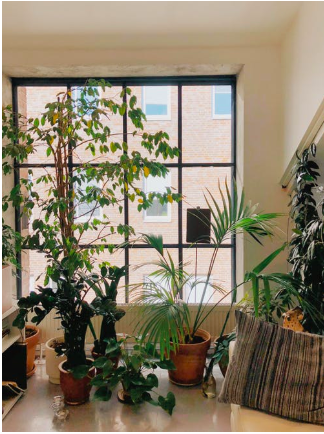
When we moved back to Calgary, with a new baby and, mercifully, no houseplants, we bought a cute little bungalow in an older neighbourhood and poured way too much time and money into its renovations. When everything was painted and unpacked, Sean came home with half a dozen houseplants.

I burst into tears. And we had the conversation we should have had years ago when I first accidentally bought him houseplants.

Now, if you love houseplants, all the more power to you. I don’t want to make you feel in any way weird or guilty about surrounding yourself with things in pots. For me, though, houseplants have always been an unwanted additional responsibility—even before kids. Something that I had to keep alive and that wouldn’t complain if I was doing a sub-par job… except by death.

And let me tell you, killing houseplants by omission and neglect feels awful. I do not rejoice when one of my victims bites the dust. I suffer. Their little dried up corpses sit there in their pots, staring at you with mute reproach…

Over the years, various friends—and my flower-loving mother—have inflicted houseplants on me. First, I tried to keep them alive. Then, I recognized that it was just prolonging the inevitable. Sure, I could give the plant, and myself, false hope by forcing myself to water it and tend to it for the first week or two. But was it not better to be honest with us both as to what was going to happen? And surely, eventually, people would notice that the plant they gave me first turned yellow, then brown, and then just wasn’t around anymore?
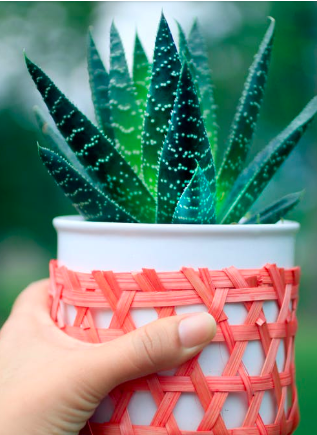
A couple of years ago, a newly enamoured friend brought me a little houseplant (I prefer not to learn their names; it makes their deaths slightly less painful) in a cute mug, as a “so happy you’re in my life” gift.

“I noticed you didn’t have any plants in the house,” she said. I thanked her and looked at the little green thing with a sigh. Apologized to it silently for the short straw it drew. Three months, I murmured under my breath. I figure you’ve got three months. If you’re lucky.

“I told her that if you didn’t have plants in the house, it’s because you don’t like then,” her partner put in. Perceptive human. My friend looked crestfallen.

“I love plants,” I said. Not lied, exactly. I love plants… in their natural habitat, so to speak.

I didn’t add, “I just can’t keep them alive.”

There is no miraculous twist to this story, by the way. The poor plant withered and died as do all living things when deprived of love and water. But I still have the mug. So there’s that.

Sean and my mom frequently buy me Tiger or Calla lilies in pots, or early tulips, daffodils and hyacinths, the occasional pot of mums. No African violets though, not after the African violet disaster of 2004; don’t ask.

This seems to be our compromise. I’d be quite happy to receive only already dead cut flowers.

Sean: I feel guilty about buying dead flowers.

Jane: Baby, I’m gonna kill the potted plants anyway.

Sometimes, though, I transplant them into the garden, and they eke out a slightly longer existence there. And one Tiger Lily actually came back the following year. That was pretty exciting.

I do love green things, you know. Gardens, parks, forests, mountains, prairies.

Old, lush, overgrown European cemeteries…

I just think… they belong outside. Where I don’t have to water them.

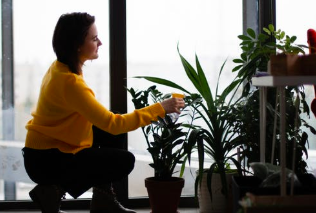
Oh, my garden? A self-sustaining assemblage of the hardest plants know to sapiens that have learned to fend for themselves. Every once in a while, I think I might learn to care for them, and learn to love gardening. I take a few books on gardening out of the library.

Enjoy reading them. Return to neglecting the plants…
The motherfucking sadist who helped me walk again wants me to do push-ups.

Him: We haven’t done these in a while.

Jane: That’s because I hate them and I’m not good at them.

Him: We will practice more.

Jane: You know what? I think there are some things—I’m 45 years old. I’m never going to floss better. I’m never going to enjoy doing push-ups—or invest any time practicing doing them better. And I’m never going to take care of houseplants.

Him: I’m hearing you think we should floss more during our workouts? And you want me to get you a plant or something?

I don’t want to be a bad feminist, and I’ve absolutely seen women master push-ups and do dozens and dozens of the things without breaking a sweat. I’ve never seen a woman with my body shape master push-ups. Boobs are heavy. I tell the motherfucking sadist this. Then also pontificate about the length of my legs and the plumpness of my ass, and how all of this adds up to non-push-up executing body.

He sighs.

Him: From the knees. Ten. A ten year-old could do that. Don’t whine. And when you go home, floss.

I comply.

But if the bastard gets me a houseplant for our next anniversary, I’m leaving him.

Who am I kidding. Of course I’m not.

But. I will kill the plant. This time, with pleasure.

xoxo

“Jane”

All photos courtesy of Pexels.com

Finding Water, grateful for Julia Cameron, kinda whiny anyway

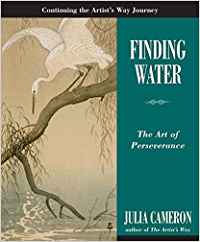
I’m re-reading Julia Cameron’s Finding Water: The Art of Perseverance, one of her “sequels,” if I can be permitted to call them that, to her revolutionary creative recovery program, The Artist’s Way. I have a cynical suspicion that both Finding Water (2006) and its predecessor Walking in the World (2003)—as well as Cameron’s myriad The Artist’s Way spin-offs, including The Prosperous Heart (2012), The Artist’s Way for Parents (2014), It’s Never Too Late to Begin Again (2016)—were written more at the behest of her publisher than her muse. “Julia!” I imagine the publisher saying. “We need The Artist’s Way 2!” “But I said all I have to say on this in the last book!” Julia protests. “Julia! The people want—need—more! Also, money!” And she sighs, and she looks at her 12-week structure, and she thinks, sure, I can come up with another variant of this, and she writes. And writes some more…

What you need to know: Neither Finding Water nor Walking in the World are nearly as good or life-changing as The Artist’s Way. Because she did give it all away in that first one: the “sequels” are just refinements. Not as good, not as profound. And yet, I re-read both every couple of years as part of my The Artist’s Way refresher. And when I do, I always find something “new,” something I need to hear, learn, affirm at that particular joint in my artistic journey, personal life.

And on this week’s trip with Julia Cameron—the woman who, six, seven years ago now, gave me permission to think of myself as an artist, and what a frightening thought that was—I find Julia’s mid-life insecurities reassuring. I love reading about her sudden foray into music and piano lessons at age 45. Her attempt to stage musicals in New York City in her fifties. I’m not clear if they’re successful or not. I rather think they’re not, or she’d give me the happy ending now, wouldn’t she? Or is she holding it back so that I value the process regardless of what happened to the final product?

When I teach writing (or marketing, for that matter), I draw on a lot of Julia’s ideas, and I’ve read and re-read her so many times now that you’d think nothing would be new… But today, this, if not new, is necessary, and it lifts my heart. Julia says:

One of the greatest disservices we can do to ourselves as artists is to make our work too special and too different from everybody else’s work. To the degree to which we can normalize our day, we have a chance to be both productive and happy. Let us say, as is often the case, we are resistant to getting down to work. We have a choice. We can buy into our resistance—Writer’s block! Painter’s block!—or we can simply say, “I don’t feel like working today, and I’ll bet an awful lot of other people are in the same boat.”

I don’t feel like working today.

I don’t feel like dealing with my shitty first drafts or my marketing analysis or my synopsis or anything, and OMFG, the taxes, I don’t want to do that either. My process for today, I decide, is going to be reading Julia. Because, today, I need to read about how on some days (months) she doesn’t feel like working (more than 20 books later), I love reading about her shitty first drafts, and agent’s rejections of her novels. This is Julia-fucking-Cameron, after all, author of The Artist’s Way, the former Mrs. Martin Scorsese, if anyone should have people beating a path to her door for a book, any book, surely it should be her—how many copies of The Artist’s Way has she sold? (Four million, at 2016, and she still can’t place every novel.)

I find this reassuring. Not because Julia’s suffered and struggled—if I could take that away from her, from anyone, I would. It’s just… reaffirming. Nobody’s entitled to success, fame, an easy ride, an easy second or seventeenth contract. We do the work… because we must do the work.

I’m corrupting young minds part-time these days, teaching journalism courses at a post-secondary institution to “aspiring” writers, artists, photographers, journalists. I’m giving them all I’ve got a la Annie Dillard, although sometimes, I worry I’m teaching skills as obsolete and unvalued as typewriter repair. I hope the core of what I’m giving them is still valid. They want to know how I built a freelance career, and most of what I did, had to do, could do, doesn’t precisely apply to them. But this does—I sent out 97 pitches before I sold my first story.

…spend it all, shoot it, play it, lose it, all, right away, every time. Do not hoard what seems good for a later place in the book or for another book; give it, give it all, give it now.

Annie Dillard, The Writing Life

Their reaction to this story—most are horrified—tells me what their odds of succeeding are in whatever career or artistic path they choose.

Perseverance. How hard are you willing to work for this thing you love?

My industry has always been an industry of attrition. We the survivors, the “success” stories? In some ways, we’re the idiots who persevere well past the point of reason.

One of my favourite things about re-reading The Artist’s Way and Finding Water etc. are the encounters with the quotes Julia (I feel we’re on a first-name basis now, it’s been so many years) sprinkles in the margins. It’s here that I first “heard” George Nathan say that “Art is the sex of the imagination,” and Irving Layton assert that “If poetry is like an orgasm, an academic can be likened to someone who studies the passion stains on the bedsheets.”

Yesterday, I read this:

It is not irritating to be where one is. It is only irritating to think one would like to be somewhere else.

John Cage

Where I am right now is not awesome. Irritating doesn’t begin to describe it. The family therapist, who is part of Flora’s ever-growing medical team, and whose job, I think, is to medicate me without drugs—although, really, I keep on waiting for her to give me a marijuana prescription, it’s the most useful thing she could do, except, of course, she doesn’t need to, I can just go to the Co-op and get it—well, except that weed isn’t really my thing, but, OMFG, every time I think about the family therapist, I want to get stoned, where was I? The family therapist tells me not to think of this time as the new normal. She says this is still the crisis, a stage, things will get better. Also, things have been much—much—worse. She counsels… hope, and focusing on the future.

I wish I could fire her. I’m not sure if she’s incompetent or if I’m just being obtuse. But I can’t live on hope. I can’t endure today simply by thinking that tomorrow—next month—next year—2024—will be easier, better, more functional.

Thich Nhat Hahn—my favourite monk—and the Jewish Buddhists I read (seriously, so many of the modern American Buddhist teachers come from the Jewish tradition—why is that? I should find out) want me to be able to enjoy the sun on my skin, the beauty of a flower—Flora’s excited smile as she puts together her Pastel Goth wardrobe for high school. And I do. This, right now, is a happy moment. Unfortunately, odds are pretty good it will be followed by an hour in hell, and that hell is not all in my head, fuck you, Bodhisattva Junior.

Breathe.

When the hours in hell outnumber the happy moments by a substantial factor, I dream of running away, and I apply for a job in Dubai, an arts residency in the mountains.

You: Yeah, what happened with that?

Jane: Didn’t get the job in Dubai. Got the arts residency.

I am very excited about the residency. But I’m also aware that the 12 days in the fall that I will spend away from the demands of my life, while giving me time for focused work and, also, uninterrupted sleep, will not change anything, in the present, in the long term. In fact, they can damage the work I need to do in the present. “I can suffer now, I can sacrifice now, because I get those 12 days soon!”

This is the way most people think about their shitty jobs and vacations.

This is not the way I want to live my life.

Neither does Julia. In the week of Finding Water I’m reading now, her doctor notes that she’s tired and recommends renting a cabin in the country for the summer, so she can get away from it all and write.

I didn’t want to rent a cabin in the country; I wanted to write right where I was, smack in the middle of New York City. I wanted to write about the excitement of the flower district, the garment district, the antique district. I wanted to write about exactly where I was planted, in the rich soil of a bustling metropolis. I wanted to write, period.

I had a lust to simply lay some track, to put some words to my experience, to try to achieve an optimistic balance by putting things onto the page.

I must be serene in the place where I am planted.

Me too, Julia, me too. (No hashtag.)

So, I’m trying to figure it out. To make the present inhabitable, fulfilling. So many things completely beyond my control and unpredictable. What can I change, affect? What anchors, routines, predictability can I create? Where can I thrive?

I’ve kept writing in the mornings, my Morning Pages as Julia taught me in The Artist’s Way all those years ago. (Six years now? Seven?) Trying to jump from the pages to creative, constructive work when the mornings are calm. But life does not always allow this, and I cannot pressure myself. “I must set my own gentle pace,” Cameron writes in Finding Water. Something else, someone else is setting my pace. I must accept it and work with it. Not hope that tomorrow, maybe, next month, maybe, for fuck’s sake, next year, surely, will be better.

What can I do today?

Sometimes, only the basics. Morning pages, Flora’s current morning routine, Ender’s breakfast, potato chips and pickles for lunch. A meditation session that turns into a nap, because, interrupted sleep. Apologies to the dog for not taking her out for a walk—ok, fine, five minutes, to the end of the alley and back, hey, we did it!

Sometimes, a 12-hour marathon. I try to take Saturdays away, mini-arts residencies, maxi-Artist’s Dates. Sometimes, work, work, work, work, and I am so happy—fucking family therapist and her bubble baths as self-care suggestions—just because she hates her job, can she not imagine that what I want, more than anything, is more time for mine?

Sometimes, silence.

Today, a few hours with Julia.

Julia says,

When joy is elusive, we must actively seek it out. We must put ourselves with people and things that bring us delight. Sometimes, when we are at our most depressed, it can be difficult to even recall the joys in life. It is for this reason , that one more time we must take pen in hand. Turning to the page, number from one to fifty. Now list fifty things which you love.

Do it.

xoxo

“Jane”

PS If you’re in yeg or yyc or thereabouts, Julia Cameron is coming to Edmonton on October 5! Of course I’m going.

TICKETS HERE

PS2 Here’s a recent New Yorker article on Julia Cameron’s utility to 20-somethings in an age of self-promotion:
https://www.newyorker.com/culture/cultural-comment/the-artists-way-in-an-age-of-self-promotion

PS3 And here’s a recent New York Times article on Cameron, kinda an overview/homage:
https://www.nytimes.com/2019/02/02/style/julia-cameron-the-artists-way.html

If any of my students are reading this, and you’ve clicked on the above article and read it, please note: if you ever write a sentence like this:

“On a recent snowy afternoon, Ms. Cameron, who has enormous blue eyes and a nimbus of blonde hair, admitted to the jitters before this interview.”

I will fail your ass. Today’s lesson. WTF, NYT?