“You are amazing”—you are partly right

The nurses tells me, “You guys are amazing.” It’s 9, 10 am in the morning and we’ve been in the hospital for almost 12 hours—we will be there another 48 before being transferred to another hospital. I have just lived through the hardest night of my life. I do not feel amazing. I feel like something the cat dragged in, chewed up, swallowed, then puked up, and stomped on.

Compliments in crisis are hard to take. You don’t really have the capacity respond to them with a simple, “Thank you.” Also, I think, they invite self-reflection at a time when you can’t really afford it, because it goes from “Fuck, yeah, I’m amazing!” to “No. No, I’m not. How did I let things get this bad, how did I not recognize the symptoms, why did I not act earlier?” in microseconds.

“I sure as fuck don’t feel amazing,” I tell the nurse and she tries to reassure me how amazing indeed I am, by comparing me, favourably, with the scores of un-amazing parents she’s seen. I understand those parents completely. I stand with them, not apart from them. I too am a mess, helpless, indignant, in denial, frustrated, angry, so angry.

Apparently, I just hide it better.

My mom tells me I’m amazing too, all the time, and I finally tell her she needs to fucking stop. I tell you the same thing, and you’re hurt. You’re trying to reflect something good and beautiful at me, you’re trying—you say to me—to acknowledge what I’m doing and going through. My courage, my commitment, bla bla bla, stop talking, for the love of God, stop talking now. I get your intention, but you make me feel like you are acknowledging a lie, encouraging a facade, and preventing me from telling you how hard things are, how unhappy I am.

I am not, by the way, unhappy today. This is a happy moment—me, coffee, notebook, pen. The sun is shining—yesterday was a good day—today, I might start on our 2018 taxes, the process interrupted in March—I’m going to make a list of new publishers to query for that book—this is a happy moment and nothing that happens later will take this moment away from me.

Him: Meditation or marijuana?

Jane: Neither. I’m writing. Do you understand?

I’ve been trying to figure out, for months now, what the right thing to say to someone who’s suffering is. And I think Thich Nhat Hahn nailed it:

 “I know you’re suffering, and I’m here for you.”

Nothing more—we really can’t hear anything else.

I have many good friends and when things were at their worst and Flora was in the hospital, I got a lot of “What can I do to help?” “Anything you need, just ask” texts. So I can tell you all this—the next time a friend of yours is in crisis, do this: bring them soup, make up a care package of chocolate, break into their house and do the dishes and clean the bathroom, hire a maid, drop off non-perishable groceries. If you are making an offer that requires making a decision, make it very, very specific: “I will come by your house on Tuesday at 4 pm to take Ender to the zoo, so you can go to the hospital for the night.” “I am going to Superstore on Sunday, and I’ll pick up groceries for you. Don’t worry about a list—I know what you need.” (Non-perishables, frozen prepared meals, and snacks. People in crisis do not make salads, roasted vegetables, or risotto. Finding a can opener is hard enough.)

Asking, “What can I do to help?” turns me into your project manager. And, in crisis, I cannot do that. Project management requires high executive skills. People in crisis have a hard time showering.

Him: Ungrateful much?

Jane: Ah, good point. Why do you want to help me, exactly? Because you want to alleviate my suffering—or because you want me to feel grateful to you? Or because you want to feel good that you’re the sort of person who helps? Motivation matters, and my crisis is not a feel-good opportunity for you. My deep gratitude practice notwithstanding, if you want to help me because you want me to feel grateful, you can take your help and shove it up your ass without the aid of lube.

By the way, Ender and I celebrated the end of his easy illness by spending $800 at Costco on all the things, so don’t buy me groceries. We never have to go shopping again.

Cinder: You do know how much I eat, right?

Jane: Hush. Let me enjoy, for a few more days, the illusion that I’ve just taken down a mammoth, and the village has more than enough meat to see it through the winter. I mean, summer.

Cinder: You’re so weird.

Speaking of weird—Thich Nhat Hahn (yes, he’s weird—I expect to be that woo-woo and spiritual, you have to be—it just isn’t normal to be that compassionate and loving and insightful), he says, when you tell me, “You’re amazing,” what I should say is, “You’re partly right.” And he’s a wise egg, so I’m going to try that. Shall we practice?

You: You’re amazing.

Jane: You’re partly right. Mostly, I’m a fucking mess but I’m doing my best. Most of the time. Sometimes, I just lie there and wish this was the sort of crisis one could call the fire department for. Do you remember, during the flood, all those firefighters? Yum. That’s what I need now. Not a team of six—I won’t be greedy. Three will do. And they will say, “Are you all right? Do you need anything heavy moved? Do you need a taxpayer-funded, first-respondents-in-uniform, gorgeous-humans-who-work-out-all-the-time-in-uniform hug?”

You: You’re so weird.

Jane: You’re partly right. I’m also very normal. And, amazing.

xoxo

Jane
Her story, my story, our story

Calgary celebrates this year’s flood anniversary with a heavy rain but the river stays in its bed and our alley does not turn into a lake. A friend, away from Ground Zero at work, texts me anxiously. It’s all ok, I tell her—I wonder how many years have to pass before we relax in June—and how many years after that that a flood will come again, catching us off guard?

I am in a very reflective mood—not full-on navel-gazing, because I’m thinking not so much about myself as about story, and not just my story. In 21 Lessons for the 21st Century, Noah Yuval Harari says, “You are not a story,” and he argues that realizing this fact is one of the ways we will save the world. A funny statement from a historian—one who weaves stories for the present from stories of the past. And, he’s wrong. So wrong. We need stories. Stories is how we make sense of the world. It’s not truth and justice that carry the day. It’s the best story. Whoever has the best story persuades, conquers, wins.

In the many handwritten, unpublished “posts” I have from this year to date, my favourite—and the one that, perhaps, one day I will be able to share with you—is called “The End of Mommy Blogging.” It’s my story of how my children’s sentience and desire for privacy are killing my blog by altering, limiting the stories I can tell. Nowhere is this more blatant than in the largely untold story of the last six months and Flora’s health situation. “Don’t write about it, don’t tell anyone, my life, my story, my disclosure, my refusal to be seen as the disease, to carry a label,” she says, and I nod, I understand, I try to comply—but badly.

I understand her need to control the story, but the story of her illness is also my story, our story, and to not be able to deal with it the way I always deal with shit—to express it as a controlled, structured narrative, to turn suffering and pain and angst into story—into art—that makes some sense of the suffering—not doing that is very hard.

“Write about something else,” Flora commands. But she’s 14 and she doesn’t understand that there is nothing else. Her illness and her suffering touch every other part of my life, external and internal. Nothing exists in separation from it: my relationship to her brothers; my work, such as it is at the moment; my marriage—the best metaphor for which, right now, is me and Sean as two drowning rats, trying to keep their heads above water, each trying to help the other stay afloat, but fuck, it’s hard, would you do all of the work for a while, and also hold me up while you’re doing it? my little rat feet just can’t paddle any more…

My story, his story, her story, our story.

Every once in a  while, I force myself to interact with other people. And I can do it, for a while, so long as they don’t ask me how things are, how I’m doing. I cannot dissemble or evade. I cannot say, “I’m fine.” I’ve tried, and “fine,” in my throat, turns into a wail and comes out as “My daughter is really sick.” But that’s all I can say, because her story, so now, they need to find something else to talk to me about. And they say, “How is everything else?”

And I don’t understand how they don’t understand that there is nothing else.

There is only my child’s suffering. My helplessness. Worse, my ineptitude, resentment, anger.

The anger is getting better. Meditation in not a panacea—I’m pretty sure it does not cure cancer and heart disease, sorry, Buddhist and yoga fanatics—but it does dissolve anger. How can one be angry at gravity, the theory of relativity, electrons, basal ganglia, your right arm? Breathe in and out, wish I could pray, but what sort of asshole god would let this happen to a child, breathe…

“Things could always be worse.” Flora says this every once in a while, and then we all say, “And they have been, let’s not forget, they have been.” And there is so much suffering around us, and so much of it, almost all of it, so much worse. My child will live. And may be—very likely, actually—win a Nobel Prize for research into genetics that will alleviate some of this suffering.

Weirdly enough, telling yourself others have it much worse than you does not alleviate suffering. It just makes you feel guilty for feeling bad.

What I have learned, during the flood, now, is that guilt is a bad motivator.

Flora disagrees. Trots out examples I can’t share with you. But she’s wrong. Guilt makes you ashamed of what you feel, what you want. (“I just want things to be normal, and I’m so tired of all this shit!”) Guilt makes you deny your needs and desires.

Maybe it propels you towards the required action—the action deemed necessary, usually, by others. But it keeps you from peace, acceptance of your shadow, and it keeps you from the action that is truly right for you and the situation.

Meditation, by the way, does not really seem to dissolve guilt. But gratitude does.

So, I practice being grateful for you, even though I can’t really accept your help, because your help comes with obligations I can’t fulfill, do you see that?

Ender’s been sick much of this week, a little lump on the couch in the kitchen, fading in and out of sleep and refusing medicine but demanding cuddles. I give him what I can; Sean stays home from work two days to multi-task, study for his final and cuddle the Ender. We’ve decided, long ago, that children are energy vampires when they are sick. They need you to sit beside them and hold them so they can use your life force to replenish theirs. Hey, it sounds cynical—if you have kids, you know it’s true.

Ender’s illness is simple, easy to care for—my duties, role, responsibility easy to see and fulfill.

“You’re not angry with Ender for being sick!” Flora.

Bam. Guilt. Flare of anger. Fucking ungrateful child, does she not see… Breathe. She probably doesn’t—after all, a loved child should take it for granted that a parent drops everything for her when she has an owie.

I look at all the things I’ve dropped and I wonder how, if I will pick them up again. You are there too, our friendship and our love, the time we used to spend together. And my work. Fuck. Right there, in broken pieces.

In my story, I mourn it more than I mourn you. Can you understand that, and will you forgive it?

We don’t flood yesterday, we probably won’t flood tomorrow. “This is a happy moment.” Gratitude dilutes guilt. Meditation slowly turns anger and resentment into compassion and acceptance.

Breathe.

Flora: Tell me a story.

Jane: Once upon a time, there was a girl who loved stories…

Flora: You’re so lame.

Jane: I’m what you’ve got.

Flora: Tell me a real story.

Jane: One upon a time there was mother who told stories…

Her story, my story, our story.

xoxo

“Jane”


This is a happy moment

Words are rather hard these days. So, a few pictures:

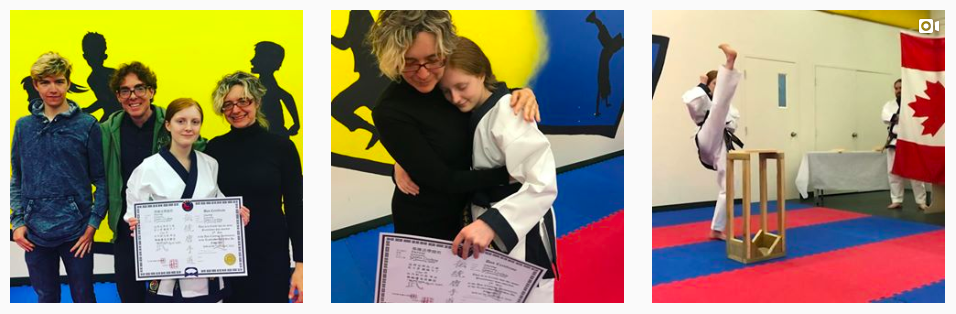
It’s official.

Seven year journey, and the last six months, so fucking hard.

You want to see that video, right? Watch. You’re going to fixate at how high that leg goes. Don’t. Watch how effortless the drop of the kick is, and how her body relaxes immediately afterwards.

She’s gonna be ok.

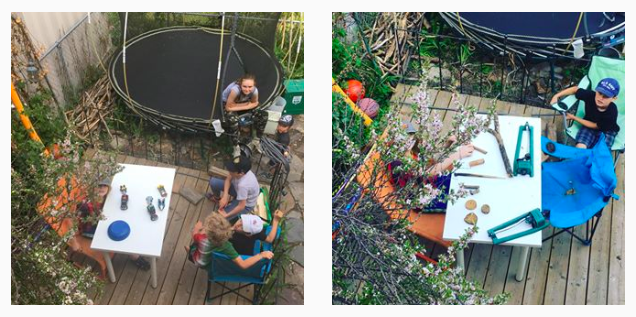
Life, these days, consists of a lot of this:

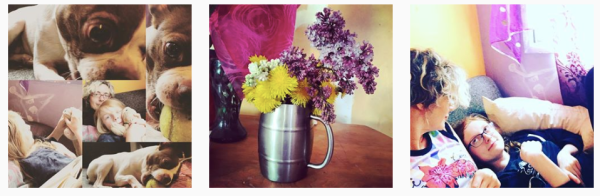
A little bit of this:

And this giant turned 17. Guess what he wants for his birthday?

*

The six mantras of loving speech, by Thich Nhat Hanh:

  1. I am here for you.
  2. I know you are there, and I’m happy.
  3. I know you suffer, and that’s why I’m here for you.
  4. I suffer. Please help.
  5. This is a happy moment.
  6. You are partly right.

(The Art of Communicating)‎

This is a happy moment.

xoxo

“Jane”